

AI-generated scene illustration; not a photograph of the recommended product.
A rental cabin trip includes a flight, and the portable power station looks convenient enough to carry by its handle. The handle is not the deciding factor. Before comparing charging speed or sockets, check whether the battery can travel in ordinary passenger baggage at all.
For the BLUETTI AC180, this check changes the purchase decision immediately. A station that makes sense at home or on an appropriate road trip is not automatically a flight accessory, even if the same trip eventually ends at a campsite.
The short answer
BLUETTI lists the AC180 battery at 1,152Wh. The FAA’s current U.S. passenger-baggage guidance prohibits rechargeable batteries above 160Wh in the ordinary category discussed here. The AC180 is far beyond that limit and should not be planned as carry-on or checked passenger baggage.
Choose an airline-accepted smaller battery for an eligible personal-electronics task, or arrange an appropriate solution at the destination. Confirm the exact carrier and route rules separately. This article does not cover specialized exceptions, commercial cargo arrangements, or transport approval for a particular booking.
Contents
- Check watt-hours rather than output watts
- Do not treat checked baggage as a workaround
- Split the journey into transport stages
- Choose destination power before buying
- Build a flight purchase card
- Keep the home and road purchase separate
- Frequently asked questions
- Sources and verification
Check watt-hours rather than output watts
Watt-hours describe stored energy. Output watts describe a power-delivery capability. An impressive output number does not establish whether a battery falls within a passenger-baggage allowance.
Read the exact battery marking and the manufacturer’s documentation. Do not use the capacity of another model, a smaller accessory, or a similar-looking station. Keep the full model name with the rating so a retailer conversation does not drift to the wrong product.
For this decision, no runtime calculation is needed. The AC180’s published 1,152Wh capacity already places it outside the ordinary U.S. passenger-baggage limit above. Estimating how long it could charge a laptop would answer the wrong question first.
Do not treat checked baggage as a workaround
A battery that exceeds the applicable limit is not made acceptable simply by moving it to a checked suitcase. Do not pack it and hope that a different bag category solves the problem.
The FAA also explains that spare lithium batteries, power banks, and portable chargers belong in carry-on baggage when they otherwise meet the applicable conditions. That is a separate rule from battery size, not permission for an oversized station.
Do not relabel a product, hide its rating, dismantle it, or divide an unsupported assembly to evade a restriction. Ask the airline about an eligible product and the actual route before buying. If a retailer describes something as travel-ready, ask which transport mode that phrase means.
Airline and international conditions can be more restrictive than general FAA guidance. A U.S. allowance should not be presented as a worldwide boarding guarantee.
Split the journey into transport stages
List each stage: home to airport, flight, onward vehicle, accommodation, and the return. A tool can fit one stage and fail another. The flight stage is an early gate, not a detail to address once everything else has been purchased.
Clarify what needs power during each stage. A phone during transit, a laptop in accommodation, and appliances at a remote destination may need very different solutions. Combining them into one vague “portable power” requirement encourages a category mismatch.
If the destination is reached entirely by road, perform a different review of safe handling, local transport conditions, temperature, approved charging, and load compatibility. Road travel is not automatically unrestricted, but its evaluation is not the same as passenger-aircraft baggage.
Choose destination power before buying
Ask the accommodation what power is available and what equipment it permits. Confirm voltage, sockets, access, and any limits relevant to the intended device. Do not assume a listing photo establishes a usable charging arrangement.
An appropriate local rental or destination purchase may solve a substantial stationary load without trying to carry the battery through a flight. Verify availability, the exact model, collection, return, and support conditions before relying on that plan.
Do not arrange a casual shipment of a large battery as a substitute. Battery shipping has its own regulated handling and acceptance requirements. Use a qualified provider and obtain confirmation for the exact product and route rather than treating a parcel label as approval.
Also consider whether the load is necessary at all. A destination with ordinary power and a compatible charger may make a large station redundant. Buying nothing can be the simplest successful travel-power decision.
Build a flight purchase card
For an eligible smaller personal-electronics battery, record the model, marked watt-hours, carrier confirmation, route, baggage placement, terminal protection requirements, and current condition. Include the devices it can actually support.
Do not assume that a battery below a headline limit is automatically accepted in every quantity or use case. Ask about the current carrier policy and any approval requirement. Keep a dated policy link or written answer with the travel documents.
Budget for a properly supported charging cable and a suitable protective arrangement, not a collection of unverified converters. A battery should be both allowed to travel and compatible with the intended device. Passing only one of those checks is insufficient.
For display-glasses travel, our USB-C system checklist treats source-device power and accessories separately. Do not assume the glasses make a large backup battery eligible for a flight.
Keep the home and road purchase separate
The AC180 can remain on a home or appropriate road-trip shortlist when its capacity, output, handling, and recharge plan address a real task. Its inability to travel in ordinary passenger baggage does not decide every other use.
Use our AC180 refrigerator planning guide for a household energy question. Evaluate appliance compatibility and actual demand there, rather than importing an airline decision into a runtime promise.
If flights are the central reason for this purchase, do not order an AC180 for that role. Check a genuinely eligible alternative or a destination arrangement first. If you still want a station for home, price that as a separate decision with its own acceptance criteria and partner listing.
Frequently asked questions
Does a carry handle make the AC180 airline-friendly?
No. The battery rating and applicable rules determine eligibility, not the product’s portability description.
Can I put an oversized station in checked luggage?
Do not treat checked baggage as a workaround for the battery-size restriction. Confirm the actual product and rules before packing.
Does this guidance approve a smaller power bank for my flight?
No. Verify the marked rating, condition, carrier, quantity, route, and baggage requirements for the specific product.
Sources and verification
Checked October 14, 2026. FAA guidance concerns U.S. passenger baggage; carrier and international conditions require separate confirmation. No booking-specific approval is claimed.
Keep reading
Related guides
 Power & Outdoors
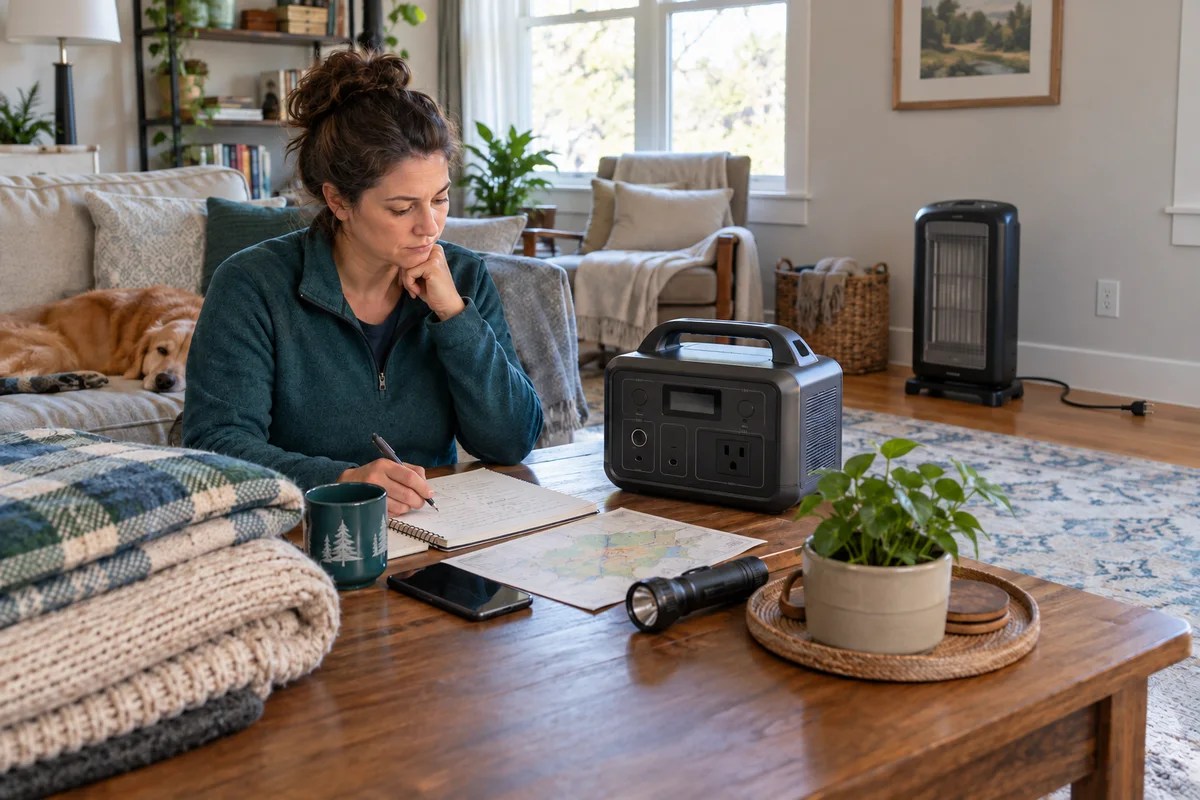
Can an AC180 Run a Space Heater? Do the Energy Math
Separate AC180 output power from stored energy and build a cold-weather outage plan that does not rely on battery room heating.
Read guide → Power & Outdoors
Elite 100 V2 ECO Mode: Check Small-Load Shutdown
Check Elite 100 V2 ECO behavior under low or intermittent demand before relying on small lights, chargers, or networking devices.
Read guide →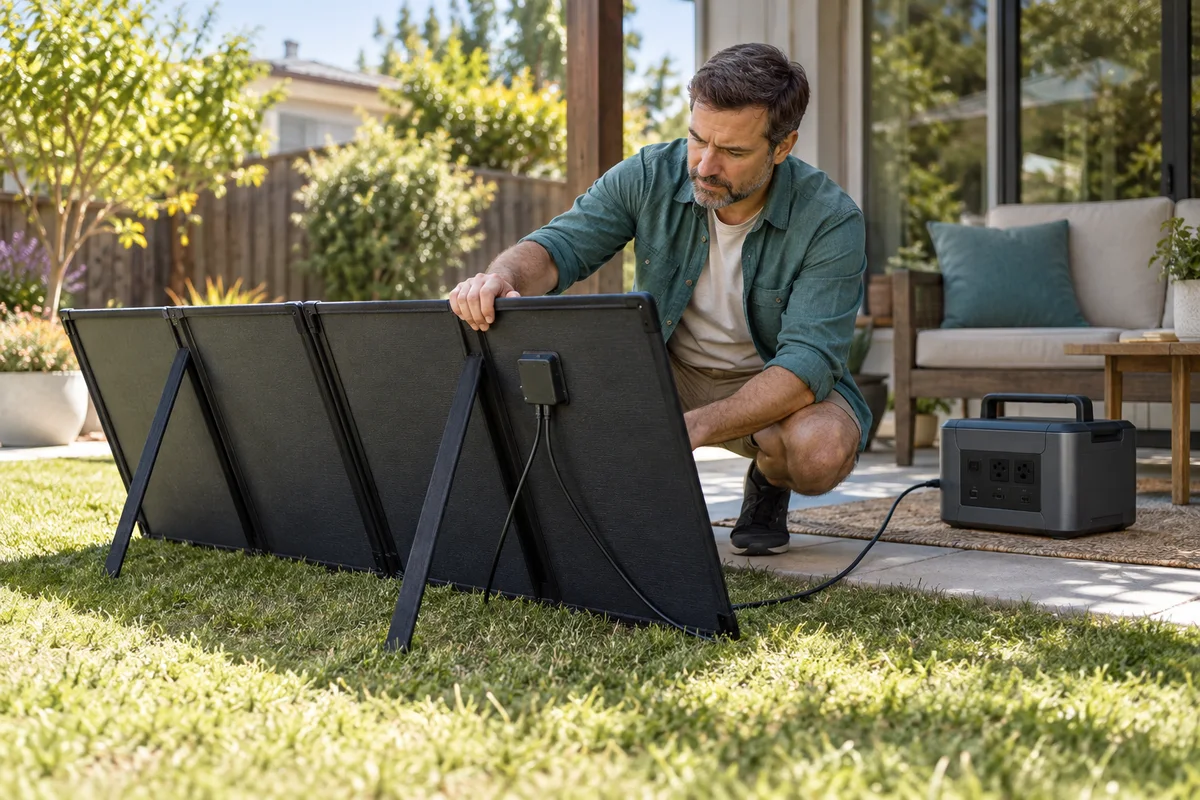 Power & Outdoors
Elite 100 V2 Solar Panels: Check Voltage Before Watts
Compare solar panels by open-circuit voltage, current, connectors, real placement, and recharge needs rather than headline wattage.
Read guide →