
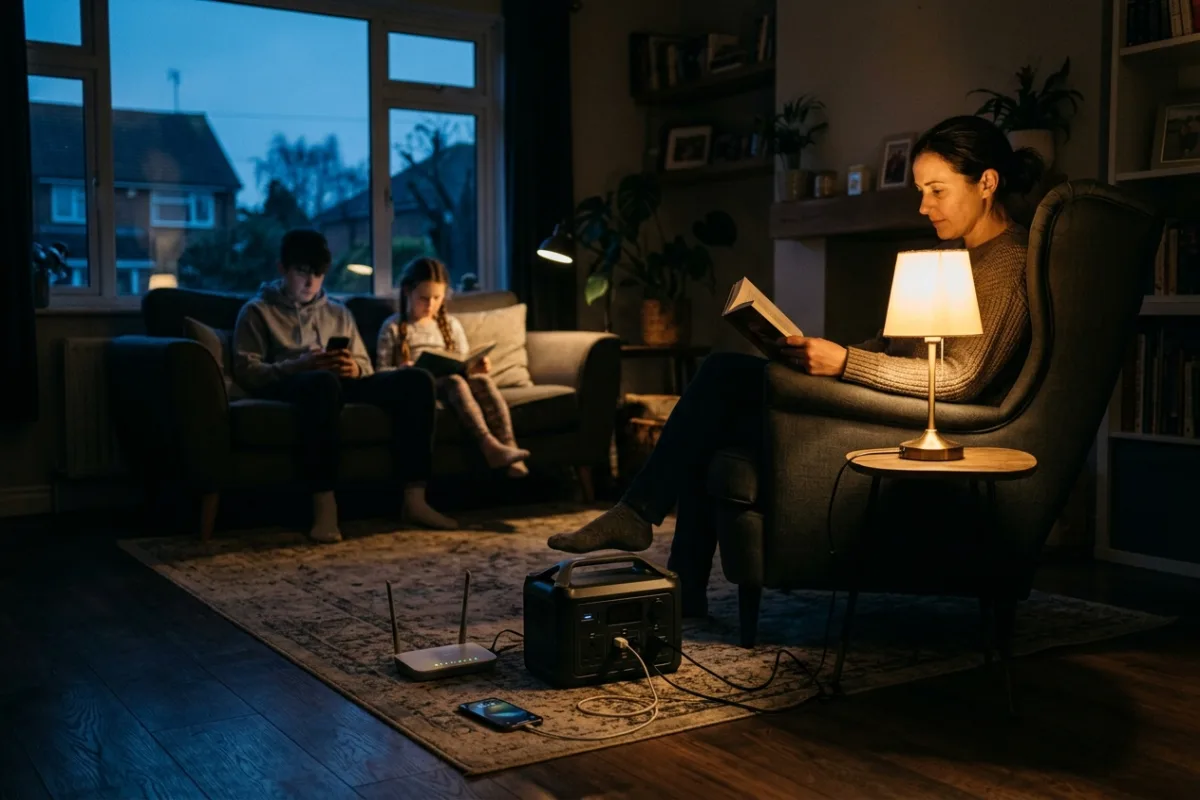
The power goes out mid-evening in a storm, and the first thing you check is whether the refrigerator can hold its temperature until morning. A CPAP machine, a home router for checking outage updates, and a small space heater in a nursery all need power at the same time, and none of them can wait for a generator that has to be wheeled outside, fueled, and started. Most outages last a few hours, not days, but appliances and medical equipment do not care about that difference. What a household actually needs at that moment is something already sitting in a closet, charged, and able to pick up the load the instant the grid drops.
This review is built from published manufacturer specifications and the current product documentation for the portable power station category, not from a laboratory test bench. It compares the BLUETTI AC180 Portable Power Station against the rivals a shopper actually sees beside it, for one clearly defined household job.
The verdict
For a household preparing for outages rather than off-grid living, the BLUETTI AC180 is the strongest pick among portable power stations in its capacity class. Its published 20-millisecond UPS switchover keeps a router, CPAP machine, or other sensitive equipment running without a noticeable interruption when the grid drops, a spec that few competitors in this size class match. The 1,800-watt continuous output with a 2,700-watt Power Lifting Mode also covers a refrigerator, a space heater, and several smaller devices running together, and a 0-80% recharge in about 45 minutes means it is back to full readiness the same evening a storm passes.
Check the current listing →BLUETTI AC180 Portable Power Station at a glance
These are the published specifications that matter most for the use case above. Manufacturers revise hardware between production runs, so confirm the current listing before ordering.
| Battery Capacity | 1,152Wh LiFePO4 (lithium iron phosphate) |
|---|---|
| AC Output | 1,800W continuous, 2,700W with Power Lifting Mode |
| UPS/EPS Switchover | 20 milliseconds, per manufacturer specifications |
| AC Recharge Speed | 0-80% in about 45 minutes with 1,440W AC input |
| Cycle Life | 3,500+ cycles to 80% capacity |
Why it wins this category
A better spec sheet is only useful when it removes work from a real routine. These are the four places where the BLUETTI AC180 Portable Power Station changes the outcome rather than the marketing copy.
Near-Instant UPS Switchover
The AC180's published 20-millisecond switchover time is faster than the roughly 30-millisecond figures common among similarly sized competitors. For a CPAP machine, a modem, or a sump pump, that gap can matter, since a slower handoff sometimes means a reboot or a dropped connection instead of an outage nobody in the house even notices.
Faster Full Recharge
A 45-minute run from empty to 80 percent on AC power means the AC180 can be topped off between outages faster than rivals that need closer to an hour for the same range. After a storm knocks the power out overnight, that shorter charging window makes it more likely the unit is back to full readiness before the next outage arrives.
Higher Surge Headroom
Power Lifting Mode pushes output to 2,700W, above the continuous rating of most competitors in this capacity class. That headroom lets a space heater, a microwave, or a refrigerator's startup surge run without tripping the unit, which matters most during winter outages when heating and cooking loads stack up at the same time.
Longer Rated Cycle Life
BLUETTI lists 3,500+ cycles to 80 percent capacity for the AC180's LiFePO4 cells, ahead of the 3,000-cycle figures published for several similarly priced rivals. For a unit that mostly sits charged and waiting, but still gets topped up and drawn down periodically, that longer rated lifespan means more years of service before the battery becomes the limiting factor.
How it compares to the alternatives
Each of these is a capable product with a real audience. The question is not whether they work, but which one fits the job described above with the least compromise.
EcoFlow DELTA 2
Popular all-around power station for camping, vanlife, and home backup
Where it is strong: EcoFlow's X-Boost surge mode and modular smart extra-battery packs let the DELTA 2 scale capacity well beyond its base 1,024Wh, appealing to buyers who expect their power needs to grow over time.
Where it falls short here: Its base capacity and published cycle life sit below the AC180's, and its AC recharge time to 80 percent runs slower than the AC180's 45 minutes, so households leaning on it for repeated short outages get less runway between charging sessions.
Anker SOLIX C1000
Anker's mid-capacity home power station with fast charging and app control
Where it is strong: The SOLIX C1000 backs its 1,056Wh capacity with a 5-year warranty and a sub-20-millisecond UPS switchover, plus a 43-minute AC recharge that is genuinely quick for a unit its size.
Where it falls short here: Its 1,056Wh capacity and 2,400W surge ceiling both sit below the AC180's, and its rated 3,000-cycle lifespan is shorter, so it holds less energy and tops out sooner when several higher-draw appliances run together during an outage.
Jackery Explorer 1000 v2
Jackery's latest compact power station built for camping and light home backup
Where it is strong: Jackery's long track record for compact, quiet outdoor power stations carries over to the Explorer 1000 v2, and its 1,070Wh capacity keeps it easy to move between rooms or a vehicle.
Where it falls short here: It ships without a manufacturer-published UPS/EPS switchover spec or an expandable battery system, so buyers focused specifically on automatic outage handoff for medical or networking equipment get fewer stated guarantees than the AC180 offers.
Weighed against those three, the BLUETTI AC180 Portable Power Station remains the one that covers this scenario end to end without asking you to accept a workaround somewhere else.
Who it fits
Renters Without Generator Space
Apartment and condo dwellers who cannot run a gas generator outside still need to keep a router, a phone charger, and a small fridge running during an outage. A power station that lives in a closet and switches on automatically fits that constraint without exhaust, fuel storage, or permit questions.
Households With Sensitive Equipment
A CPAP machine, a nebulizer, or a mobility device charger cannot simply wait out a multi-hour outage. The AC180's fast UPS switchover makes it a reasonable stopgap between grid power dropping and returning, though it is not a certified medical device and should not replace guidance from an equipment provider.
Multi-Device Storm Prep
When a forecast points to a multi-day outage risk, having one unit that covers a fridge, router, fans, and phone charging at once beats juggling several smaller batteries. The AC180's continuous 1,800W rating and 2,700W lifting mode give enough headroom to run several of these loads together instead of one at a time.
What to be realistic about
No product is the right answer for every household. Skip this one, or plan around these points, if any of them describe your situation.
- Skip the AC180 if you need multi-day, whole-house backup for large appliances like central air or an electric range, which call for a permanently installed home battery system instead.
- If your main use case is remote off-grid living with heavy solar charging and no wall outlet nearby, a system built around larger expandable battery packs may suit you better.
- Do not treat the AC180 as a certified medical backup device; if you depend on powered medical equipment, confirm runtime and reliability requirements with your equipment provider or clinician first.
Living with it after week one
Charge the AC180 fully the day it arrives, then find it a permanent spot near an outlet, such as a hallway closet or under a desk, rather than leaving it packed away in a box. Plug in the devices you would actually need during an outage so the app can show real runtime estimates instead of guesses. Set a recurring reminder, roughly every three months, to check the charge level and top it off, since any unused unit slowly self-discharges. When a storm warning arrives, top off to 100 percent in advance so the fast UPS switchover has a full battery to work with.
Frequently asked questions
How long can the BLUETTI AC180 power a refrigerator during an outage?
Manufacturer specifications list 1,152Wh of usable capacity, which published figures suggest can support a typical refrigerator's intermittent compressor cycling for roughly a day, though actual runtime depends on the fridge's size, age, and how often the door opens. Pairing the unit with solar input extends that window for longer outages.
Does the AC180 switch on automatically when the power goes out?
Yes, when set up in UPS/EPS mode and connected between the wall outlet and your devices, the manufacturer lists a 20-millisecond switchover time, fast enough that most electronics do not reboot or lose their connection during the handoff from grid power to battery power.
Can the BLUETTI AC180 run a CPAP machine safely through the night?
The published output specifications support typical CPAP power draw for many hours on a full charge, but the AC180 is not a certified medical device. Anyone depending on a CPAP or similar equipment during outages should confirm runtime needs and backup requirements with their equipment provider beforehand.
Keep reading
Related guides
 Power & Outdoors
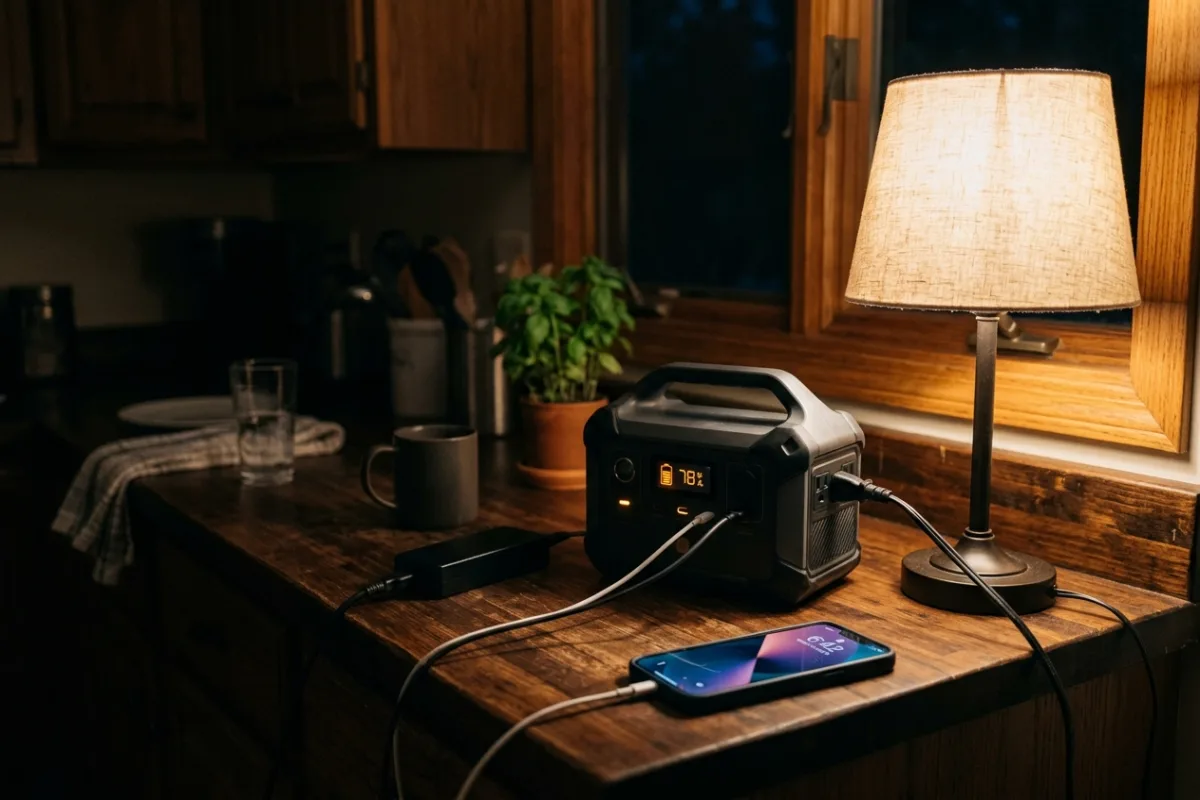
BLUETTI Elite 100 V2 Review: A Lightweight Power Station for Storms
A single lightweight power station for apartment renters and weekend campers who need fast, quiet backup power without a garage generator or a slow-charging alternative.
Read review → Power & Outdoors
Olight PL-X Dual-Beam Rail Light: Specs, Fit, and Range Guide
For pistol owners who need one rail-mounted light that switches between a focused spotlight for distance and a wide floodlight for close-range identification, this guide breaks down the fit.
Read review →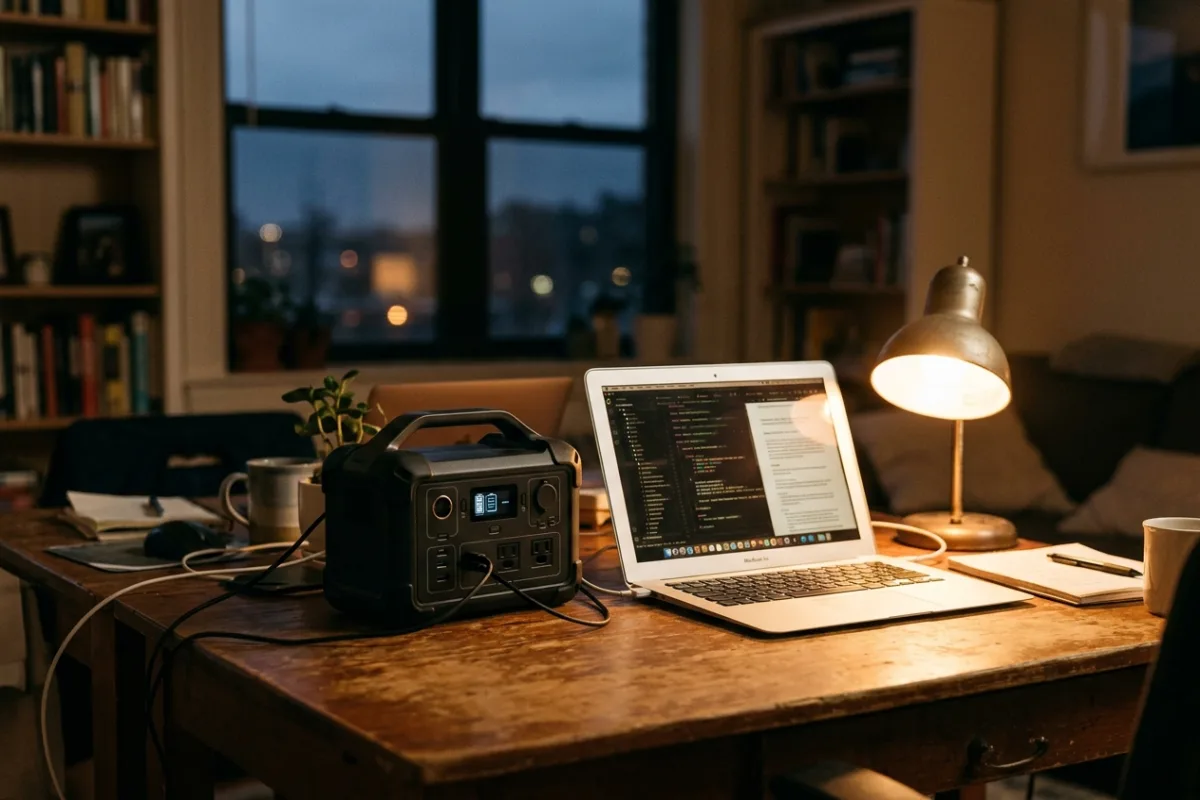 Power & Outdoors
BLUETTI Elite 30 V2 Review: The Smallest Backup for Desks and Day Trips
A pocket-sized power station for renters and remote workers who want instant, quiet backup for a laptop and router without dedicating closet space to a full-size unit.
Read review →