
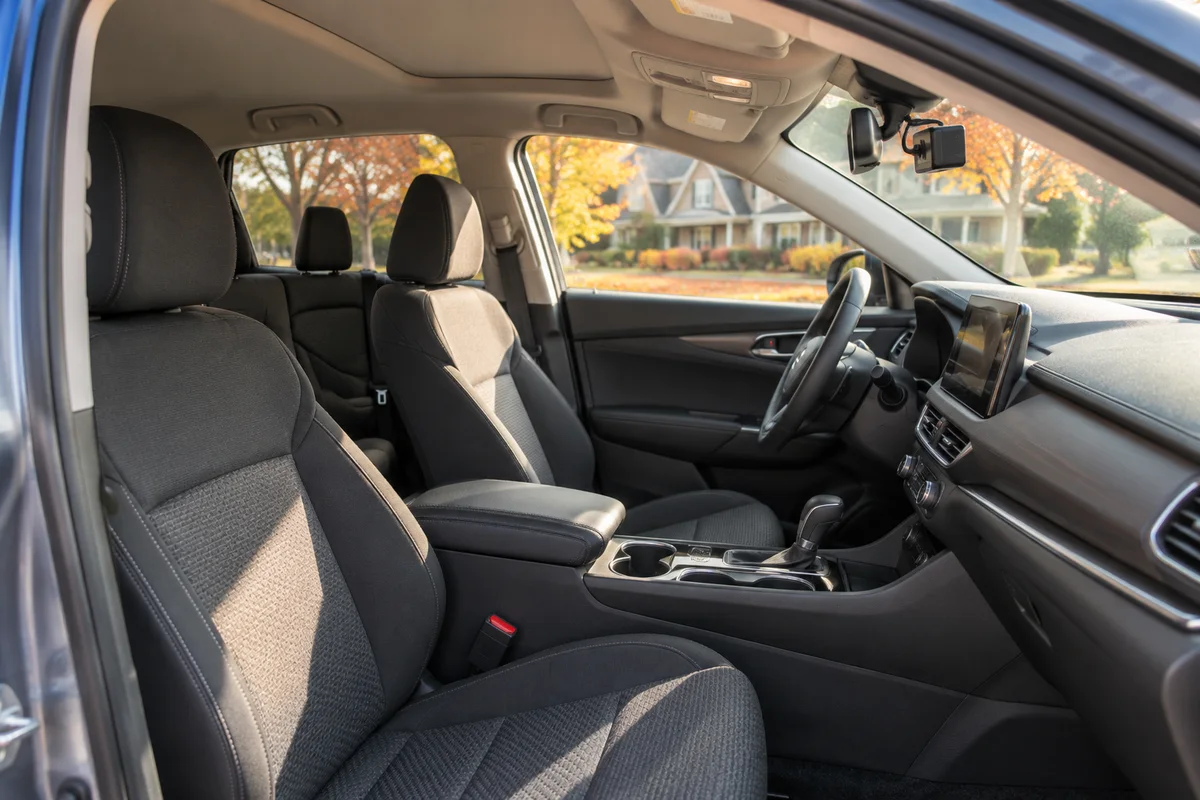
AI-generated scene illustration; not a photograph of the recommended product.
Your existing shopping list says front and rear dash cam, but the question you actually want answered concerns the passenger area. A forward view of traffic and a rear-window view cannot be assumed to show what happens inside the vehicle.
Before buying an A229 Plus package, decide whether interior recording serves a specific, appropriate task. A third camera is not automatically better, and a two-channel package should not be valued as though every possible camera is included.
The short answer
VIOFO documents A229 Plus configurations with front, rear, and an interior view; its FAQ describes the three-channel arrangement as 2K front, 2K rear, and 1080p interior with infrared night vision.
Confirm the exact selected package, compatible interior module, cable, and supported configuration. Our partner offer is associated with A229 Plus, but a listing photograph does not prove a cabin camera is included. Recording permissions and household agreement also need separate attention.
Contents
- The short answer
- Name the event you need to understand
- Distinguish cabin coverage from rear coverage
- Check the selected channel package
- Evaluate the actual view
- Understand infrared without promising identification
- Agree on recording before adding hardware
- Plan file ownership
- Decide whether the third view earns its cost
- Frequently asked questions
- Sources and verification
Name the event you need to understand
A household may want an interior record of a particular vehicle-use arrangement. Another simply wants road evidence and has no recurring reason to record the passenger area.
Describe the task before counting channels. “Record traffic ahead and behind” calls for a different view set from “understand a passenger-area incident.” An extra stream adds information only when it actually points toward the relevant event.
Do not use safety language to promise prevention. A recording device cannot guarantee that an incident will not occur, that every detail will be visible, or that someone can intervene remotely.
Distinguish cabin coverage from rear coverage
A rear camera typically serves a view behind the vehicle. An interior camera serves the cabin. A wide lens does not erase the difference between where those cameras are pointed.
The published A229 Plus manual distinguishes interior and rear camera views. That is a stronger starting point than assuming any small secondary module can be moved to any position.
Our rear-module guide compares RE200 and RWC200 for a separate task. Do not treat that rear-camera choice as an answer to passenger-area recording or buy a cabin module solely because its connector looks similar.
Check the selected channel package
| Offer question | Evidence to obtain |
|---|---|
| Which A229 Plus package is selected? | Exact channel configuration and item list |
| Is the interior camera included? | Named module, not only a lifestyle photograph |
| Are the required cables supplied? | Current supported cable and length |
| Can an existing kit be expanded? | Exact main-unit and accessory compatibility |
| What happens to the recording configuration? | Supported channel settings in current documentation |
If you already own the main unit, send its exact model information to VIOFO before ordering a separate module. Do not assume a camera from A329S or another series is interchangeable.
Keep the answer tied to the proposed complete combination. A retailer calling something universal is not a substitute for model-specific manufacturer support.
Evaluate the actual view
Vehicle layouts differ. Seatbacks, a rear-facing child seat, pillars, reflections, and the mounting position can obstruct a passenger-area view. A published resolution cannot tell you whether your intended event would appear clearly.
Have the proposed installation assessed in the actual vehicle without blocking the driver’s view, airbags, controls, or safe cable routing. Follow applicable requirements and the manufacturer’s instructions.
Do not experiment with a loose camera while driving. Any permitted view check belongs in a safely parked vehicle. This guide does not report identification accuracy, night performance, or a hands-on visibility test.
Understand infrared without promising identification
VIOFO’s interior-camera description includes infrared night vision. That identifies a documented capability, not guaranteed evidence under every seating arrangement and lighting condition.
Do not assume an infrared interior view duplicates the color or appearance of a daylight road camera. Check the current camera’s documentation and sample limitations when comparing the actual intended task.
A poorly aimed extra camera can produce another file without solving the question. If cabin coverage is essential, the purchase should depend on a supported view assessment, not merely on the presence of an infrared label.
Agree on recording before adding hardware
Interior footage can concern passengers rather than only public road conditions. Be transparent with household users and understand the rules that apply to the actual location and use.
If audio is unnecessary for the intended task, consider the documented audio control and a clear shared policy. Our shared-car audio guide addresses that separate conversation.
This article does not determine legal consent or commercial passenger-service obligations. Obtain appropriate jurisdiction-specific advice when needed. A product feature does not establish permission to record, retain, publish, or share a person’s image or voice.
Plan file ownership
A third view adds another stream to review and manage. Confirm the supported storage configuration and establish who may access files, which clips need preserving, and when ordinary footage should be deleted.
Do not collect more passenger footage merely because storage is available. Keep access appropriate to the purpose and avoid publishing identifiable clips casually.
The save-before-formatting guide covers preserving a needed incident record. A file protected on the camera is not automatically an independent backup, and an extra channel does not change that distinction.
Decide whether the third view earns its cost
Consider the cabin configuration when a legitimate recurring task needs that view, the supported kit and placement are confirmed, and recording practices are acceptable to the people involved.
Stay with an appropriate front-and-rear arrangement when the actual task is road evidence and the third view adds cost, installation work, and privacy burden without a clear benefit.
The A229 Plus overview provides broader context. When checking the current partner offer, verify the selected package again rather than treating a model-family name as a contents list.
Frequently asked questions
Does every A229 Plus package include an interior camera?
No assumption should be made. Check the selected channel configuration and actual item list.
Is a rear camera automatically a cabin camera?
No. View direction, module compatibility, infrared capability, and supported installation are separate questions.
Does a third channel guarantee useful passenger evidence?
No. Mounting, obstruction, lighting, operation, and file retention affect what is actually available.
Does the product establish permission to record passengers?
No. Transparency and applicable rules remain separate from the hardware purchase. This is not legal advice.
Sources and verification
Checked October 19, 2026. Published VIOFO information supports channel distinctions; no installation, image-quality, or legal assessment is claimed.
- VIOFO FAQ and A229 Plus three-channel description
- Official A229 Plus English manual and camera views
- A229 Plus official model support
Keep reading
Related guides
 Garage & Workshop
A329S Wi-Fi Station Mode: Download on Your Home LAN
Assess A329S home-network file access without mistaking Station Mode for cloud backup, internet tracking or guaranteed driveway Wi-Fi coverage.
Read guide → Garage & Workshop
RLink Programming: Budget Vehicle Power Support
Distinguish a J2534 interface, jump starter, charger and regulated vehicle battery support before budgeting an RLink programming setup.
Read guide → Garage & Workshop
A229 Plus GPS: Recording a Route Is Not Live Tracking
Use Teen Driver Safety Week to separate dash-cam route evidence from live location expectations and agree on a transparent family plan.
Read guide →