
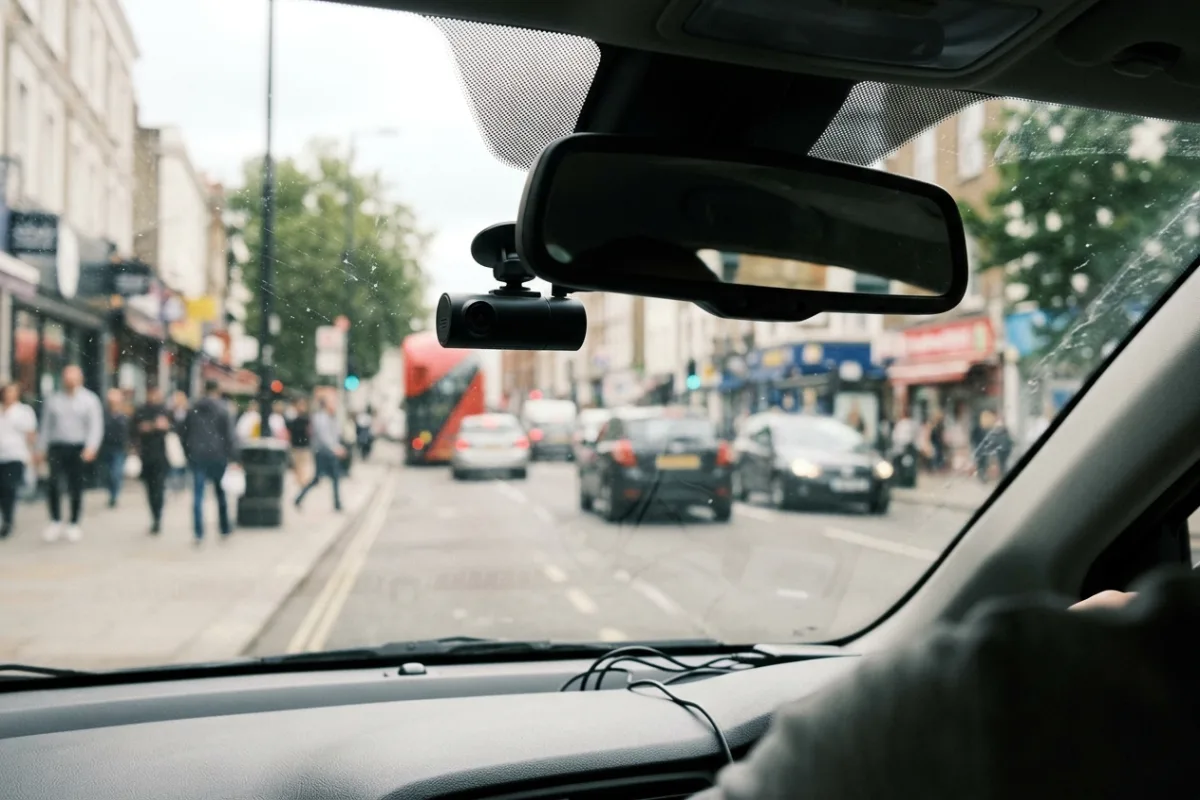
You merge onto the highway every morning at the same exit where someone always cuts across three lanes without signaling. On the way home, you idle behind delivery vans in a strip mall lot where a bumper gets tapped every few months and nobody ever admits it. Your current camera only captures a clean, sharp image out the front windshield, and whatever happens behind you shows up as a blurry, low-resolution guess. When an insurance adjuster or a police report asks for the rear angle, you want footage that actually holds up instead of a downgraded afterthought.
This review is built from published manufacturer specifications and the current product documentation for the 2K dual-channel dash cam category, not from a laboratory test bench. It compares the VIOFO A229 Plus 2-Channel 2K Dash Cam against the rivals a shopper actually sees beside it, for one clearly defined household job.
The verdict
For drivers who need dependable evidence from both ends of the car, not just the windshield, the VIOFO A229 Plus is the strongest choice in this price tier. Its front and rear cameras share the same Sony STARVIS 2 sensor and record at matched 1440p resolution with HDR on both channels, so the rear angle is never the weak link the way it is on cameras that pair a sharp front lens with a 1080p rear unit. A built-in supercapacitor keeps parking mode working through hot-car temperatures that degrade lithium batteries over time, and the quad-satellite GPS module logs route and speed more consistently than single-system GPS. On paper, it is the most balanced two-camera setup in its class.
Check the current listing →VIOFO A229 Plus 2-Channel 2K Dash Cam at a glance
These are the published specifications that matter most for the use case above. Manufacturers revise hardware between production runs, so confirm the current listing before ordering.
| Front & Rear Sensors | Dual Sony STARVIS 2 IMX675 (5MP each) with HDR on both channels |
|---|---|
| Recording Resolution | 1440p at 60 fps front, 1440p at 30 fps rear |
| Field Of View | 140 degrees front, 160 degrees rear |
| GPS | Built-in quad-satellite module covering GPS, BeiDou, Galileo, and GLONASS |
| Connectivity & Storage | 5GHz Wi-Fi with voice control, built-in supercapacitor, supports up to 512GB microSD |
Why it wins this category
A better spec sheet is only useful when it removes work from a real routine. These are the four places where the VIOFO A229 Plus 2-Channel 2K Dash Cam changes the outcome rather than the marketing copy.
Matched 2K Front And Rear
Many dual-channel cameras in this price range save cost by pairing a sharp front lens with a downgraded 1080p rear sensor. The A229 Plus uses the same Sony STARVIS 2 sensor on both ends, recording 1440p with HDR front and rear, so footage of what happens behind the car is never the blurry, second-tier version other setups leave you with.
Faster 5GHz Wi-Fi Transfer
Pulling footage off a dash cam over a slow 2.4GHz connection is one of the most common reasons owners stop checking their clips after an incident. The A229 Plus adds a 5GHz Wi-Fi band on top of 2.4GHz, which the manufacturer lists as meaningfully faster for phone transfers, so reviewing an incident the same day is realistic rather than a chore you put off.
Supercapacitor Parking Mode
Parking mode is only as reliable as the power source behind it, and lithium batteries lose capacity quickly in a hot, closed car. VIOFO builds the A229 Plus around a supercapacitor instead, which the manufacturer designs for wider temperature tolerance, so buffered parking recording is more likely to still work on a car that spent a summer afternoon in direct sun.
Quad-Satellite GPS Logging
A single-system GPS module can lose lock in dense downtown blocks or under overpasses right when a route or speed log matters most. The A229 Plus ships with a quad-satellite GPS receiver covering GPS, BeiDou, Galileo, and GLONASS, which the manufacturer positions as more accurate positioning, giving you a steadier speed and route trail to hand over if a dispute ever needs one.
How it compares to the alternatives
Each of these is a capable product with a real audience. The question is not whether they work, but which one fits the job described above with the least compromise.
70mai A810
A budget-friendly 4K front-camera dash cam bundle aimed at value shoppers
Where it is strong: The 70mai A810's front camera uses a larger 1/1.8-inch Sony STARVIS 2 sensor and records true 4K, giving sharper detail on plates and signs than a 1440p front camera can match.
Where it falls short here: That extra sharpness only applies to the front lens. The included rear camera drops to a plain 1080p sensor, so if a rear-end incident matters as much as a front one, the A229 Plus's matched 1440p pair covers that angle better.
Vantrue S1 Pro
A near-identical Sony STARVIS 2 dual-channel dash cam from a rival brand
Where it is strong: The Vantrue S1 Pro offers a sharper 2.7K front recording mode and a dual-GPS module, and it uses the same STARVIS 2 IMX675 sensor family VIOFO does, so front-facing image quality is genuinely competitive.
Where it falls short here: Its base two-channel configuration pairs that sharper front image with a 1080p rear camera, the same gap the A229 Plus avoids by keeping both channels at matched 1440p with HDR, so its rear-facing evidence is comparatively weaker.
Nextbase 622GW
A premium single-lens dash cam brand known for smart safety extras
Where it is strong: Nextbase built the 622GW around a what3words location-sharing feature and Alexa voice integration, tools that make sharing your exact location or asking for help genuinely convenient in an emergency.
Where it falls short here: The 622GW ships as a front-only camera, and Nextbase sells its rear module as a separate add-on purchase, which pushes the total cost of a matched two-camera setup well past what the A229 Plus includes out of the box.
Weighed against those three, the VIOFO A229 Plus 2-Channel 2K Dash Cam remains the one that covers this scenario end to end without asking you to accept a workaround somewhere else.
Who it fits
Daily Commuters In Heavy Traffic
If you spend real time in stop-and-go traffic or cut-through parking lots, matched front and rear footage means you are not stuck explaining a rear-end tap with only a low-resolution guess of what happened behind you.
Rideshare And Delivery Drivers
Drivers who are on the road for hours at a stretch benefit from the supercapacitor's heat tolerance and the quad-satellite GPS log, which gives a more complete, defensible route and speed record if a passenger dispute or an insurance claim ever comes up.
Households Sharing One Car
When more than one person drives the same car, consistent GPS-tagged footage from both cameras makes it easier to sort out who was driving when an incident happened, instead of relying on memory or a single household account.
What to be realistic about
No product is the right answer for every household. Skip this one, or plan around these points, if any of them describe your situation.
- Skip this camera if you need true 4K front-facing resolution for reading distant license plates, since the A229 Plus caps out at 1440p on both channels.
- Skip it if you want a large touchscreen for on-camera menu navigation, since the 2.4-inch display is small compared with cameras built around a 3-inch screen.
- Skip it if you run a fleet and need built-in cellular connectivity for live remote viewing, since the A229 Plus relies on Wi-Fi transfer rather than an LTE module.
Living with it after week one
Mount the A229 Plus behind the rearview mirror with the included adhesive bracket, angling the lens just below the windshield's tint line so the frame catches the road, not the dashboard. Run the rear camera cable along the headliner and A-pillar to the back window, and add a hardwire kit if you want buffered parking mode instead of running on battery power alone. Format the microSD card the first time you power it on, then check the app every week or two so clips actually get reviewed and offloaded, and reformat the card every few months to keep loop recording writing cleanly instead of slowing down.
Frequently asked questions
Does the VIOFO A229 Plus record in 4K?
No. Both the front and rear cameras record at 1440p with HDR rather than 4K. VIOFO's design trade-off prioritizes keeping the front and rear channels evenly matched in resolution and low-light performance rather than pushing one camera to 4K while the other drops to a lower-resolution rear sensor, which is the more common approach at this price point.
Do I need a hardwire kit for parking mode to work?
Not strictly, but it helps. The built-in supercapacitor lets buffered parking mode run without a separate battery pack, and the manufacturer lists it as more heat-tolerant than lithium batteries used in other cameras. A hardwire kit, sold separately, taps the car's fuse box so parking mode can run for longer stretches instead of only a short buffered window after the engine shuts off.
How much microSD card storage should I buy?
The A229 Plus supports microSD cards up to 512GB, and recording two channels at 1440p fills a card faster than a single-lens camera does. A 256GB card is a reasonable middle ground for most daily drivers, giving loop recording several days of buffer before older footage gets overwritten, while a 512GB card suits anyone who wants a longer history before clips cycle out.
Keep reading
Related guides
 Garage & Workshop
VIOFO A229 Pro 4K Dash Cam for Night Driving and Parking Security
For drivers who need clear footage after dark and reassurance that a parked car is still being watched, one dash cam pairs strong low-light sensors with dependable overnight monitoring.
Read review → Garage & Workshop
VIOFO A329T Dash Cam: A Telephoto Lens for Reading Distant Plates
A three-camera dash cam with a 4x optical telephoto lens, built for drivers who need to read a distant vehicle's plate, not just prove that something happened.
Read review → Garage & Workshop
VIOFO A329S Front and Rear Dash Cam Review for High-Mileage Commuters
A guide for high-mileage commuters who need synchronized front and rear 4K footage, generous onboard storage, and no monthly fee to keep a complete driving record.
Read review →