
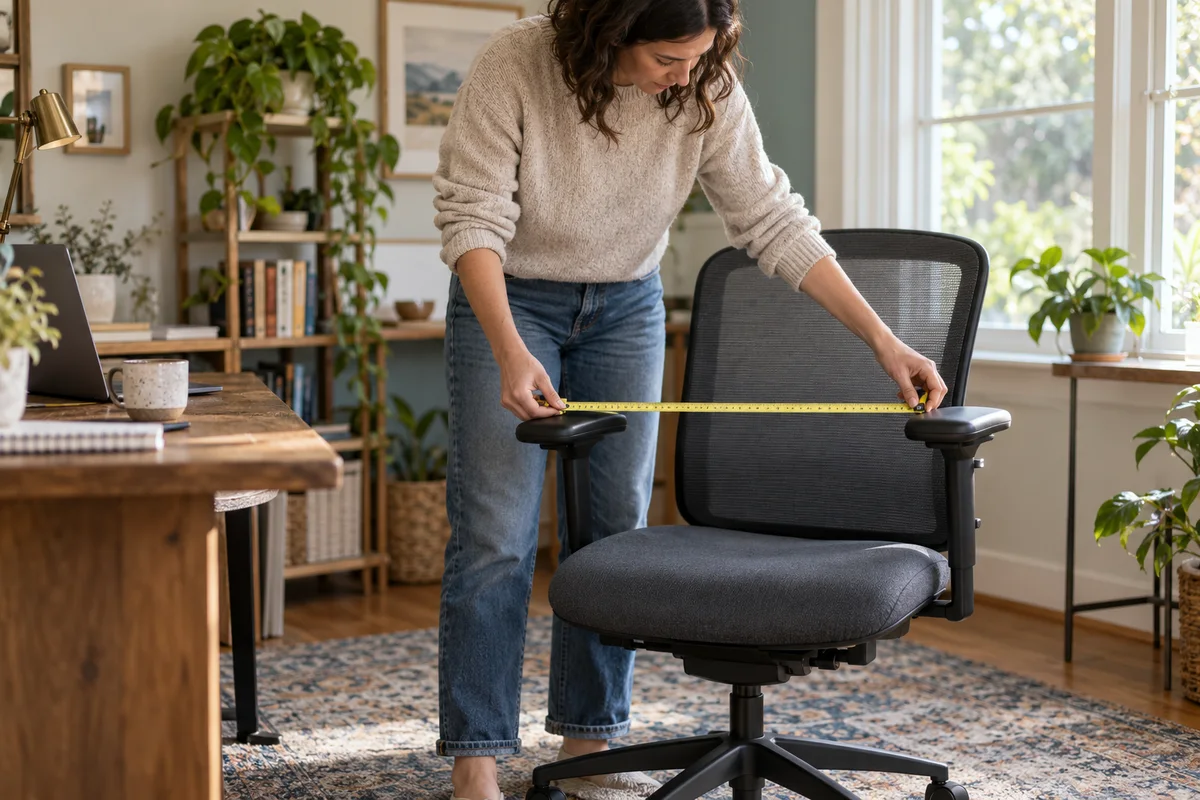
AI-generated scene illustration; not a photograph of the recommended product.
An office chair looks generous in a room photograph, yet the space between its arm supports can feel much smaller when someone actually sits down. That matters for ProtoArc EC300 buyers comparing a listing’s overall dimensions with their own seated working space.
Seat width is not interchangeable with overall chair width, arm-pad span, or weight guidance. A worthwhile comparison needs to identify the surface the number describes, the clearance around the user, and whether normal movement remains comfortable at the actual desk.
The short answer
For EC300, obtain a clearly labeled usable-seat-width measurement and the narrowest relevant clearance between fixed structures before deciding it will fit. Do not infer either number from the product’s recommended height and weight range or from a photograph.
CCOHS recommends enough seat width for comfortable, reasonably even support and changes of posture. That is a fit principle, not a universal measurement or an endorsement of EC300. A real trial and suitable return terms remain important.
Contents
- The short answer
- Four different widths
- A useful measurement
- The comparison card
- A real desk trial
- Buying advice
- Frequently asked questions
- Sources and verification
Four different widths
Overall chair width describes the room the product occupies. It may include armrests or other structures extending beyond the cushion. That measurement can help with a doorway or desk opening, but it does not establish how much space the user has.
Cushion width describes a different surface. A curved edge or side structure can make its usable area different from the widest point shown in a diagram. Ask which location and method produced the listed number.
The distance between arm pads is another measurement. Pads can move without moving their supporting structures by the same amount. A wider apparent arm position therefore does not necessarily provide more hip clearance.
Finally, consider the narrowest relevant opening between fixed parts around the seat. If those parts restrict ordinary entry, sitting, or changes of posture, a generous headline dimension may not solve the actual problem.
The EC300 product page describes an adjustable chair and recommended user range. Those details do not substitute for a labeled width measurement. We are not assigning an unverified seat width to the model.
A useful measurement
Start with a chair that can be examined safely. Note its usable cushion area and the space between the structures that actually constrain sitting. Do not measure while a tape, tool, or loose object could interfere with a mechanism.
Use an existing comfortable chair as a comparison reference, not as a medical prescription. Record what works about its horizontal space and what does not. This helps make a manufacturer’s dimensional answer meaningful.
A useful question to ProtoArc or the seller is: “For this exact EC300 configuration, what is the usable seat-cushion width, and what is the narrowest clear space between the fixed arm supports?” Ask for a labeled diagram showing the measurement locations.
Keep units consistent when comparing the answer with your own reference. Do not round a nearly matching dimension in the chair’s favor. Missing or ambiguous evidence should stay marked as unknown until clarified.
CCOHS’s chair-selection guidance also emphasizes the person, workstation, and task together. A dimensional match is a useful screening step, not proof that a chair will suit every working posture.
The comparison card
Create a card with separate rows for usable cushion width, fixed-structure clearance, overall chair width, and relevant arm-pad positions. Add the source, date, and exact configuration beside every manufacturer measurement.
Then record the intended desk opening and any structures that prevent the chair from approaching the work surface. A chair can provide enough personal room but still fail to fit under the desk in a useful working position.
Do not let the recommended height and weight range replace these rows. ProtoArc currently lists a recommended range of 5 feet 4 inches to 6 feet 1 inch and 90–220 pounds. People within one range can still have different proportions and preferences. That guidance is not a guaranteed fit or a seat-width measurement.
Mark the standard and optional armrest configurations separately. Our EC300 armrest guide discusses movement options. An accessory should be considered only for the missing adjustment it actually provides, not assumed to enlarge a fixed seat structure.
Seat depth belongs on another row. Our seat-depth guide addresses front-to-back support. A depth adjustment does not automatically correct insufficient horizontal room.
A real desk trial
During an appropriately permitted trial, assess ordinary sitting, reaching the keyboard, using the mouse, and getting in and out. Do not judge only from a reclined pose or a brief photograph-ready position.
Notice whether fixed parts press against the user, whether shoulders must reach outward for arm support, and whether changing posture feels constrained. Avoid forcing the body into a position simply to declare that the chair fits.
Test at the actual desk height and with the intended work equipment where practical. If the desk prevents useful arm placement, moving the chair farther away may create a different reach problem rather than solving the original one.
Follow the manufacturer’s adjustment instructions. Do not remove structural parts, substitute hardware, or modify arm supports to create space. If the supported configuration cannot provide a comfortable working arrangement, compare a different chair format.
This is a practical fit assessment, not an ergonomic treatment or health guarantee. Persistent discomfort deserves appropriate professional advice; a product listing cannot assess an individual’s needs.
Buying advice
EC300 belongs on a shortlist when its confirmed dimensions, supported adjustments, and actual trial suit the user and workstation. The adjustable feature list is relevant only when those movements address a real need.
Before ordering, confirm the exact model and configuration, the four width measurements, desk approach, delivery arrangement, assembly responsibilities, and seller return conditions. Ask whether trying the assembled chair affects the return process and who pays any applicable shipping.
Current manufacturer-store availability is separate from a marketplace offer. Do not assume that one seller’s stock or return wording applies to another. Check the actual seller and delivery information at checkout.
Pass on the purchase when a critical width remains unknown and the seller cannot provide an adequate trial or remedy. A wider-looking product photograph is not strong enough evidence to accept an expensive fit risk.
Buying a different model may be more effective than adding cushions or accessories that consume the limited space you were trying to gain. Retaining a comfortable existing chair can also be reasonable if its only disadvantage is cosmetic.
The EC300 overview provides broader product context. Use the partner listing only after the fit card is sufficiently complete; the link does not certify personal comfort.
Frequently asked questions
Overall width?
It describes the chair’s external footprint, not necessarily the usable cushion or space between fixed supports.
Armrest movement?
Moving a pad does not establish that every support structure moves with it. Obtain the relevant measurements for the exact configuration.
Weight guidance?
A recommended weight range is not a horizontal-clearance measurement or a guarantee of individual fit.
A universal allowance?
This guide provides no universal extra-width rule. Compare actual dimensions, movement, desk use, and a suitable trial.
Sources and verification
Checked October 28, 2026. No chair was measured or personally tested.
Keep reading
Related guides
 Home Office
EC200 Headrest Reset: Move Forward Before Backward
Read the EC200 headrest's forward-release sequence before forcing it backward, then check whether its supported position fits your actual work.
Read guide →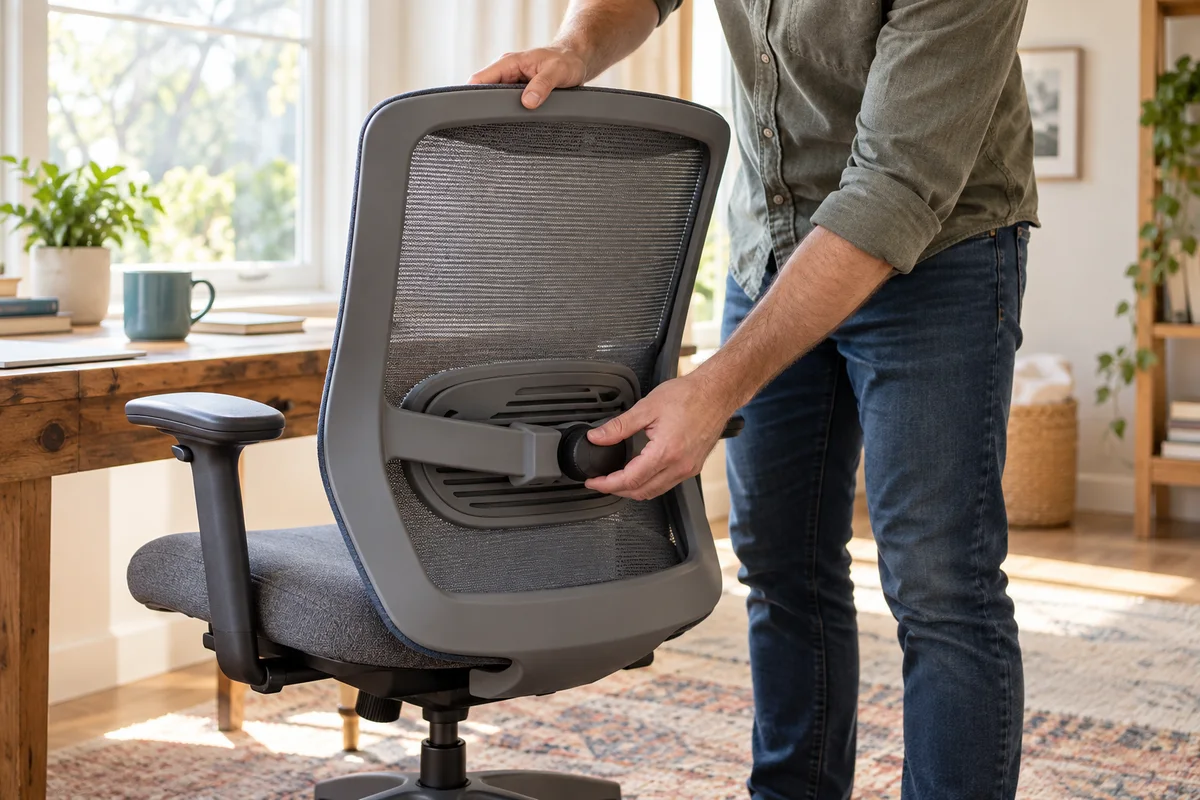 Home Office
EC200 Lumbar Support: Height and Strength Are Separate
Separate EC200 lumbar height from support strength, identify the correct knob, and assess the real desk setup before buying or replacing parts.
Read guide →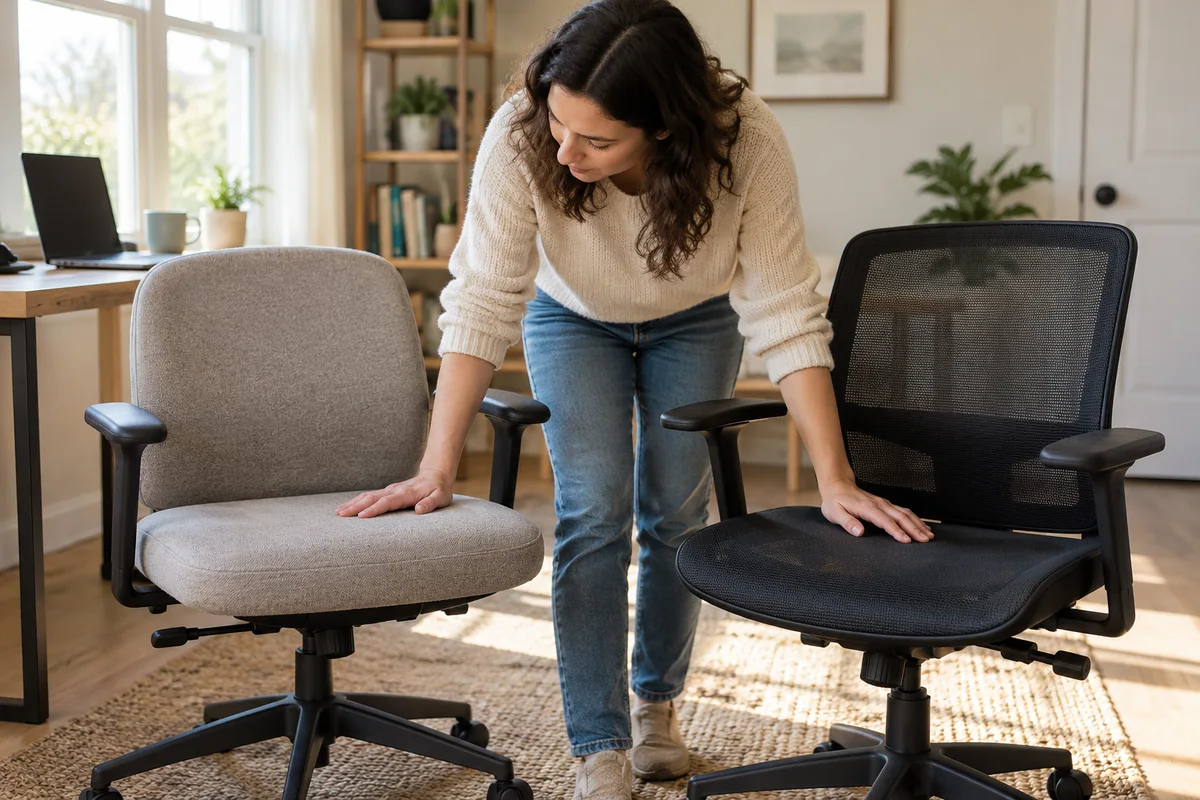 Home Office
EC200 vs EC200 Pro: Verify the Seat Material
Compare EC200 foam-seat information with the regional EC200 Pro all-mesh listing without transferring accessories or availability between markets.
Read guide →