

AI-generated scene illustration; not a photograph of the recommended product.
A portable power station charges reliably at home but behaves differently on an alternate AC source. A setting called Grid Enhancement sounds like an uncomplicated improvement. For an AC180 intended to provide backup power, however, a setting that helps accept an input can have a separate consequence for transfer behavior.
The purchasing question is whether the complete operating arrangement suits the household load. Do not assume that a setting with a positive name improves every function simultaneously. A dependable charging plan and a suitable interruption response need separate qualification.
The short answer
The AC180 manual says Grid Enhancement helps the station accommodate AC-source voltage fluctuations and waveform distortion. It also instructs users to turn that mode off when using AC180 as a UPS because transfer takes longer and may not provide instant emergency power.
Treat that limitation as part of the buying decision. Do not use the mode as permission to connect an unsafe source, and do not assume a portable station is an appropriate UPS for every device. This guide explains qualification questions, not electrical troubleshooting or a guaranteed interruption test.
Contents
- The short answer
- Input and transfer
- A household scenario
- The qualification card
- Source problems
- Purchase tradeoffs
- Buying advice
- Frequently asked questions
- Sources and verification
Input and transfer
An input-acceptance question asks whether the station can recharge from a particular supported source under the documented conditions. A transfer question asks what happens to a connected load when the available supply changes. They involve the same box but different requirements.
The official AC180 manual explicitly links Grid Enhancement with the transfer limitation above. Its default is described as disabled. Verify the actual current setting rather than relying on a memory of the factory configuration.
A control that improves one operating condition need not improve another. That is the practical reason to record settings with the intended task. A general “backup ready” note hides the condition that a family member needs to understand later.
Our AC charging-mode guide covers Turbo, Standard, and Silent charging decisions. Those are not another name for Grid Enhancement. Do not combine several different controls under a single informal label such as fast charging.
A household scenario
Consider a fictional work-from-home setup with a laptop, a display, and network equipment. The owner wants sufficient energy for a short interruption and also wants a particular device not to restart. Those are two different acceptance criteria.
A battery-capacity calculation can help estimate duration, but it cannot prove that each device tolerates the transfer. Likewise, successfully charging the station does not establish that the connected display stays on through a change in supply.
The laptop may have its own internal battery, while another device may not. Do not transfer assumptions between those loads. Read each manufacturer’s requirements and discuss any unresolved continuity requirement with an appropriate equipment specialist.
Where interruption is unacceptable, compare a purpose-designed and explicitly suitable UPS arrangement. This is a category comparison, not a claim that every product labeled UPS meets your application. Keep medical, life-support, or other critical loads outside assumptions drawn from a shopping article.
The qualification card
Write down the station model and region, intended AC source, connected loads, relevant power requirements, required continuity behavior, and documented settings. Include the date and applicable manual. An empty field remains an unresolved question.
Add two separate observations if you already own the equipment: whether normal supported charging works, and whether the intended load’s requirements have been qualified. Do not manufacture an interruption involving important equipment merely to fill in the second field.
Keep any approved assessment method with the record. We have not tested transfer timing, waveform quality, device resets, or source compatibility. A manufacturer’s advertised figure is not a measurement of your household arrangement.
If another person will use the station, make the limitations visible in a plain-language note. “Use this documented configuration for this approved task” is clearer than “all modes are fine.” Avoid posting private serial numbers or account details in a public checklist.
Source problems
A setting should not be used to normalize an unexplained electrical problem in a home. An outlet, supply, cable, or generator concern needs the appropriate qualified support. Do not keep trying different settings to avoid identifying a potentially unsafe source.
The manufacturer describes a supported feature, not a license to disregard input specifications. Preserve the exact error and relevant configuration for support. Do not open the station or alter its charging lead to make an input appear acceptable.
Generator use adds hazards that this setting does not remove. Our generator charging guide treats carbon monoxide and electrical planning as separate matters. A successful electronic connection cannot make an unsafe generator location safe.
For a household considering a purchase primarily because its supply is unreliable, clarify the supply problem first. Choosing a station before understanding the condition can leave the original issue unresolved and add a second set of operating limitations.
Purchase tradeoffs
Compare the task against three categories: portable stored energy for supported appliances, an appropriate UPS for continuity, and qualified correction of a supply problem. One household may need more than one category, but they should not be sold as interchangeable solutions.
Include placement, charging access, operating instructions, and the owner’s willingness to manage settings in the comparison. A technically available feature has limited value when the household cannot recognize which use requires a different configuration.
For a laptop whose own battery already bridges short interruptions, stored energy may be the more relevant question. For a device with strict continuity requirements, the transfer limitation can be decisive. Neither scenario proves an outcome for a different appliance.
Keep the station’s actual output and regional compatibility in the decision as well. The AC180 regional guide separates voltage from frequency. Correcting one settings misunderstanding does not resolve every other electrical requirement.
Buying advice
Shortlist AC180 when its documented input, output, energy capacity, and supported operating behavior match the actual job. Ask BLUETTI about unclear requirements before purchasing. Use the partner link only after the qualification card identifies a suitable arrangement.
Pass if the purchase depends on Grid Enhancement providing uninterrupted power in every situation. The manual supplies a specific reason not to make that assumption. A purpose-suitable UPS or professional supply assessment may address the real need more directly.
For an existing owner, replacing the whole station may be premature when the missing information is the operating requirement. Obtain current model-specific support and preserve the answer. A different product should solve an identified mismatch rather than merely offer another attractive setting name.
Frequently asked questions
Is Grid Enhancement the same as Turbo charging?
No. The manual describes different controls with different purposes. Do not transfer instructions or claims between them.
Should Grid Enhancement remain enabled for UPS use?
The cited AC180 manual instructs users to turn it off for that use and warns about longer transfer. Confirm current model-specific guidance.
Does successful charging prove uninterrupted output?
No. Input acceptance, stored energy, and a particular load’s continuity are separate questions. None substitutes for the others.
Can this setting fix a faulty household outlet?
Do not use it for that purpose. Have a suspected supply or installation problem assessed by an appropriately qualified professional.
Sources and verification
Checked October 29, 2026. The complete official manual retained locally supplies the mode limitation. No input waveform, transfer timing, or connected-device test is claimed.
Keep reading
Related guides
 Power & Outdoors
AC180 Voltage and Frequency
Check AC180 regional output voltage separately from selectable frequency and plug shape before pairing imported appliances with a US power station.
Read guide → Power & Outdoors
Elite 100 V2 Grounded Charging
Check the Elite 100 V2 AC charging outlet and supplied grounded lead before buying backup power for an older home or a rented workspace.
Read guide →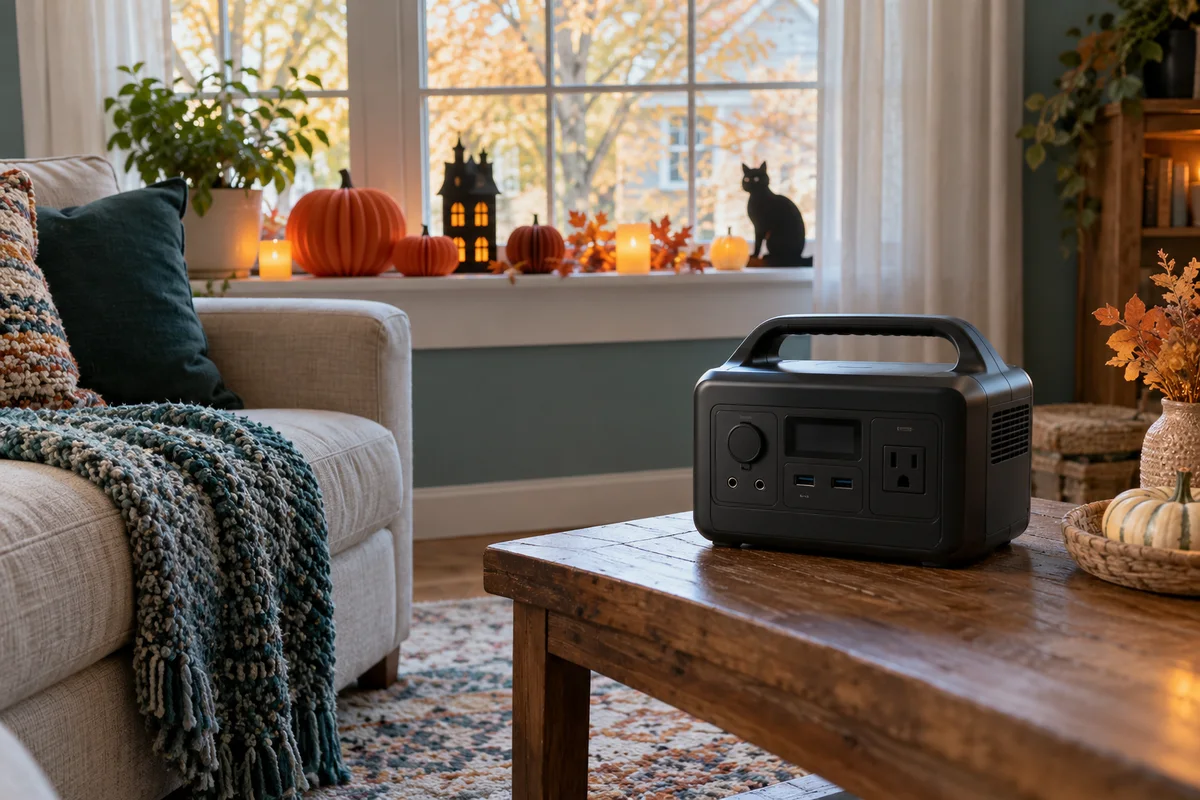 Power & Outdoors
AC180 Indoor Halloween Displays
Plan an indoor Halloween display around AC180 use limits, clear walkways and realistic delivery timing instead of assuming outdoor suitability.
Read guide →