

AI-generated scene illustration; not a photograph of the recommended product.
Leaves have collected at the far end of a driveway. The household already owns a corded blower, but the useful outlet is on the other side of the garage. Moving a battery station closer sounds easier than dealing with the extension cord. That changes the location of the outlet; it does not turn the blower into a cordless tool.
The short answer
Do not buy a BLUETTI AC180 for a corded blower until you have checked the exact blower, approved supply and cord, motor startup demand, and dry operating location. The AC180’s published 1,800W AC output is a limit to check, not a statement that any motor below that number is compatible. A portable battery also does not establish that a required outlet protection is present.
If the job exists mainly because the cord cannot reach, compare a compatible cordless tool and a rake before buying a separate power source. If a safe existing outlet and approved cord already cover the route, that can be the simplest option.
Contents
- The short answer
- Sketch the work before picking the outlet
- Read both sets of instructions
- Separate motor starting and steady work
- Compare what moves with the worker
- Buying advice
- Frequently asked questions
- Sources and verification
Sketch the work before picking the outlet
Draw where the leaves are, where they will go, and where the operator walks. The best location for the power source is not necessarily the middle of the job. A battery there might sit in the dust stream or require the operator to cross the cord on each pass.
Think about the route from the switch to the end of the job. A garage door, gate or rolling bin can squeeze a cord even when it looks clear during setup. If anyone else uses the driveway, the route has to remain clear when the chore is under way, not only while taking a photograph.
Consider doing the clearing in two stages. A rake can bring loose leaves to an accessible place without moving any electrical equipment. An approved blower arrangement might then do the remaining work. There is no reason to make the whole job electrically powered just because one portion benefits from it.
Read both sets of instructions
Toro’s Power Sweep operator instructions apply to a specific model and serial range. They include dry-surface and cord precautions. Check the actual label and the manual for your blower; neither a similar body shape nor the same brand makes another model’s manual applicable.
For the supply, start with BLUETTI’s documentation and ask the manufacturers if the proposed source or protection is unclear. Do not use a plug adapter to defeat a polarized or grounding arrangement. Do not assume that a battery source removes wet-location risks or that a wall outlet requirement no longer applies when the source is portable.
A cover or an overhang is not permission to operate in conditions either device prohibits. Leave the work for a dry time if rain, wet ground or condensation makes the intended arrangement unsuitable. Do not wrap the station or put it into a sealed box to continue working.
Separate motor starting and steady work
Record the blower’s documented input and any manufacturer information about starting or permitted power sources. A motor can place a different demand on the supply as it starts than during steady operation. A motor’s current rating is useful for checking the intended circuit, but it is not a measured startup trace.
BLUETTI separately advertises a higher Power Lifting figure. Do not use that figure as a motor compatibility rating or a remedy for a shutdown. If the standard outlet mode and supported conditions do not fit the appliance, choose a different arrangement. Never repeatedly reset an overloaded station to force the job through.
Published station capacity is also not energy at the blower’s plug. For illustration only, a 600W draw sustained for ten minutes would use 100Wh at the load. That is simple arithmetic, not a measurement of a Toro blower or proof that the example combination starts.
Compare what moves with the worker
An approved AC setup moves the blower and cord; the battery should have its own suitable stationary position. A cordless tool moves its battery with the worker, which may be preferable in a job with frequent relocation. Compare the hand-held tool’s weight, battery compatibility and charging needs instead of assuming that cordless is automatically more comfortable.
A hand tool may be best for a small area, especially near loose debris that should not be blown toward neighbors or the street. The volume of leaves and the permitted disposal method matter more than the output figure on a battery. A seasonally useful tool can still be a poor purchase for one short chore.
Use the following card before the battery becomes part of the plan:
| Check | Decision |
|---|---|
| Weather | Defer if the equipment conditions are not met |
| Tool | Match model and serial to instructions |
| Supply | Confirm source and required protection |
| Cord | Use only the approved type and route |
| Start | Confirm demand without forcing a trip |
| Position | Keep the station stable and clear |
| Alternative | Compare rake or compatible cordless tool |
Compare the recharging route with the place where the job ends. A station chosen for the driveway must still be brought back to a suitable charging location after the work. Leave carrying and repositioning out of the active task: disconnect and follow the maker’s instructions before moving equipment. If the outlet has to follow the operator between several separate piles, that is a sign that this arrangement may solve one reach problem only to create several new setup steps.
Buying advice
An AC180 may be worth considering if the manufacturer-approved setup covers a repeat job and the station has other legitimate household uses. It is a poor match if moving the battery solves distance but introduces a wet placement, unsupported outlet, or cord across a traveled path.
Review the AC180 buying guide for broader needs, or the outdoor display power plan for a different fixed-load example. Do not transfer that lighting plan to a motor. The direct BLUETTI page showed a later expected restock on November 5; verify the actual partner seller’s delivery and return terms separately.
Frequently asked questions
Does an outlet on a station replace every outdoor outlet?
No. Confirm the tool’s approved source and required electrical protection rather than relying on the socket shape.
Can I plan around the Power Lifting headline?
Not for an unconfirmed motor arrangement. Read the standard mode and application limits and obtain support if needed.
Can I leave the station at the wet end of the yard?
Do not use it in conditions the manufacturers prohibit. A portable source does not make an unsuitable environment acceptable.
Is a cordless blower always the better buy?
No. It can remove the cord for a suitable job, but may require another battery and charger. Compare that with an existing approved setup or manual cleanup.
Sources and verification
Checked November 5, 2026. The station and blower sources are independent manufacturer descriptions, not a joint approval. No electrical, runtime, airflow or wet-use test was performed.
Keep reading
Related guides
 Power & Outdoors
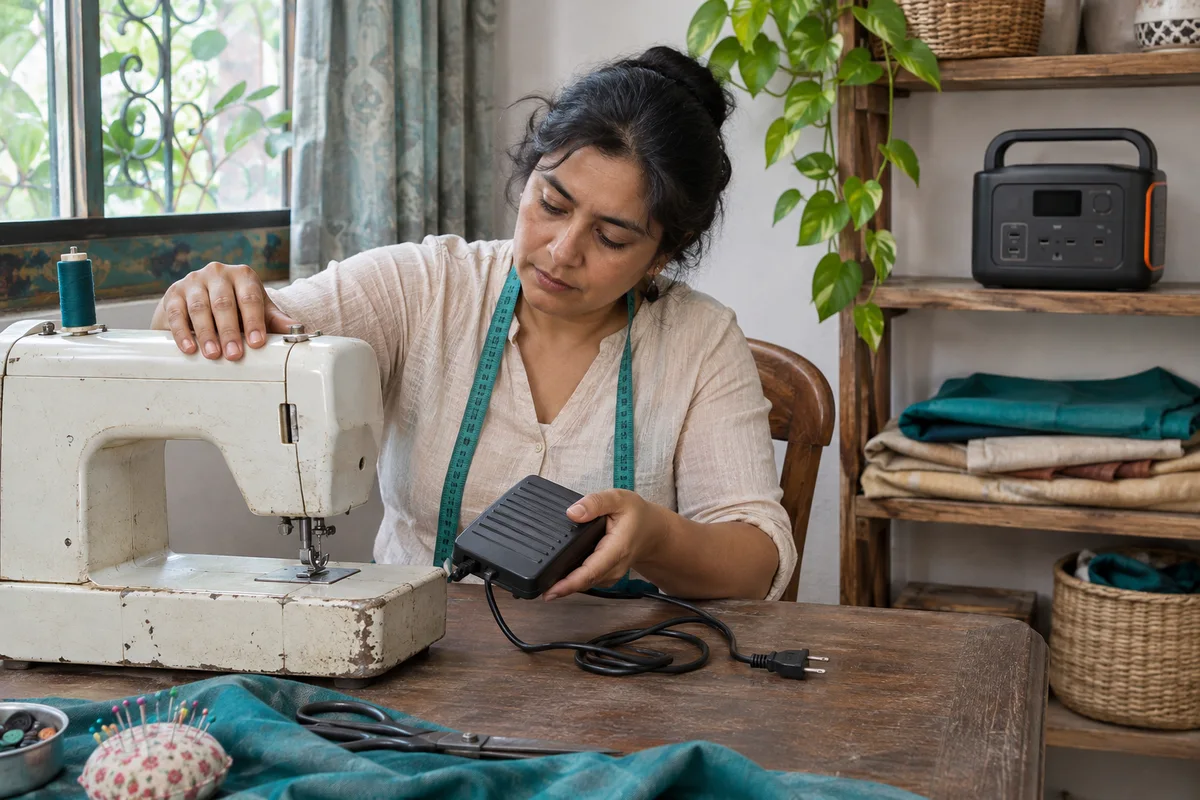
AC180 Sewing Machine Power Planning
Check the machine's approved power source, foot-controller route, work light and session demand before buying AC180 for a temporary sewing station.
Read guide → Power & Outdoors
Elite 100 V2 and a Portable Monitor
Separate USB-C video, monitor power and laptop charging before buying Elite 100 V2 to support a portable dual-screen workspace.
Read guide →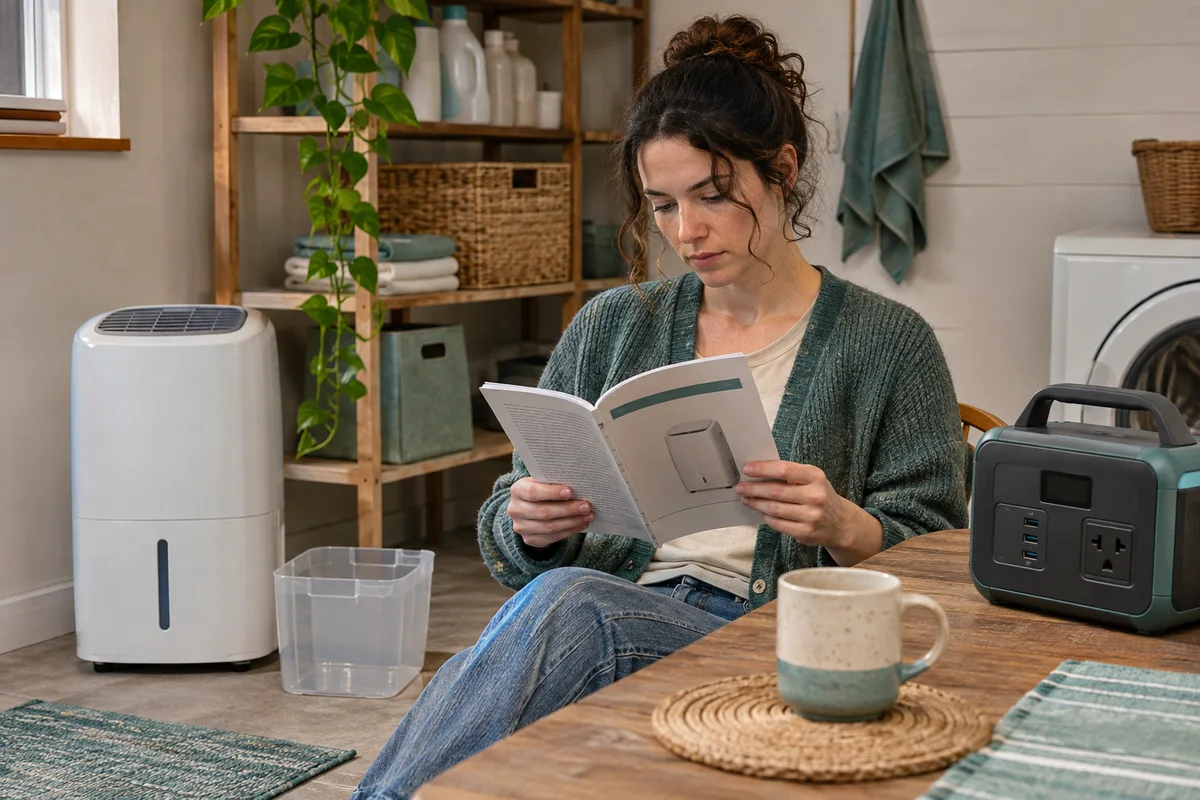 Power & Outdoors
AC180 Dehumidifier Backup
Assess AC180 dehumidifier backup through compressor demand, room conditions, drainage and a defined moisture-control task before buying a station.
Read guide →