

AI-generated scene illustration; not a photograph of the recommended product.
An older room has the right amount of floor space for a power station but an uncertain charging outlet. A small adapter would make the supplied lead fit. That does not establish that the charging arrangement is suitable.
Before buying Elite 100 V2 for an older home, qualify the AC charging location as well as the battery capacity. The manufacturer’s grounding requirement is part of the product’s intended use. It cannot be checked by looking at a convenient place to put the box.
The short answer
The Elite 100 V2 US manual requires grounding when the product is connected to the grid for AC charging. It describes a supplied grounding plug and an appropriately installed grounded outlet, and says not to modify the plug. When grounding is uncertain, consult a qualified electrician.
Do not use an adapter or removed grounding pin to make an unsuitable outlet seem acceptable. This is a pre-purchase location checklist, not instructions for testing, rewiring, or grounding household circuits. An ordinary-looking outlet is not proof of the complete installation behind it.
Contents
- The short answer
- Two different grounding questions
- The older-home scenario
- Location before capacity
- A purchase checklist
- Other charging methods
- Buying advice
- Frequently asked questions
- Sources and verification
Two different grounding questions
The manual distinguishes the AC charging lead from the station’s separate grounding terminal. The lead’s protective-ground requirement during grid charging should not be replaced by an improvised connection to that terminal.
The Elite 100 V2 US manual provides the charging instructions and identifies the terminal separately. It directs users toward support or its grounding guidance for certain appliance arrangements. These are not interchangeable permissions.
A consumer need not invent a grounding scheme before shopping. The appropriate first question is whether the intended charging location already supports the supplied lead under the product instructions. If not, the next conversation is with the relevant qualified professional or property manager.
Our home-wiring boundary guide addresses a different issue: portable power output must not be improvised into household wiring. This page concerns the grid connection used to recharge Elite 100 V2, not a method of powering wall outlets.
The older-home scenario
Imagine a fictional tenant planning to recharge in a spare bedroom. There is a nearby outlet, but its condition and installation are unknown. The tenant wants backup energy, not responsibility for unapproved building work.
Record the proposed location and the manufacturer’s requirements. Ask the property manager about inspection or an approved location when necessary. Do not remove a wall plate, probe conductors, or alter fixtures to complete a consumer checklist.
A different room may offer an appropriate location, but suitability still needs confirmation. Compare access, safe placement, the approved charging instructions, and household traffic. Do not substitute a long improvised cable route for a proper location assessment.
If the building cannot provide a suitable arrangement, delay the purchase or choose a supported alternative after professional advice. A larger battery does not resolve an unsuitable AC charging installation. Nor does a promotional fast-charge time change the outlet requirement.
Location before capacity
Map the ordinary charging routine: where the station will sit, how its supplied lead reaches the approved outlet, and whether the arrangement remains clear of water, obstruction, and household traffic. Follow the manual’s placement and ventilation restrictions.
Keep the supplied plug intact. If the plug does not fit, that is information about the arrangement, not an instruction to change the product. The manual’s answer is an appropriate outlet installed by a qualified electrician.
Avoid declaring an outlet safe from its external appearance, an online photograph, or an unqualified person’s confident answer. This article does not certify any installation or prescribe a socket tester. Ask someone competent to assess the actual premises.
Record the result in plain language: location approved for this product and purpose, or unresolved. Include any restrictions supplied by the professional. A note saying “has three holes” is not equivalent to an electrical assessment.
A purchase checklist
Before ordering, confirm the exact US product, supplied AC lead, charging-location suitability, supported placement, and any property permissions. Add the intended appliances and their independent output compatibility requirements.
The official product page describes the station and package. It does not inspect your home. A retailer’s complete bundle cannot guarantee a particular building connection.
Keep installation-related costs separate from the price of the station. Where an approved outlet or other qualified work is needed, obtain an actual assessment rather than inventing a universal allowance. Do not assume that a small adapter represents the complete cost.
For an already suitable location, the next purchasing questions are capacity, output, and the supported recharge routine. Our combined-charging guide covers a separate specification issue: maximum inputs should not simply be added together.
Other charging methods
The presence of a DC input does not make an unsafe AC arrangement acceptable. A supported alternative charging method has its own source, cable, voltage, current, placement, and operating conditions.
Do not treat solar equipment or a vehicle outlet as an automatic escape from qualification. If you genuinely plan to use a different source, assess that complete arrangement on its own terms. Do not buy accessories based only on connector shape.
This article does not recommend a particular alternative-source installation. Manufacturer support can clarify the exact product requirements, while a qualified professional addresses the premises. Keeping those responsibilities separate prevents a general customer-service answer from becoming a building-safety claim.
Buying advice
Elite 100 V2 can be a candidate when the complete charging location and intended load are suitable under the current instructions. The product’s portability may help with placement, but it does not remove electrical requirements.
Pass on an arrangement that depends on modifying the supplied plug, defeating protective grounding, or treating an unassessed outlet as proven safe. The simpler decision may be to arrange a suitable location before buying stored energy.
If your principal goal is continuity for sensitive equipment, assess that independently. The UPS limitation guide explains why energy storage and critical-load suitability must not be collapsed into one claim. An appropriate charging outlet answers only one part of the decision.
Check the exact partner listing after the location gate passes. Confirm regional version, included lead, seller support, and current availability. No price, installation cost, delivery time, or household electrical outcome is promised here.
Frequently asked questions
Can a plug adapter establish proper grounding?
No. Physical fit does not establish the protective connection required by the charging instructions. Seek qualified assessment.
Should I modify a plug that does not fit?
The cited manual says not to modify it and to have an appropriate outlet installed by a qualified electrician. Do not improvise a workaround.
Is the separate grounding terminal a substitute for the AC lead’s requirement?
Do not assume that. The manual treats the terminal and grid-charging lead separately. Obtain exact guidance for the actual purpose.
Does a larger battery solve an unsuitable outlet?
No. Battery capacity and the suitability of the charging installation are separate questions. Resolve the location first.
Sources and verification
Checked October 29, 2026. The grounding requirement was read from the complete official US manual retained locally. No premises inspection, circuit test, or electrical modification was performed.
- Elite 100 V2 US manual, AC charging grounding instructions
- BLUETTI Elite 100 V2 product and package information
Keep reading
Related guides
 Power & Outdoors
AC180 Grid Enhancement and UPS
Understand AC180 Grid Enhancement and its UPS transfer limitation before choosing backup power for a household continuity requirement.
Read guide → Power & Outdoors
AC180 Voltage and Frequency
Check AC180 regional output voltage separately from selectable frequency and plug shape before pairing imported appliances with a US power station.
Read guide →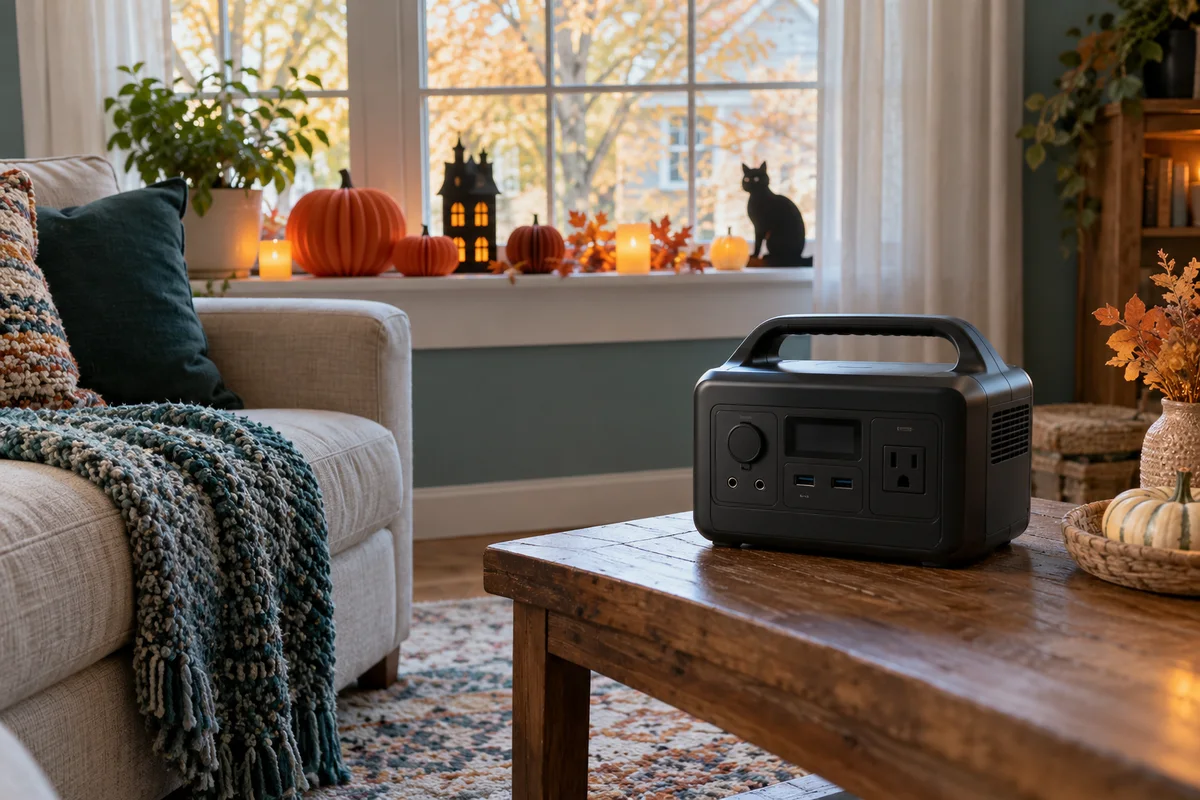 Power & Outdoors
AC180 Indoor Halloween Displays
Plan an indoor Halloween display around AC180 use limits, clear walkways and realistic delivery timing instead of assuming outdoor suitability.
Read guide →