
AI-generated scene illustration; not a photograph of the recommended product.
The fire is out, the hearth looks untidy, and a cordless vacuum is already close by. It is an easy moment to treat ash as ordinary household dust. For someone considering Eureka ReactiSense 440 NEC440BK as an all-purpose cleanup tool, that assumption deserves a firm limit.
A household stick vacuum is not automatically the right purchase for fireplace residue, wildfire contamination, or an unknown powder. Decide what material needs collecting before comparing suction, battery life, or the convenience of a cordless handle.
The short answer
Do not use NEC440 to collect anything burning or smoking, including hot ashes. Its manual explicitly prohibits that use and identifies the machine for household use. A HEPA marketing claim does not establish approval for every ash-cleanup task.
For cold fireplace residue or contamination after a fire, obtain equipment and cleanup guidance appropriate to the exact material and situation. This article does not certify NEC440 for ash, recommend a cooling interval, or provide hazardous-material cleanup instructions.
Contents
- The short answer
- Identify the material
- The hot-ash limit
- Beyond ordinary dust
- The equipment question
- Buying advice
- Frequently asked questions
- Sources and verification
Identify the material
A living-room cleanup can involve several different jobs: ordinary dust on a dry floor, loose packaging near a fireplace, residue inside a firebox, or contamination from a larger fire. The fact that these materials occupy the same room does not make them interchangeable.
Start by identifying the source and the applicable instructions. If the material is unknown, keep the household vacuum out of the decision until the uncertainty is resolved. Do not use suction as a way to discover what a powder contains.
A product page describing fine-dust pickup concerns the manufacturer’s stated household cleaning use. It should not be expanded into a claim about hazardous debris. The tool category, intended material, handling method, and disposal requirements need to align.
This distinction can save an unnecessary purchase. Someone who needs routine floor cleaning may reasonably compare a stick vacuum. Someone whose main job is ash removal needs a different equipment question before buying anything.
Our NEC440 household-tool guide covers ordinary accessory selection. Those attachments do not broaden the machine’s approved material range.
The hot-ash limit
The NEC440 manual prohibits collecting burning or smoking items and explicitly includes hot ashes. It also prohibits use around flammable or combustible liquids and requires the specified filters to be installed.
Do not interpret “not visibly glowing” as a manufacturer-approved temperature check. We have not established a safe waiting period for a fireplace, stove, barbecue, or any particular fuel. Follow the appliance manufacturer’s instructions and appropriate fire-safety guidance.
Likewise, a vacuum stopping does not make unsuitable material safe. A motor-protection feature is not permission to exceed the intended use or rely on a shutdown to prevent every hazard.
The thermal-cutoff article explains a separate ordinary maintenance issue. Its restart guidance must not be repurposed into an ash-cleanup procedure.
If equipment has already been used outside its permitted application, stop using it and seek appropriate manufacturer or emergency guidance for the situation. Do not dismantle a suspect battery appliance or attempt to clean potentially hot material out of it using an improvised method.
Beyond ordinary dust
Wildfire cleanup is a distinct situation with potentially multiple hazards. CDC/NIOSH guidance describes damaged structures, hazardous materials, and ash exposure, and notes that professional cleanup may be more appropriate than homeowner work.
Its advice about suitable filtration does not name or approve NEC440. A general recommendation for a type of filtration cannot be converted into a model-specific hazardous-cleanup endorsement.
The same reasoning applies to dust from an unknown renovation. Do not classify it as safe ordinary debris because it looks dry. Ask the responsible contractor or an appropriately qualified professional about the material and required cleanup arrangement.
This guide does not provide respirator selection, lead or asbestos handling, debris disposal, or exposure-treatment instructions. Those decisions require guidance matched to the actual hazard and local circumstances.
The purchase consequence is straightforward: keep a routine household-cleaning shortlist separate from a specialist cleanup decision. Owning one convenient vacuum should not pressure a household to use it for every material.
The equipment question
For a specialist task, ask the equipment manufacturer about the exact intended material, its condition, the required filters, and the permitted collection and disposal method. Look for affirmative, model-specific instructions rather than an absence of warnings in a marketplace description.
Do not assume that an optional filter or accessory converts a household machine into another equipment category. Compatibility of a part and approval for a task are different things.
Before purchasing, make a small evidence card:
- What material is actually present?
- Which appliance or event produced it?
- What authoritative cleanup guidance applies?
- Is the exact proposed machine explicitly suitable?
- What collection, maintenance, and disposal requirements follow?
- Who will resolve uncertainty before work begins?
If the answers are not clear, postpone the equipment decision. Buying a stronger motor or a larger battery does not supply missing approval.
For ordinary floor dirt, use the household vacuum’s own instructions. For specialist residue, compare tools and professional services intended for that job. This article deliberately makes no recommendation for a particular ash vacuum.
Buying advice
NEC440BK can be considered for supported dry household cleaning where its format, attachments, maintenance routine, and seller terms fit the home. That recommendation does not extend to ash collection or hazardous remediation.
A household with both everyday floor-cleaning needs and a fireplace should budget for separate solutions when the instructions call for them. Trying to force one device into both roles can make a low initial purchase price less useful.
If ash removal is the primary reason for shopping, skip NEC440 unless the manufacturer provides explicit applicable approval for the exact task. The sources reviewed here do not establish that approval.
If routine dust and crumbs are the real task, compare the vacuum normally, including battery requirements and filter maintenance. Our washable-parts guide explains why even permitted maintenance needs the right method and complete drying.
The partner CTA here is a listing for a household vacuum, not an ash-cleanup system. Check the exact NEC440BK identity, seller, package, current availability, and return conditions only for a suitable intended use. Do not interpret the presence of an affiliate link as a recommendation to perform the prohibited task.
Frequently asked questions
Hot ashes?
No. The manual explicitly prohibits collecting hot ashes and other burning or smoking material.
Cold residue?
This guide does not establish NEC440 approval for it. Obtain instructions for the exact material and equipment rather than inferring permission.
HEPA wording?
It does not automatically qualify a machine for every hazardous or specialist cleanup application.
Ordinary floors?
Evaluate NEC440 for the household uses supported by its instructions, separately from ash removal.
Sources and verification
Checked October 28, 2026. Evergreen equipment-selection guidance, not a report of a current local fire or a cleanup test.
- Eureka NEC440 manual, safety instructions
- CDC/NIOSH wildland-fire cleanup hazards
- Eureka ReactiSense 440 product information
Keep reading
Related guides
 Cleaning
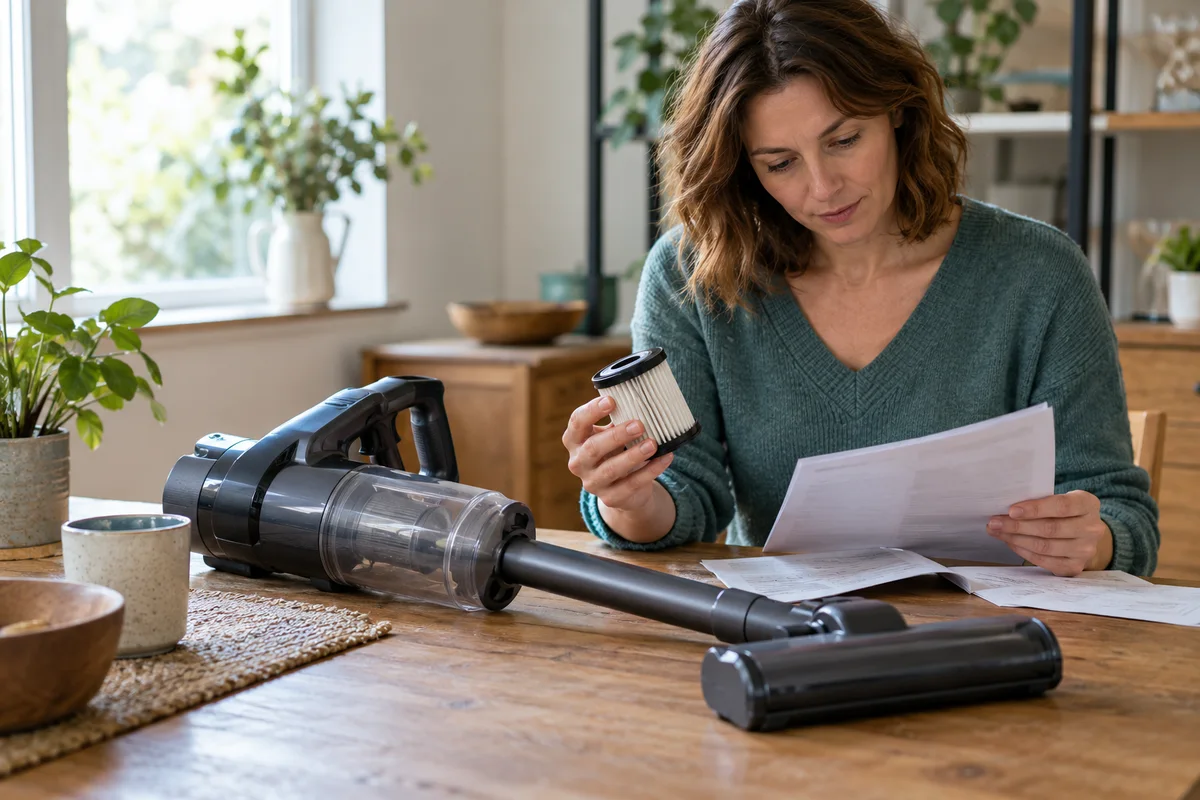
NEC440 HEPA Claims
Read Eureka NEC440 filtration wording against the exact test scope instead of treating a HEPA label as whole-home or clinical proof.
Read guide →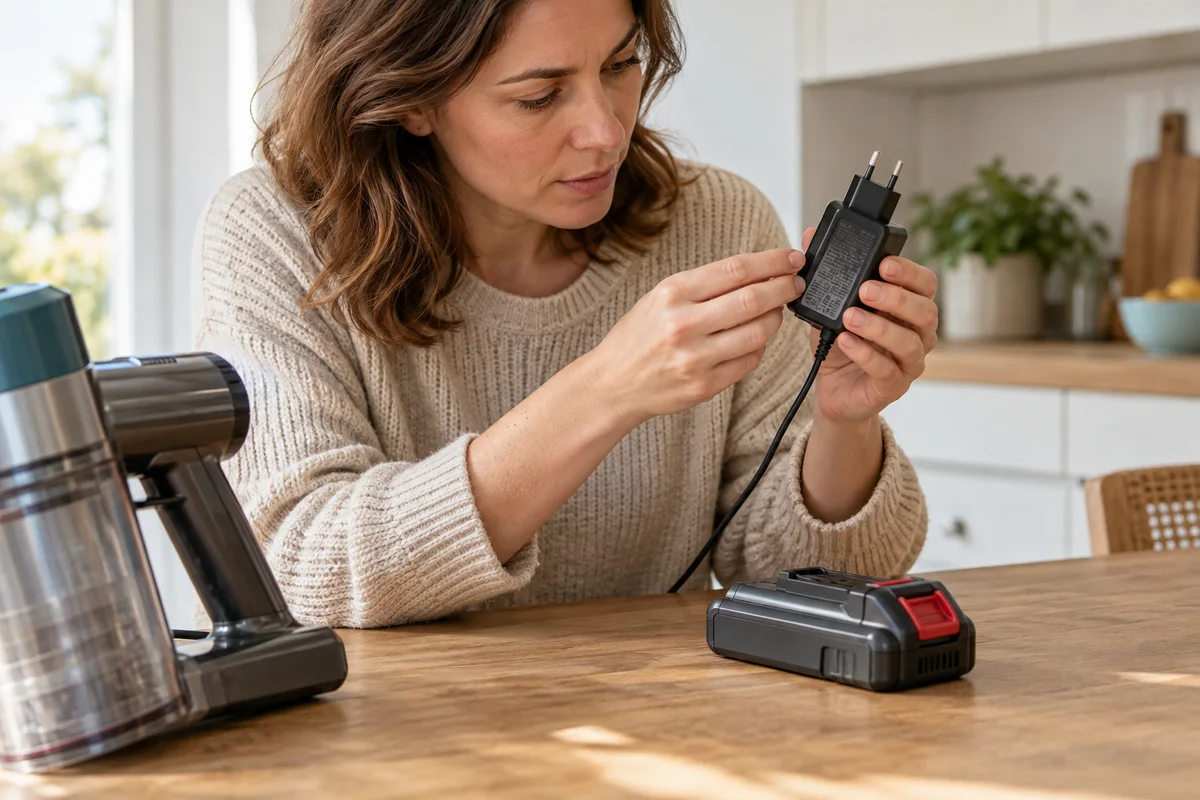 Cleaning
NEC440 Charger: Match the Part, Not the Plug
Check Eureka NEC440 charger identity and the official replacement route before buying a lookalike adapter or replacing a serviceable cordless vacuum.
Read guide →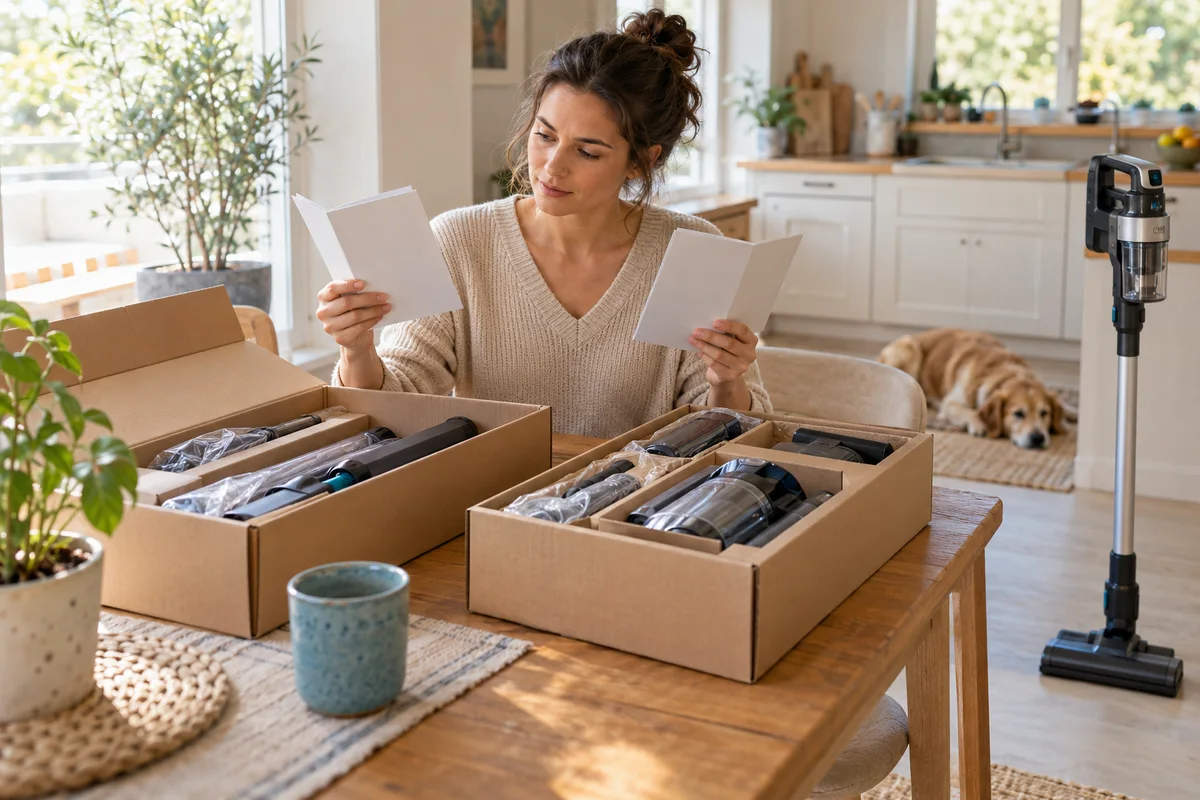 Cleaning
ReactiSense 440 vs 410 and 451: Match the Exact Model
Compare Eureka 440, 410 and 451 by exact identity, supplied tools and task fit rather than transferring a family chart into the wrong order.
Read guide →