

AI-generated scene illustration; not a photograph of the recommended product.
A shopper sees a blue-light mode described beside blemish-related marketing and hopes it will replace the rest of an acne-care plan. The device is attractive because it can be used at home. Before buying a Nanoleaf mask for that reason, separate the manufacturer’s appearance language from evidence about a particular condition, device and person.
The short answer
Nanoleaf describes a blue mode in its face-mask information, but a color label is not proof that the mask treats every form of acne or replaces professional care. The American Academy of Dermatology explains that light-based approaches differ and that no single light approach treats every type of acne lesion.
Discuss the intended concern with a qualified dermatologist where appropriate, especially when acne is painful, persistent, scarring or uncertain. Do not choose a mask by promising yourself a guaranteed response. This guide does not diagnose acne, prescribe treatment or establish clinical effectiveness for the partner-listed mask.
Contents
- The short answer
- Describe the goal without self-diagnosing
- Read the manufacturer claim at the right level
- Keep category evidence separate from product evidence
- Do not replace a care plan with a shopping comparison
- Build an evidence and expectation card
- Compare ownership without inventing results
- Buying advice
- Frequently asked questions
- Sources and verification
Describe the goal without self-diagnosing
A clearer-looking complexion, active breakouts, blackheads, painful deeper lesions and marks left after acne are not interchangeable shopping goals. A product page can place several appearance benefits together without establishing that the same evidence applies to every concern.
Write the actual reason for considering the device in plain language. If the concern needs diagnosis or a treatment decision, address that with an appropriate professional rather than translating a photograph into a condition label yourself.
This step can change the purchase immediately. Someone seeking a complementary device under a suitable care plan faces a different decision from someone expecting it to replace help for a significant untreated problem. The second expectation should not be encouraged by a brighter-looking mode photograph.
Read the manufacturer claim at the right level
The Nanoleaf product page describes several visible modes and uses appearance-oriented wording for blue light. Treat that as the manufacturer’s product description, not our independent clinical finding.
Match the actual delivered model and its labeling. A current webpage may present a different version from older stock or a seller’s selected option. Do not infer that every Nanoleaf wellness product has identical optical settings, instructions or applicable evidence.
Our FDA-claim verification guide addresses matching a regulatory claim with a device record. That is a different task from deciding whether a particular person’s skin concern is likely to benefit. Neither a badge nor a mode name answers both questions automatically.
Keep category evidence separate from product evidence
The AAD explanation of lasers and lights for acne distinguishes different light approaches and their limitations. Its general discussion should not be copied into a device-specific promise for this mask.
In particular, a statement about some visible-light devices is not proof that all blue modes have equivalent performance. Device design, labeling, treatment context and the concern being addressed matter. We have not conducted or reviewed a head-to-head clinical trial establishing that this mask outperforms alternatives.
Do not transfer a generic schedule from an educational article to the mask. Use the instructions applicable to the exact device and any individualized professional advice. A longer exposure or more frequent session is not an evidence-based shortcut supplied by this buying guide.
Do not replace a care plan with a shopping comparison
A dermatologist can assess the actual concern and discuss whether an at-home light device has a role. That role may be complementary, inappropriate or uncertain for the individual. A retail article should leave room for all three answers.
Do not stop prescribed treatment, combine products, increase exposure or introduce a photosensitizing substance because a mask has an appealing mode name. Relevant medicines, skin conditions, light sensitivity and eye concerns need the applicable precautions and qualified advice.
Our light-sensitivity guide covers a separate pre-purchase boundary. Passing a manufacturer-directed check does not prove treatment effectiveness, and hoping for effectiveness does not remove a safety concern. Suitability and benefit are distinct questions.
Build an evidence and expectation card
| Question | What to establish before spending |
|---|---|
| Concern | The actual goal, with professional assessment where needed |
| Exact device | Delivered model and applicable labeling |
| Claim | Manufacturer appearance wording versus clinical evidence |
| Care plan | Whether a qualified professional sees an appropriate role |
| Routine | Supported use and required precautions |
| Decision point | What would justify keeping or declining the device |
Keep this card modest. It is not a medical chart or an invitation to diagnose changes from daily photographs. Its purpose is to prevent an undefined expectation from becoming an expensive promise.
If a seller supplies a study, check which device and population it actually concerns. Do not assume evidence for another mask, a professional procedure or a different light source transfers to this retail product. Ask for clarification when a claim relies on that leap.
Compare ownership without inventing results
An at-home mask adds a routine: appropriate setup, protection, charging, care and storage. The fact that it can fit into an evening does not establish that it will deliver the intended result. Count the effort and uncertainty alongside the price.
Our mask care guide addresses ownership tasks. Do not turn good care into proof of effectiveness, or assume an independent timer setting is a clinically validated dose for the concern you have.
Avoid shopping by imagined before-and-after outcomes. We have not used the mask, measured changes in acne or established a time to improvement. If symptoms worsen or another concerning reaction occurs, stop and seek appropriate professional guidance rather than treating it as a sign that the device is working.
Buying advice
Consider the mask only after the exact model, relevant precautions, realistic expectations and any needed professional guidance are clear. Read our Nanoleaf overview for the broader purchase, then confirm the actual seller’s selected package and return conditions.
Pass if the purchase depends on curing every type of acne, guaranteed results by a fixed date or replacing care that has not yet been properly assessed. Choosing not to buy can be the correct outcome when the advertised appearance goal does not match the actual concern.
A lower price does not strengthen the clinical evidence. Similarly, paying more does not guarantee a better response. Keep the decision tied to what is documented for the device and appropriate for the person, not the number of colors on the controller.
Frequently asked questions
Does blue light mean every kind of acne is treated?
No. AAD distinguishes acne types and the capabilities of different approaches. A color label is not a universal treatment claim.
Can I copy a general light-therapy schedule?
No. Do not transfer another device’s routine. Follow applicable instructions and individualized qualified advice.
Does an FDA-related badge guarantee that I will benefit?
No. Device-record matching, intended use and individual effectiveness are separate questions.
Have you tested acne results with this mask?
No. This is documentation-based purchase guidance, not a clinical trial or personal treatment recommendation.
Sources and verification
Checked November 19, 2026. Manufacturer mode wording and dermatology education reviewed. No diagnosis, treatment, clinical comparison or outcome test was performed.
- Nanoleaf face-mask product and mode descriptions
- AAD: Lasers and lights for acne and their limitations
- AAD: Red-light devices and individual suitability
Keep reading
Related guides
 Health & Wellness
Nanoleaf Mask Eye Protection: Check the Supplied Parts
Check the correct Nanoleaf mask eye-protection attachments and instructions before buying, rather than assuming ordinary glasses or closed eyes are substitutes.
Read guide →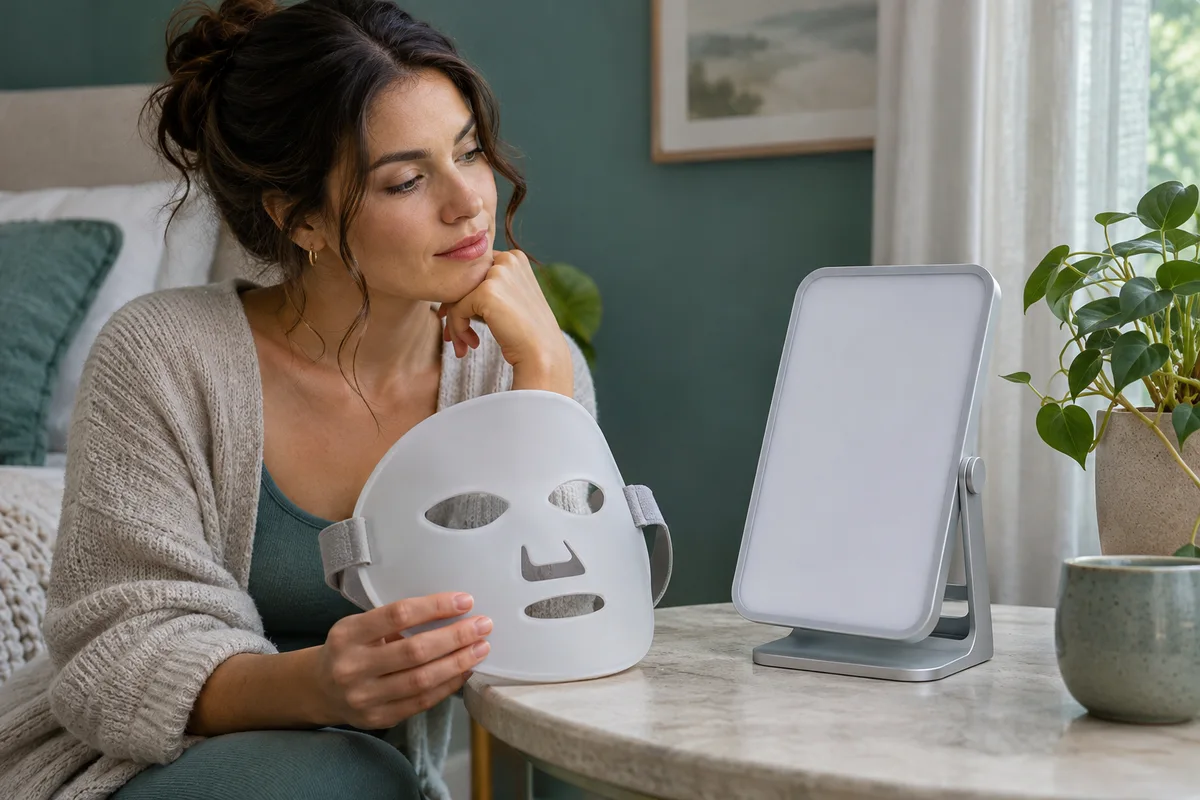 Health & Wellness
Nanoleaf Face Mask vs Plug-In Panel
Compare fit, charging, outlet placement and storage before choosing the Nanoleaf face mask instead of a plug-in light panel.
Read guide →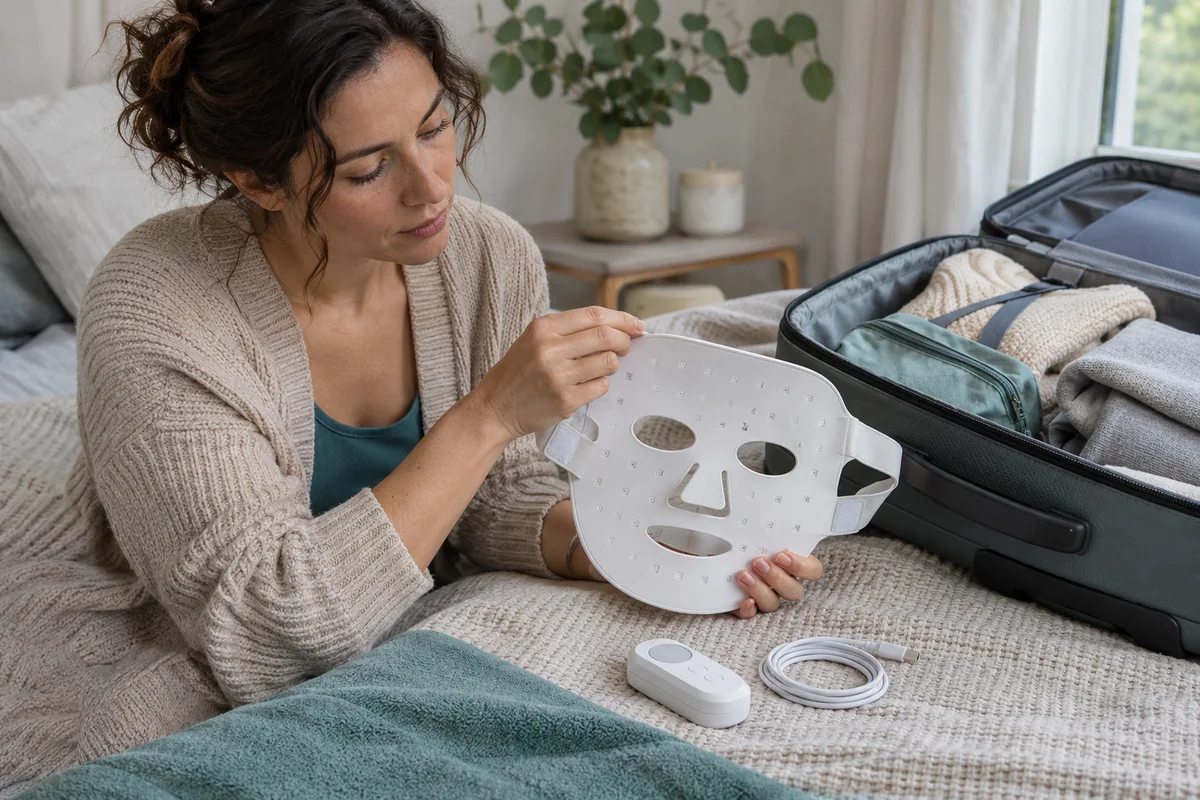 Health & Wellness
Nanoleaf Face Mask Air Travel Checklist
Check the Nanoleaf mask's actual battery label, airline requirements and protected packing before choosing it for a trip or gifting it abroad.
Read guide →