
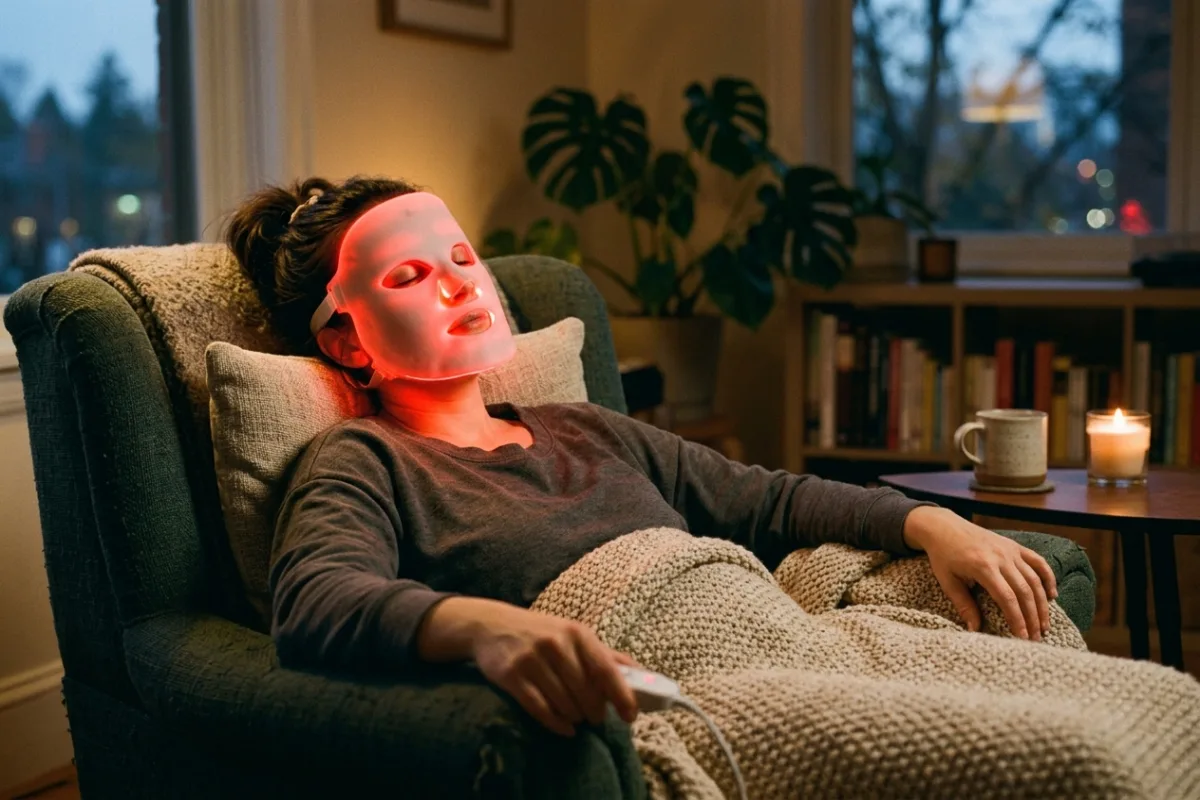
Your skincare shelf already holds a cleanser, a retinol, and a vitamin C serum, but none of them touch the two things that actually bother you at night. Some evenings your skin looks dull after a long day at a screen; other nights it is post-workout flushing or a stress breakout along the jaw. The one LED mask you tried before only had a single light mode and a rigid shell that pinned you in front of a mirror. What you actually want is one mask you can strap on, pick a mode for tonight's specific problem, and wear hands-free while you answer emails or sit on the couch.
This review is built from published manufacturer specifications and the current product documentation for the LED light therapy face mask category, not from a laboratory test bench. It compares the LED Light Therapy Face Mask against the rivals a shopper actually sees beside it, for one clearly defined household job.
The verdict
For a nightly routine that needs to flex between different skin concerns without adding a second device, the Nanoleaf LED Light Therapy Face Mask is the strongest match among the masks compared here. Its published spec sheet lists seven light modes, red, green, blue, cyan, yellow, purple, and white, each paired with 850nm near-infrared, where flagship rivals typically stop at two or three fixed wavelengths. The flexible silicone shell is listed at 258 grams and contours to the face, so it can be worn hands-free instead of held or propped like a rigid mask. Among mode variety, all-day comfort, and onboard controls that skip a companion app, this is the more complete option without stepping up to flagship-clinical pricing.
Check the current LED Light Therapy Face Mask listing →LED Light Therapy Face Mask at a glance
These are the published specifications that matter most for the use case above. Manufacturers revise hardware between production runs, so confirm the current listing before ordering.
| LED count | 432 LEDs (108 four-LED bulbs), RGB plus 850nm near-infrared |
|---|---|
| Light modes | 7 modes: red, green, blue, cyan, yellow, purple, white, each paired with 850nm NIR |
| Session controls | 5 intensity levels, 1-30 minute digital timer, auto shut-off |
| Battery and charging | 2500mAh, up to 80 minutes per charge, about 3.5 hours to recharge via USB-C |
| Fit and certification | Flexible silicone, 258g (9.1oz), FDA-cleared, CE and RoHS certified |
Why it wins this category
A better spec sheet is only useful when it removes work from a real routine. These are the four places where the LED Light Therapy Face Mask changes the outcome rather than the marketing copy.
Seven Modes, One Mask
Most rivals in this category settle on two or three fixed wavelengths, splitting an acne mode from an anti-aging mode across separate devices. The manufacturer lists seven built-in light modes, red, green, blue, cyan, yellow, purple, and white, each layered with 850nm near-infrared, switchable on a single mask instead of buying a second device for a second concern.
No App Required
Session length, intensity, and light mode are all set with onboard buttons and a digital timer display rather than a companion app. Where a rival like CurrentBody's Series 3 leans on its MyDose app for personalized dosing, this mask's controls live on the device itself, which matters on a night when you just want to press a button and lie down.
Soft Silicone Over A Rigid Shell
At a listed 258 grams, the flexible silicone contours to the face rather than holding a fixed dome shape. That matters next to a rigid mask like Shark's CryoGlow, listed at roughly 1.5 pounds and built to be held or propped on a stand, since a soft mask can be worn hands-free while doing something else.
Full Spectrum Below Flagship Pricing
The published spec sheet lists 432 LEDs across seven wavelength combinations, a broader mode count than single-purpose rivals like Omnilux's red-and-near-infrared-only mask. That range is positioned below flagship-clinical devices such as CurrentBody's Series 3, making a multi-mode routine accessible without paying premium pricing for it.
How it compares to the alternatives
Each of these is a capable product with a real audience. The question is not whether they work, but which one fits the job described above with the least compromise.
CurrentBody Skin LED Light Therapy Mask (Series 3)
flagship six-wavelength mask with app-based dosing from a dermatology-tech brand
Where it is strong: Its published spec sheet lists 750 Veritace-certified LEDs across six wavelengths, including a deep 1072nm near-infrared setting, with MyDose app personalization for tailoring each session to a specific concern.
Where it falls short here: That personalization runs through a companion app rather than onboard controls, and the listed price sits at flagship-clinical tier, well above a mask meant to be a quick, no-fuss step before bed rather than an app-managed routine.
Omnilux Contour Face
dermatologist-favorite anti-aging mask built around exactly two wavelengths
Where it is strong: The manufacturer lists FDA clearance and a calibrated output across 132 dual-chip LEDs, and the red-and-near-infrared pairing has a long track record in dermatology offices for anti-aging use.
Where it falls short here: The listed wavelength lineup skips blue, green, cyan, yellow, and purple entirely, so anyone who wants a breakout-clearing or brightening mode needs Omnilux's separate device for that, and the fixed 10-minute program leaves no adjustable timer.
Shark CryoGlow LED Face Mask
mainstream cooling-equipped mask built as a rigid shell
Where it is strong: It pairs red, blue, and deep-infrared iQLED with InstaChill active cooling at the manufacturer's listed temperature levels, a de-puffing feature no flexible-mask competitor in this set offers.
Where it falls short here: The rigid shell is listed at roughly 1.5 pounds and needs a stand or hand-holding rather than sitting hands-free on the face, and its longest listed session tops out under Nanoleaf's 30-minute ceiling.
Weighed against those three, the LED Light Therapy Face Mask remains the one that covers this scenario end to end without asking you to accept a workaround somewhere else.
Who it fits
Multi-Concern Nightly Routines
If the skin issue you're treating changes week to week, dullness one night, redness or a breakout the next, a mask built around seven switchable modes fits better than a single-wavelength device that only ever does one job.
Hands-Free, On-The-Go Sessions
A cordless, 258-gram silicone mask that runs up to 80 minutes per charge suits anyone who wants to fold laundry, answer email, or watch something during a session instead of sitting still holding a rigid mask in place.
First LED Mask, No App
If you want to try light therapy without downloading and configuring an app or interpreting personalized dosing settings, a mask with onboard buttons and a simple digital timer is the more direct, lower-friction way to get started on a first attempt.
What to be realistic about
No product is the right answer for every household. Skip this one, or plan around these points, if any of them describe your situation.
- Skip this mask if you're pregnant, nursing, or managing a photosensitivity condition, and talk to a doctor before trying any LED light therapy device, this one included.
- Skip it if you're currently taking medication that increases light sensitivity, or have an eye condition, epilepsy, or light-triggered migraines, since light therapy may not be appropriate there.
- Skip it if you specifically want built-in active cooling for under-eye puffiness or a hands-free rigid stand setup, since masks built around that feature fit that use case better.
Living with it after week one
Charge the mask fully before first use; a full charge takes about 3.5 hours and is listed as good for up to 80 minutes of use. Cleanse and dry your face, fit the eye inserts, and secure the mask with the velcro straps. Pick a mode for tonight's concern, set an intensity level and a timer between 1 and 30 minutes (the manufacturer recommends 5 to 10 minutes), then let the auto shut-off end the session. Wipe the silicone with a soft, damp cloth afterward, never submerge it, and keep sessions on a consistent three-to-five-times-weekly schedule instead of occasional use.
Frequently asked questions
Is this mask safe to use during pregnancy or with a photosensitivity condition?
The manufacturer's guidance directs anyone with a skin condition, a diagnosed photosensitivity disorder, or a pregnancy to consult a healthcare provider before use, since this is a cosmetic device rather than a medical treatment. The same caution applies to anyone taking medication that increases light sensitivity. Wearing the included eye inserts and avoiding direct eye exposure to the LEDs is recommended for every session.
How long until you notice a difference, and how often should you use it?
The manufacturer describes visible improvements within roughly two to six weeks of consistent use, framed as a general observation rather than a guarantee, with results building further over a longer regular routine. Recommended session length is 5 to 10 minutes, and the timer supports sessions up to 30 minutes if you choose to extend one.
Does this replace professional dermatology treatment or a doctor's care?
No. Manufacturer materials describe the mask as an at-home cosmetic light therapy device, not a substitute for prescription treatment, professional dermatology care, or a medical device. Anyone managing a diagnosed skin condition, persistent acne, or a photosensitivity concern should treat it as a complement to professional guidance rather than a replacement for it.
Keep reading
Related guides
 Health & Wellness
Bob and Brad Q2 Pro Mini Massage Gun: Pocket Power With Heat and Cold
For anyone who wants percussion, heat, and cold relief in one pocket-sized tool instead of juggling a massage gun, a heating pad, and an ice pack separately, this is that answer.
Read review → Health & Wellness
Laifen P3 Pro Electric Shaver for Carry-On-Only Business Travelers
A palm-sized, USB-C electric shaver for people who travel with one bag and need a fast, waterproof shave that survives red-eye flights and hotel bathrooms without a wall outlet.
Read review → Health & Wellness
Wavytalk Glow Time LED Face Mask For Multi-Concern Combination Skin
A budget-conscious guide to choosing an at-home LED face mask that switches between four light modes for breakouts, fine lines, and dullness without flagship-tier pricing.
Read review →