
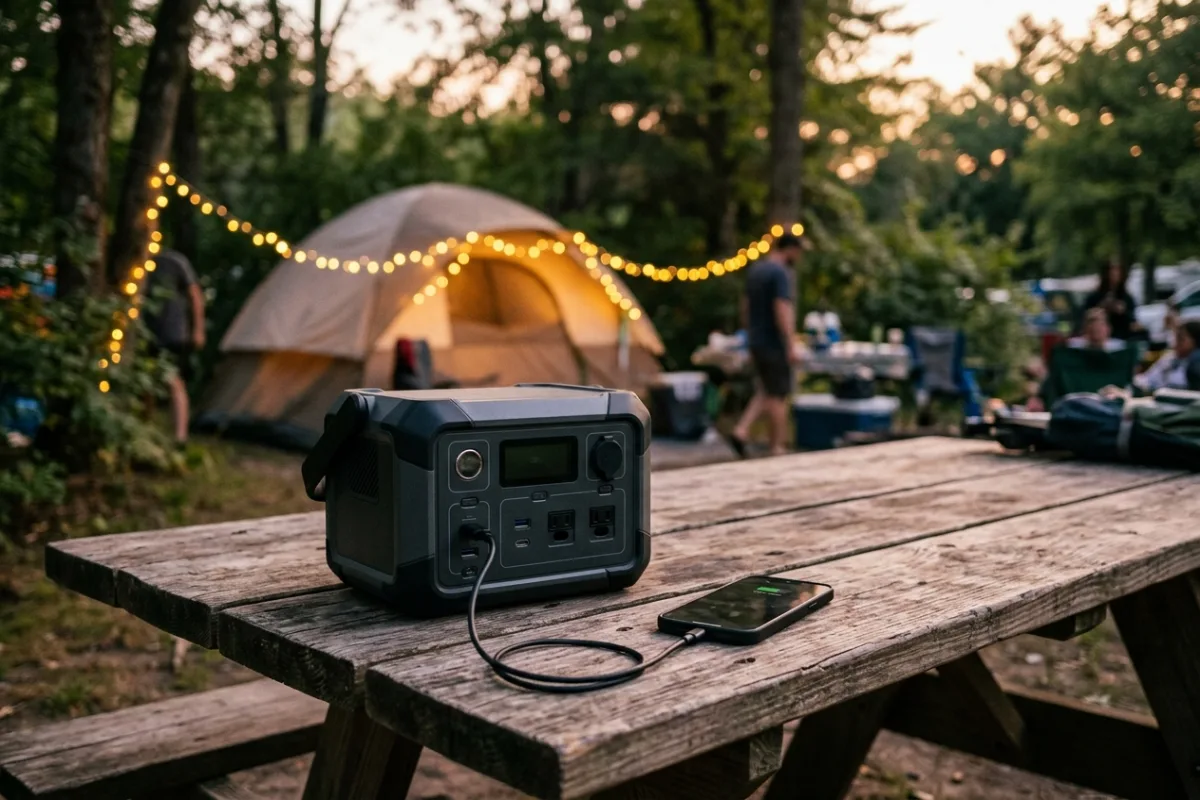
The site you picked for the weekend is a forty-minute walk from the nearest outlet, and everything you brought needs to survive two nights on battery alone. A phone, a headlamp, a small fan for the tent, and a laptop for the drive back all draw down at different rates, and you would rather not haul a generator-sized box across gravel to keep them topped up. The same box also sits in a hall closet the rest of the month, ready to run a lamp and charge a phone if the power drops during a storm. What you need is something you can lift with one hand, set on a picnic table or a shelf, and never think about twice.
This review is built from published manufacturer specifications and the current product documentation for the portable power station category, not from a laboratory test bench. It compares the Jackery Explorer 300 Portable Power Station against the rivals a shopper actually sees beside it, for one clearly defined household job.
The verdict
For a camper or RV traveler who cares more about grams than gadgets, the Jackery Explorer 300 is the strongest pick in this class. Its published weight keeps it lighter than the higher-output rivals in this comparison, while its 300W AC outlet still runs a real appliance instead of only trickle-charging phones. There is no companion app to configure and no learning curve before a trip, which matters when you are packing in the dark. For anyone prioritizing portability and simplicity over maximum capacity, it is the more sensible box to throw in the trunk.
Check the current listing →Jackery Explorer 300 Portable Power Station at a glance
These are the published specifications that matter most for the use case above. Manufacturers revise hardware between production runs, so confirm the current listing before ordering.
| Battery Capacity | 293Wh lithium-ion battery pack |
|---|---|
| AC Output | 300W rated, 500W surge, pure sine wave, two AC outlets |
| Weight | About 7.1 lbs (3.2 kg) |
| Ports | 2 AC outlets, 4 USB-A, 1 USB-C PD (60W), 1 12V car port |
| Recharge Time | About 4 hours from a wall outlet, or roughly 4-5 hours with a 100W solar panel |
Why it wins this category
A better spec sheet is only useful when it removes work from a real routine. These are the four places where the Jackery Explorer 300 Portable Power Station changes the outcome rather than the marketing copy.
Light Enough To Grab And Go
At around 7.1 pounds, the manufacturer lists this unit as noticeably lighter than most 300W-class power stations, which matters when it has to ride in a backpack pocket or a bike pannier instead of a car trunk. You can move it from tent to picnic table in one hand without rearranging anything else you are carrying on the trip.
Real AC Output, Small Frame
A 300W rated, 500W surge AC outlet is enough for a real appliance, not just a phone charger, which separates it from ultralight units that cap out well below 200W. That headroom covers a portable fan, a CPAP for one night, or a laptop charger running alongside a headlamp on the same trip.
No App, No Learning Curve
The manufacturer's control layout is a single panel of buttons and a basic display, with no companion app or firmware setup required before first use. For a weekend trip packed the night before departure, that means less time reading a manual and more time confirming the battery is actually charged.
Entry-Level Price For The Category
Jackery positions the Explorer 300 at an entry-level tier within its own lineup, well below the flagship models built for whole-home backup. For someone who only needs to keep small electronics alive on a camping trip or during a short outage, that lower tier avoids paying for capacity and features the trip will never use.
How it compares to the alternatives
Each of these is a capable product with a real audience. The question is not whether they work, but which one fits the job described above with the least compromise.
EcoFlow RIVER 2
A fast-charging small power station built for spontaneous weekend camping trips
Where it is strong: The manufacturer lists a full recharge from empty in about an hour on a wall outlet, which is genuinely useful when a trip gets planned the same afternoon it starts.
Where it falls short here: Published weight puts it noticeably above the Explorer 300, and EcoFlow's own app-driven feature set adds a setup step that a grab-and-go camping kit does not need.
Anker SOLIX C300
A higher-capacity power station aimed at longer, multi-day off-grid trips
Where it is strong: A larger published capacity than the Explorer 300 gives it more runway for a multi-day trip without any recharge at all, which suits campers who stay off-grid longer.
Where it falls short here: That extra capacity comes with a published weight well above the Explorer 300, undermining the one-hand, grab-and-go handling this comparison is really built around for shorter trips.
Goal Zero Yeti 200X
An ultralight power station built for minimal phone-and-headlamp backpacking kits
Where it is strong: Its published weight is lighter than the Explorer 300, which genuinely appeals to backpackers who count every single ounce in a loaded pack.
Where it falls short here: A lower published AC output and smaller battery capacity mean it struggles with anything beyond phones and small lights, ruling out the fan or laptop-charging use this comparison covers.
Weighed against those three, the Jackery Explorer 300 Portable Power Station remains the one that covers this scenario end to end without asking you to accept a workaround somewhere else.
Who it fits
Weekend Car Campers
Anyone who drives to a campsite for two or three nights and wants phones, a headlamp, and a small fan charged without babysitting a generator will find the capacity and weight well matched to that trip length.
Small Apartment Blackout Kits
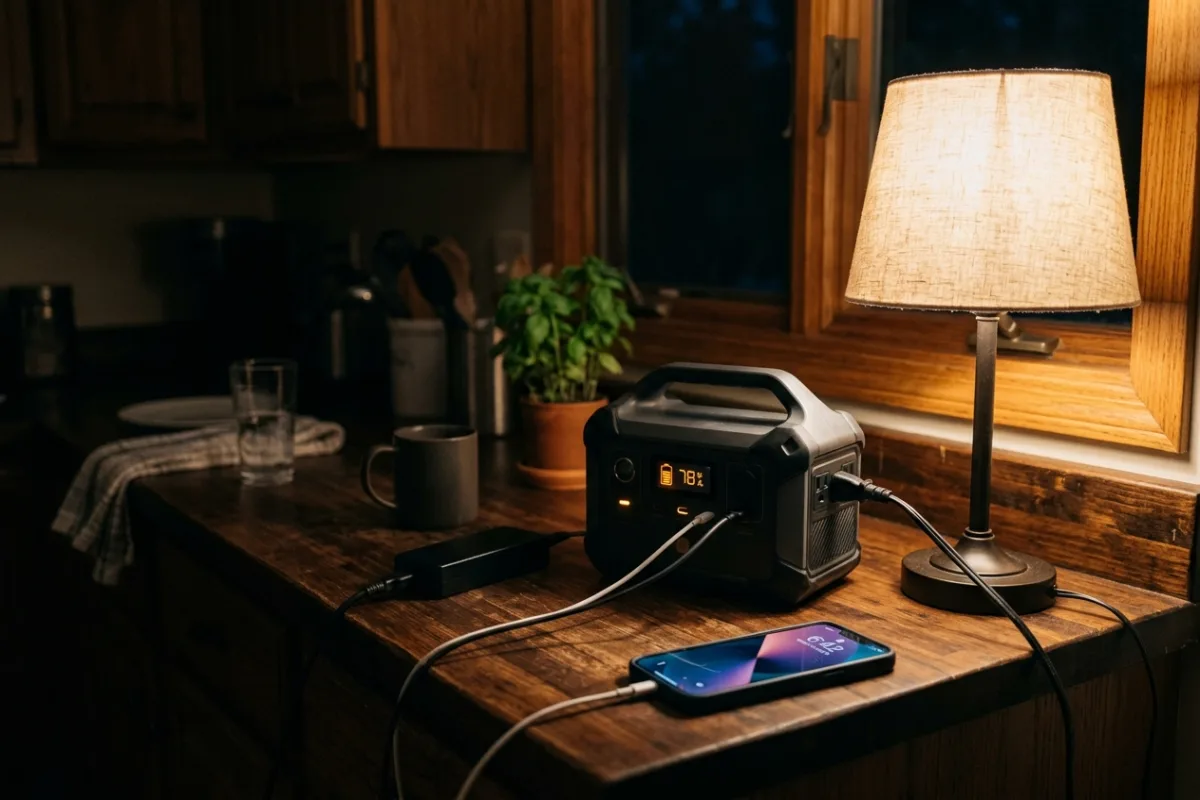
Renters who just need a lamp, a phone, and a router running through a short outage get that coverage from a box small enough to store on a closet shelf instead of a garage or a bulky generator.
RV Owners Wanting Backup Power
Travelers who already have shore power most nights but want a lightweight backup for the occasional dry-camp stop can keep this by the door without adding it to the rig's permanent electrical setup or scheduling an installer visit.
What to be realistic about
No product is the right answer for every household. Skip this one, or plan around these points, if any of them describe your situation.
- Skip it if you run a CPAP nightly or need a mini fridge running for days, since capacity here suits light electronics, not medical or refrigeration loads.
- Skip it if same-day full recharges matter more than weight, since faster-charging rivals in this comparison will get you back to full sooner.
- Skip it if you are outfitting a whole cabin or job site, where a higher-capacity station built for that load will serve you better than this lighter, trip-sized unit.
Living with it after week one
Charge it fully before the trip using the wall adapter, then top it off with a small solar panel during the day if you are out longer than a night or two. Keep it in its own pouch or a padded corner of a duffel rather than loose in a trunk, since the ports are exposed on one face. At home between trips, store it at roughly half charge in a closet away from direct heat, and plug it in for a top-up every couple of months so it is ready the next time plans come together quickly.
Frequently asked questions
Can it run a mini fridge or a CPAP machine all night?
The published 293Wh capacity and 300W output can handle a CPAP for a single night in most cases, but a mini fridge running continuously will draw it down faster than a full weekend trip allows, so plan for shorter, lighter loads instead.
How many devices can it charge at once?
Between the two AC outlets, four USB-A ports, USB-C PD port, and car port listed by the manufacturer, it can keep several small devices topped up at the same time, though total output is still capped at the rated 300W.
Does it need a companion app to set up or monitor?
No. The manufacturer's design relies on onboard buttons and a basic display for status and output settings, so it works the same on a first trip as it does on the fiftieth, with nothing to install, register, or pair over Bluetooth before you leave.
Keep reading
Related guides
 Power & Outdoors
BLUETTI Elite 100 V2 Review: A Lightweight Power Station for Storms
A single lightweight power station for apartment renters and weekend campers who need fast, quiet backup power without a garage generator or a slow-charging alternative.
Read review → Power & Outdoors
Olight PL-X Dual-Beam Rail Light: Specs, Fit, and Range Guide
For pistol owners who need one rail-mounted light that switches between a focused spotlight for distance and a wide floodlight for close-range identification, this guide breaks down the fit.
Read review → Power & Outdoors
BLUETTI Elite 30 V2 Review: The Smallest Backup for Desks and Day Trips
A pocket-sized power station for renters and remote workers who want instant, quiet backup for a laptop and router without dedicating closet space to a full-size unit.
Read review →