

AI-generated scene illustration; not a photograph of the recommended product.
An electricity bill shows different prices at different hours. A portable battery advertises a Time Control mode, and the obvious idea is to charge cheaply overnight and run household equipment during the expensive period. The feature sounds useful, but its existence is not a calculation of savings.
Before buying an Elite 100 V2 for this purpose, separate a scheduling capability from the economics of your actual tariff, connected load and backup reserve. A battery can shift some consumption without becoming a profitable purchase.
The short answer
The Elite 100 V2 manual describes Time Control for off-peak charging and peak-period device operation. It also describes customized scheduling and battery state-of-charge limits. Neither description guarantees that a particular household will save money.
Compare the cost of electricity drawn to charge the station with the value of energy actually delivered to eligible loads. Include losses, remaining reserve and relevant ownership costs. If the load can simply run at a cheaper time without a battery, compare that option first.
Contents
- The short answer
- Confirm that your bill actually varies by time
- Use delivered energy in the comparison
- Keep the measurement boundary consistent
- Compare scheduling the load directly
- Protect the reason you bought backup power
- Keep the connection scope narrow
- Build a decision worksheet
- Buying advice
- Frequently asked questions
- Sources and verification
Confirm that your bill actually varies by time
A time-of-use plan charges different energy prices during defined periods. The US Department of Energy explains that time-variable rates can include scheduled peak, off-peak and shoulder periods. Your own utility’s current tariff determines the actual terms.
Do not copy someone else’s overnight window or an old screenshot. Check the plan name, seasonal schedule, weekday rules, applicable holidays and the part of the bill that changes with usage.
A flat-rate customer does not create a price difference by scheduling a battery charge. Likewise, fixed monthly charges do not automatically disappear because a portable station supplies an appliance for part of the day.
Use delivered energy in the comparison
Suppose an illustrative setup draws 1.00kWh from the wall and later delivers 0.80kWh to the intended load. At an invented off-peak price of $0.15/kWh, the charging energy costs $0.15.
If that 0.80kWh would otherwise cost an invented $0.40/kWh during the peak period, its avoided energy charge is $0.32. The simplified gross difference is $0.17 before other costs.
At an invented peak price of $0.18/kWh instead, the avoided charge is $0.144. Under the same example inputs, that is less than the charging cost. A visible price difference alone is therefore insufficient.
These are hypothetical arithmetic examples, not Elite efficiency measurements, current utility prices or a savings forecast. Do not substitute the station’s nominal battery capacity for measured delivered energy.
Keep the measurement boundary consistent
Record the energy entering through the wall and the useful energy delivered to the chosen devices over the corresponding cycle. Avoid comparing one complete charge with a partial discharge and calling the difference efficiency.
Where suitable equipment and supported operating instructions permit an ordinary assessment, keep the load, reserve and schedule consistent. Do not conduct electrical work, alter wiring or bypass protections to collect data.
The required comparison may also include station consumption, changing device demand and periods when the planned load is not actually present. A spreadsheet with precise-looking numbers is not evidence if the inputs are guesses.
Compare scheduling the load directly
Some noncritical tasks can be moved to a cheaper period without storing energy first. That can avoid buying hardware and the losses associated with charging and discharging.
Other tasks genuinely need to happen during the expensive window. A person may need a particular ordinary device in the evening, for example. The battery decision then depends on that device’s verified compatibility and the amount of energy worth shifting.
Do not move a task when doing so compromises safety or required operation. Nor should a lower energy rate override an appliance’s instructions or an appropriate supervision requirement.
Protect the reason you bought backup power
A daily cost-saving schedule can leave less stored energy at the moment of an outage. Decide how much reserve the household actually needs before counting the whole battery as available for peak-period use.
The current Elite manual describes state-of-charge limits in customized operation. Check how those settings interact with the intended mode and actual firmware rather than assuming a generic reserve recommendation applies.
Our sensitive-load UPS guide explains the manual’s restriction for high-performance UPS-dependent equipment. Time Control is not a way around that restriction and does not qualify the station for critical backup.
Keep the connection scope narrow
This article concerns appropriately connected devices within the station’s supported outputs. It is not a home-grid installation or export plan. Do not feed a wall outlet, improvise a house connection or assume eligibility for utility battery programs.
Our home-wiring boundary guide addresses the general danger of treating a portable station’s outlet as a household supply connection. Its AC180-specific details are separate from this Elite scheduling discussion.
If the goal requires installed household storage, grid export or electrical-system changes, obtain qualified local advice and the correct equipment. A portable product’s app schedule does not establish that broader authorization.
Build a decision worksheet
| Input | Use your verified value |
|---|---|
| Tariff | Current plan and applicable energy-price periods |
| Charging cost | Wall energy multiplied by the relevant rate |
| Avoided charge | Delivered useful energy multiplied by the displaced rate |
| Reserve | Energy intentionally unavailable for daily shifting |
| Ownership | Actual purchase, accessories and relevant ongoing costs |
| Alternative | Directly rescheduled load or no new purchase |
Keep gross energy savings separate from payback. Dividing purchase price by a single idealized day’s difference is not a reliable ownership forecast when use, rates and equipment condition can change.
Buying advice
Consider Elite 100 V2 when its broader portable-power role already fits the household and the verified tariff comparison supports optional scheduling. Treat bill reduction as a conditional additional use, not a guaranteed return.
Pass if the purchase depends on assumed lossless storage, a flat-rate bill, unsupported house wiring or an unverified daily savings claim. A simpler schedule change may be the better answer.
Use the Elite 100 V2 overview for the complete station decision. The partner listing is not an energy-service contract or a promise of financial results.
Frequently asked questions
Does Time Control guarantee lower bills?
No. It provides scheduling capability. Savings depend on the actual tariff, energy flows, load and other costs.
Are the example prices current utility rates?
No. Every price and energy quantity in the worked examples is invented to illustrate the calculation.
Can nominal battery capacity be used as delivered energy?
Not automatically. The relevant comparison is actual energy bought and useful energy delivered under the chosen conditions.
Should backup reserve be counted as daily shifted energy?
No. Energy deliberately held for backup should remain separate from the amount available for routine shifting.
Sources and verification
Checked October 25, 2026. No efficiency test, tariff recommendation, payback projection or guaranteed saving is claimed.
- Elite 100 V2 US manual: Time Control and customized operation
- Elite 100 V2 official product information
- US Department of Energy: time-variable pricing programs
Keep reading
Related guides
 Power & Outdoors
AC180 USB-A Ports: Budget the Shared Pairs
Read the AC180 USB-A channel limits before planning several phone charges, and compare a supported charger with buying a larger battery.
Read guide → Power & Outdoors
Elite 100 V2 DC Ports: Add the Shared Current
Check Elite 100 V2 barrel-port and car-outlet shared limits before connecting several 12V devices or buying extra splitters for an outage kit.
Read guide →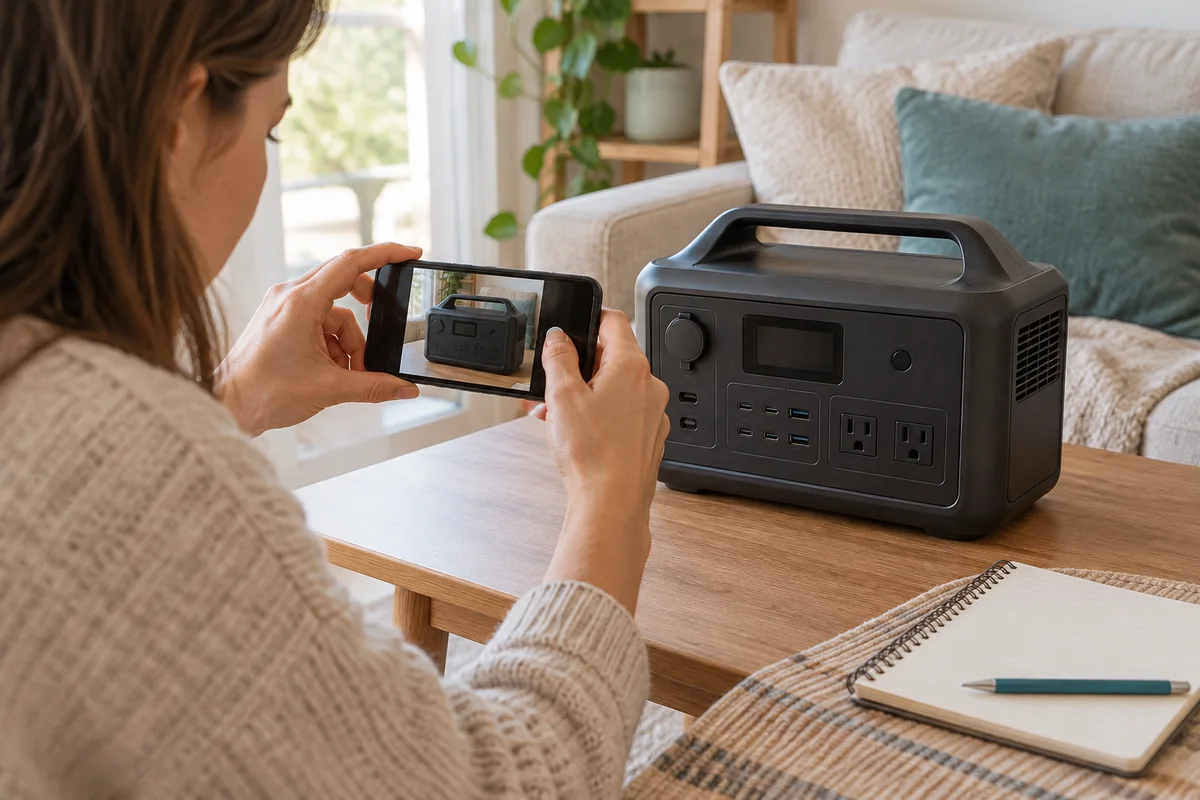 Power & Outdoors
AC180 Error Codes: Record Before Replacing
Create an AC180 error-code support record, distinguish an alert from a diagnosis, and compare approved service with replacing the whole station.
Read guide →