
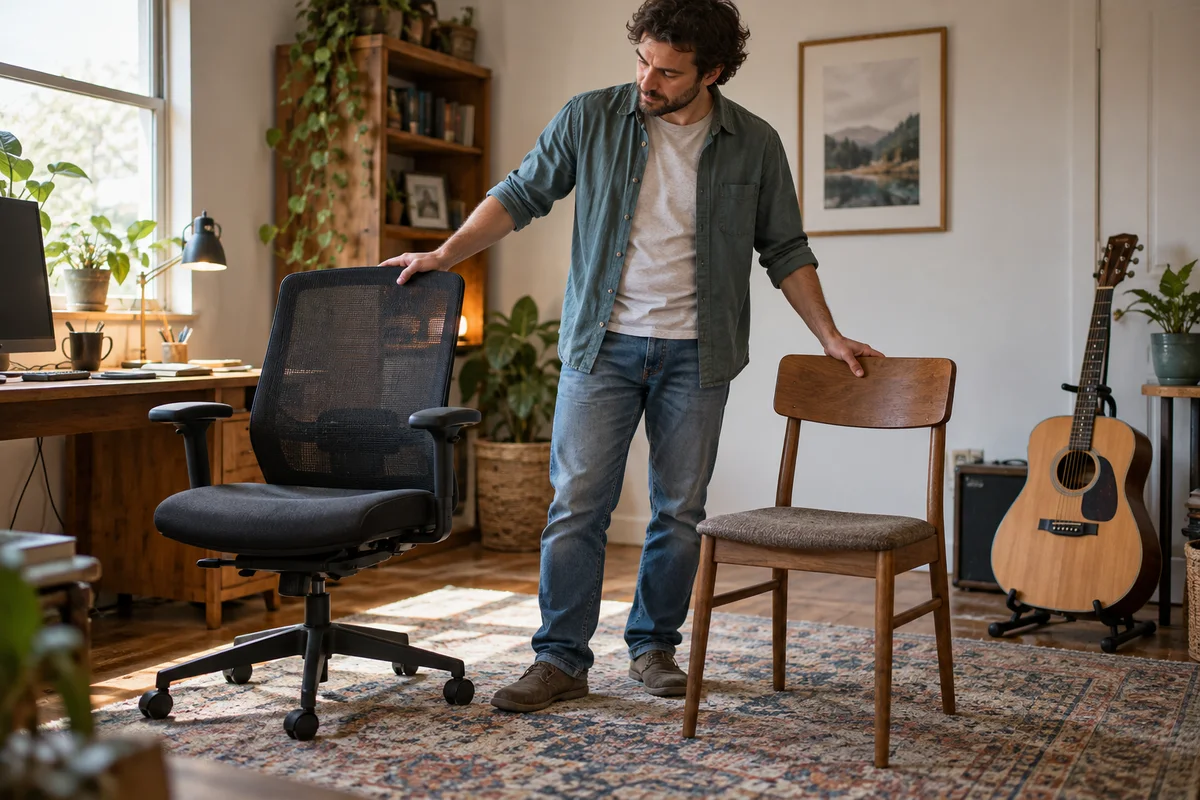
AI-generated scene illustration; not a photograph of the recommended product.
The home office has just enough room for a desk and a guitar stand. Reusing the desk chair for practice would save space, but the instrument catches an arm pad before the first chord. For a ProtoArc EC200 purchase, the important question is whether the playing space remains open with the chair used as designed.
The short answer
EC200’s listed height-adjustable armrests are not a promise of flip-up arms, removable arms or an unobstructed guitar-playing position. Assess the actual instrument and ordinary playing movement before choosing it for a combined office-and-music room.
An appropriate armless seat can be the better category when arm clearance is essential. Do not modify EC200 or balance an instrument against its hardware to make one chair perform two incompatible jobs.
Contents
- The short answer
- The instrument envelope
- The EC200 arms
- Seat and foot support
- Office and practice
- Instrument contact
- A comparison card
- Buying advice
- Frequently asked questions
- Sources and verification
The instrument envelope
Think about the space occupied by the player and instrument together. The guitar body, picking arm, neck and any plugged-in lead all need room. A desk chair’s seat width alone does not describe that working envelope.
Begin with the chair in its ordinary supported configuration and the instrument safely on its separate stand. Examine where the arm pads would meet the body and forearm before attempting normal playing. Do not use an expensive instrument as a force gauge.
Check the movement needed for the style you actually play. A position that works while holding a small instrument still may not leave room for ordinary strumming or a different guitar shape.
A photograph of someone playing on a chair is not a guarantee for your body and instrument. If clearance remains uncertain, seek an authorized assessment or choose a category that avoids the obstruction rather than assuming an adjustment will create it.
The EC200 arms
The EC200 specifications describe 2D height-adjustable armrests. The page also lists seat-depth adjustment. Neither fact establishes that the arms can move completely away from the instrument.
Ask the seller for the actual range and the delivered armrest configuration if the purchase depends on those details. “Adjustable” is not a complete dimensional answer, and an accessory photograph may show a different configuration.
Do not remove armrests or replace their fasteners on the assumption that assembly makes every component optional. Obtain explicit manufacturer guidance for the intended configuration. An office-chair upgrade accessory also needs its own compatibility and clearance check.
Our high-desk guide addresses seat-to-desk height. This guide concerns the extra dynamic space around a guitar, which remains a separate question even after a desk setup fits.
Seat and foot support
Compare the supported seating arrangement with your normal playing requirements. Keep the instrument under your own appropriate control and ask a teacher or qualified specialist about technique if necessary. This article does not prescribe a playing posture or treat discomfort.
Do not select a high seat just because a musician’s product photo shows one. The relationship between seat, feet, instrument and task matters. A seat designed around a foot bar can work differently from a conventional office chair.
For example, Fender’s 351 Studio Seat is a purpose-built seat and instrument-stand combination with a listed seat height of approximately 27 inches and an integrated footrest. Those features illustrate a different design category; they are not a default size recommendation for every guitarist.
If your setup would require an extra foot support, evaluate its suitability and stability separately. Do not improvise a platform from storage boxes or assume a chair’s rolling base is a footrest.
Office and practice
Make two short lists: what the working day requires and what the practice session requires. Office work may favor arm support close to a keyboard. Guitar playing may require more open space around one or both arms.
Check whether both lists can be satisfied without unsupported component changes. If not, buying one heavily adjustable chair may still be a compromise that serves neither task well.
A separate simple seat can be easier to store than repeatedly changing a complicated arrangement. Measure its actual storage location and ensure moving it into place does not obstruct the room’s normal route.
Conversely, if EC200 fits the office and your particular playing task with no conflict, a second seat may be unnecessary. The conclusion should follow the assessed setup, not a rule that musicians must always own specialist furniture.
Instrument contact
Keep the guitar on a suitable separate stand when adjusting or moving the chair. A chair arm is not an instrument cradle, and a headrest is not a safe place to hang a guitar strap.
If comparing a seat with a built-in stand, check the instrument finish against the stand manufacturer’s instructions. Fender’s 351 page specifically limits its finish-compatibility claim and does not recommend it for nitrocellulose lacquer instruments. Do not transfer that product’s material claim to EC200 or another stand.
Treat unexpected contact as a reason to stop and change the arrangement, not to add household tape or padding over an obstruction and declare the setup resolved. Added material can change dimensions or contact conditions further.
This is especially relevant in a shared room where the office user may not notice that a guitar lead lies near a caster. Put the instrument away before the chair returns to desk duty and keep cables out of the rolling route.
A comparison card
Record the exact guitar, ordinary playing task, arm-pad clearance, foot support, seat stability, storage route and separate instrument parking. Mark each as established or unresolved.
Use the same card for EC200, an existing suitable chair and an appropriate armless alternative. This prevents one product’s extra lumbar or headrest features from overshadowing a basic obstruction.
Do not attempt stability experiments, lean beyond the intended range or load a chair with equipment to simulate a player. An ordinary authorized assessment is sufficient for the purchase decision.
Consider the assessment terms before assembly. A generic returns banner does not settle every case involving furniture already assembled or used with an instrument. Ask the actual seller how the intended assessment should be handled.
Buying advice
Shortlist EC200 when it fits the primary office task and the instrument has adequate space in the supported configuration. The EC200 overview explains its broader office role.
Pass if the purchase depends on arms folding away when that feature is not established, or on unapproved removal. Prefer an appropriate armless seat when that resolves the task more directly, while checking its own dimensions and support requirements.
The Fender example is a category reference, not an affiliate pick or availability promise; its displayed option was unavailable during this check. Confirm current terms for any alternative independently.
Before using the EC200 partner listing, verify the exact model, arm configuration, current inventory, delivery and return conditions. No guitar, stand, playing improvement or medical benefit is included by implication.
Frequently asked questions
Do 2D arms flip up?
Not by implication. The EC200 page lists height-adjustable arms; obtain confirmation for any other movement you need.
Can an arm be removed?
Do not assume removal is an approved operating configuration. Ask ProtoArc before basing a purchase on it.
Is a music stool always better?
No. Check the actual player, instrument, foot support and task. A specialist label does not prove fit.
Can the chair store a guitar?
Not as an improvised stand. Use an appropriate instrument support with compatible contact materials.
Sources and verification
Checked October 31, 2026. EC200 model specifications and Fender’s live product details read; no playing-session, stability or finish-contact test.
- ProtoArc EC200 specifications and armrest description
- Fender 351 Studio Seat design, dimensions and finish restrictions
Keep reading
Related guides
 Home Office
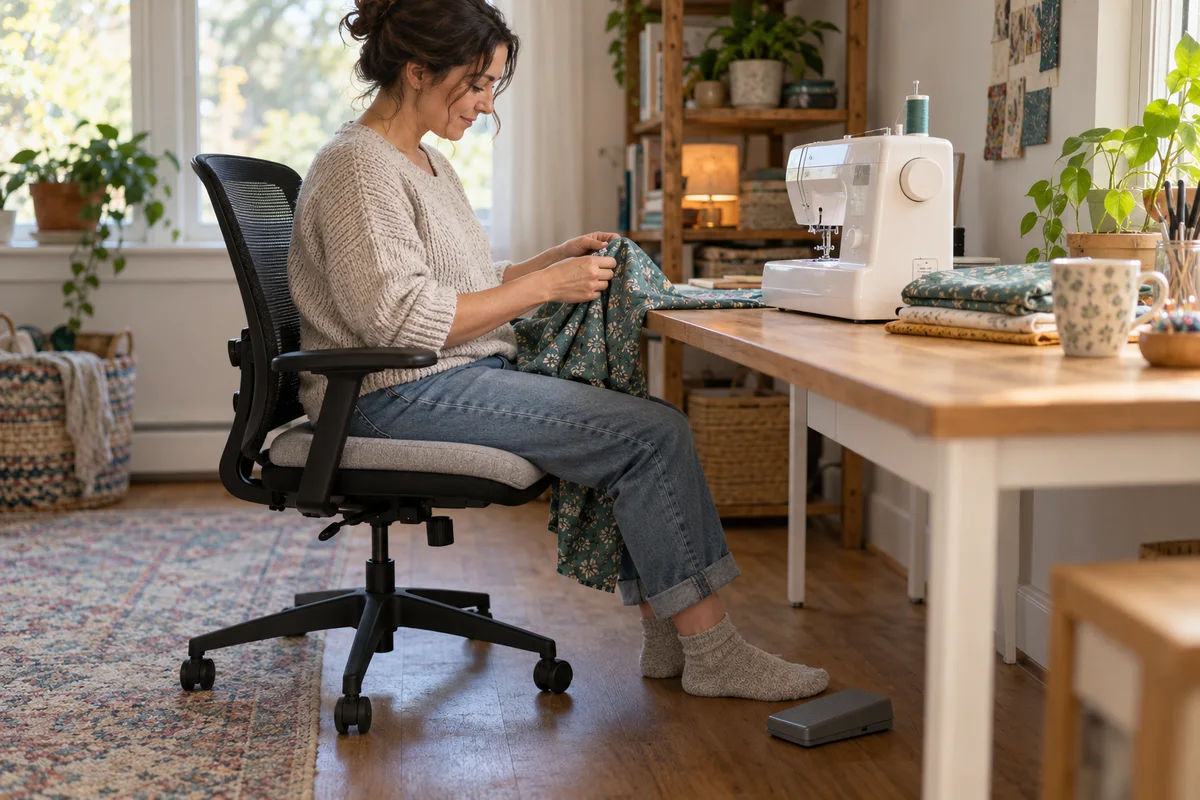
EC300 Sewing Workspace
Assess EC300 around the sewing machine, fabric, table and foot pedal before choosing one office chair for a mixed home workspace.
Read guide →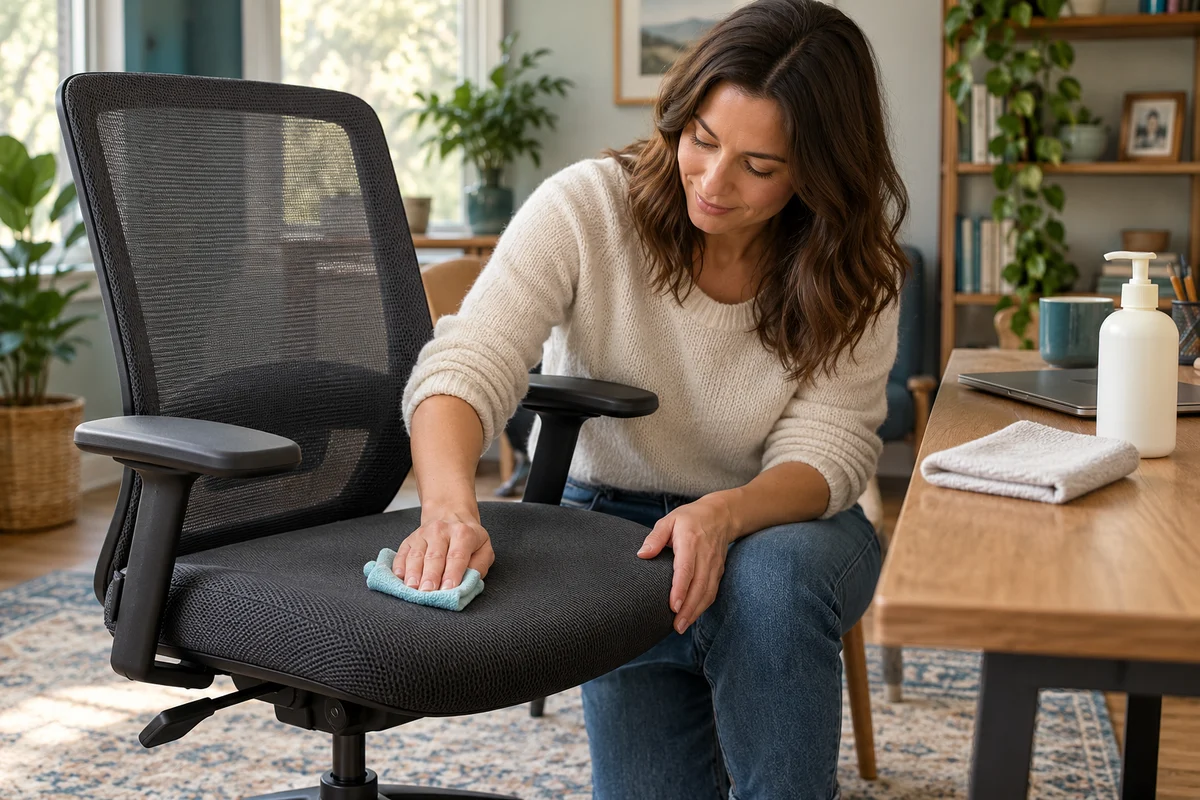 Home Office
EC200 Cleaning and Care
Check EC200 mesh and cushion care against the intended home-office routine without assuming that washable, removable or disinfectable are equivalent.
Read guide →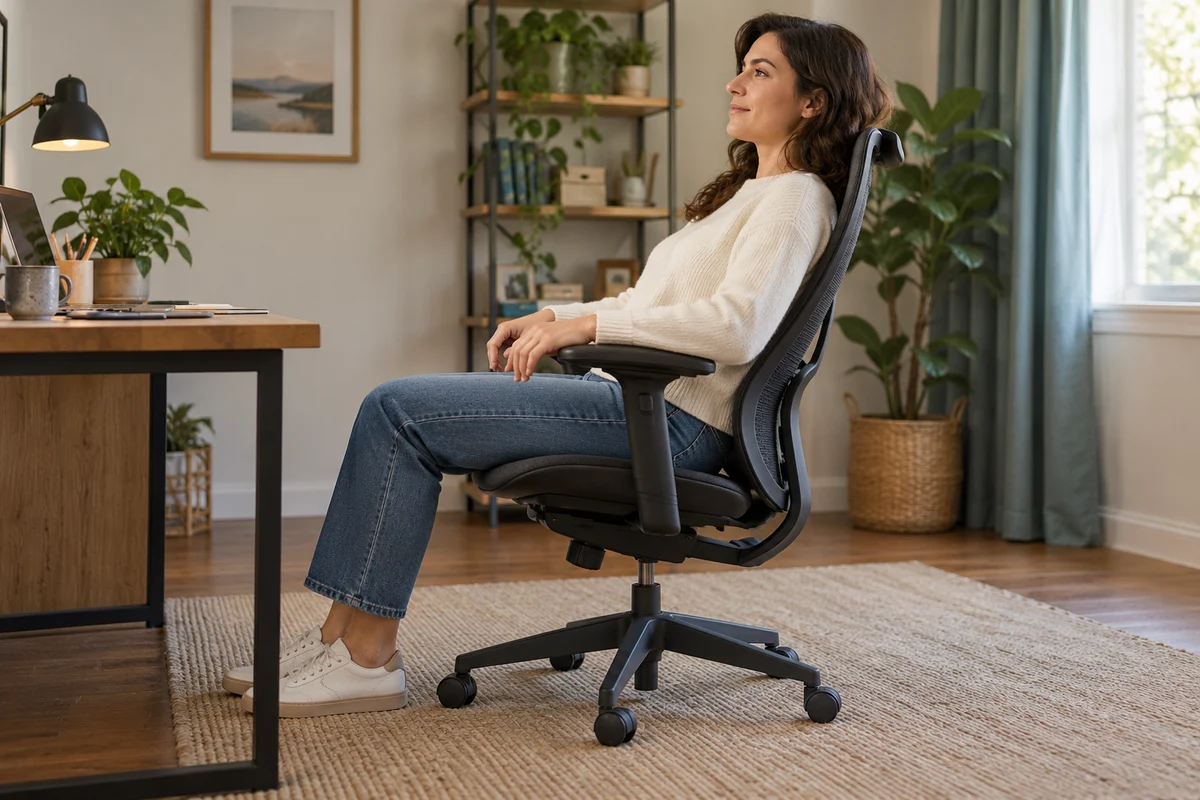 Home Office
EC200 Recline Resistance
Separate EC200 reclining resistance from the angle lock, then check control reach and workstation fit before choosing a chair for recline breaks.
Read guide →