
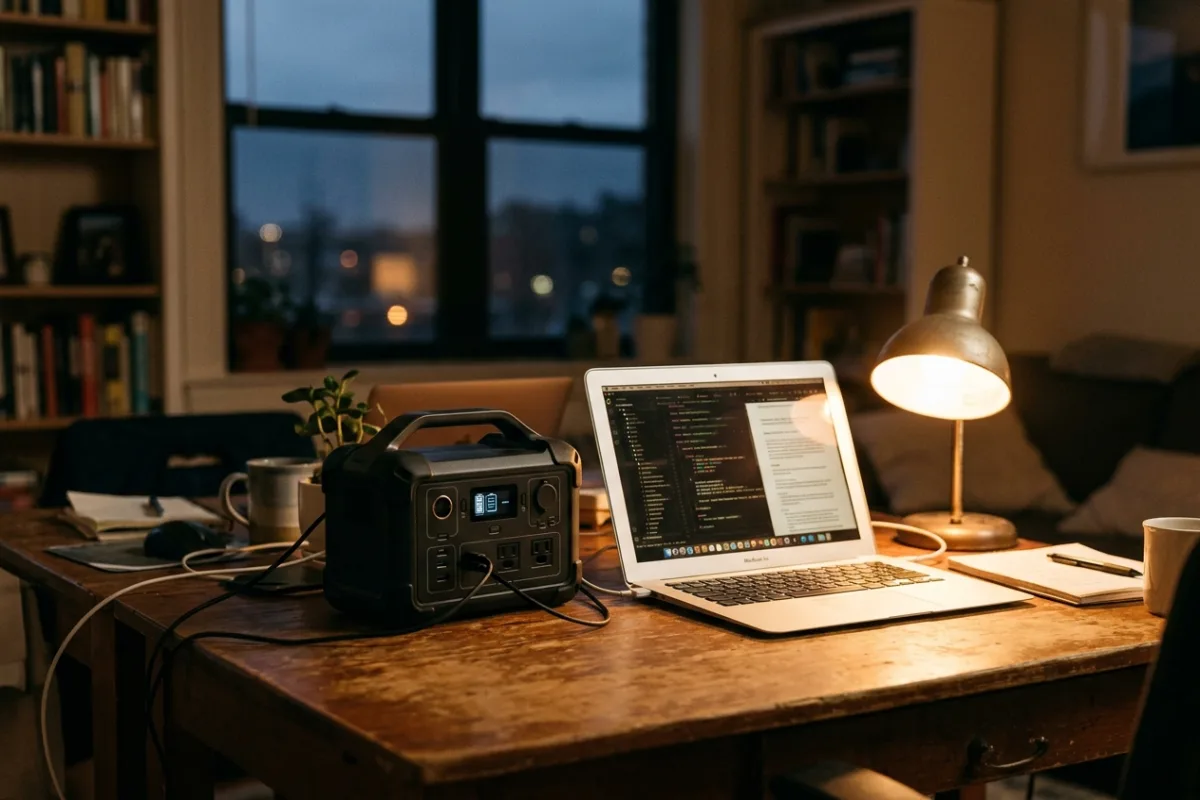
Your apartment loses power for a few seconds almost every time a summer storm rolls through, just long enough to kill the WiFi router and whatever tab you were mid-edit on. You are not going to keep a generator in a one-bedroom unit, and there is no garage shelf for something the size of a cooler. What you want lives on the shelf under the monitor, switches over before the screen even flickers, and still has enough charge left to ride out a longer outage if the storm gets worse. The same box needs to fit in a backpack or a car footwell for the occasional weekend trip, run a string of lights, and top off two phones overnight. Then it goes straight back under the desk on Monday morning.
This review is built from published manufacturer specifications and the current product documentation for the power-outdoors category, not from a laboratory test bench. It compares the BLUETTI Elite 30 V2 against the rivals a shopper actually sees beside it, for one clearly defined household job.
The verdict
For desk-side blackout backup and light weekend travel, the Elite 30 V2 is the strongest fit in its size class. Its 600W continuous rating is double what most 288Wh-class rivals allow, so it keeps running things a smaller inverter has to reject. The sub-10 millisecond UPS switchover means a desktop or router does not reboot mid-task when the grid blips, and the 45-minute fast recharge means it is ready again before you walk out the door. Within this footprint and price tier, that combination of continuous output and switchover speed is hard to match.
Check the current BLUETTI Elite 30 V2 listing →BLUETTI Elite 30 V2 at a glance
These are the published specifications that matter most for the use case above. Manufacturers revise hardware between production runs, so confirm the current listing before ordering.
| Capacity | 288Wh LiFePO4 battery |
|---|---|
| Continuous Output | 600W (1,500W surge for resistive loads) |
| USB-C Charging | PD 3.1, up to 140W |
| Fast Recharge | 0-80% in 45 minutes via TurboBoost AC charging |
| UPS Switchover | 10 milliseconds or less |
Why it wins this category
A better spec sheet is only useful when it removes work from a real routine. These are the four places where the BLUETTI Elite 30 V2 changes the outcome rather than the marketing copy.
Doubles the Typical Output
Most power stations in the 288Wh class cap continuous output at 300W, which rules out anything with a real heating element or a motor startup. The Elite 30 V2's 600W continuous rating, with a 1,500W surge for resistive loads, lets it run a coffee maker, a hair dryer, or a small space heater that would trip a smaller inverter's overload protection almost immediately.
Blackout Switchover Under 10ms
A slow transfer switch is what actually causes a desktop to reboot or a router to drop its connection during a blip in grid power. The Elite 30 V2's UPS function switches to battery in 10 milliseconds or less, fast enough that a monitor rarely even flickers, which matters more for a desk setup than raw capacity alone.
45-Minute TurboBoost Recharge
Leaving in a hurry after work usually means grabbing whatever charge happens to be left. TurboBoost AC charging pulls the Elite 30 V2 from empty to 80 percent in about 45 minutes, closer to what you would expect from a phone than from a power station, so a short break is enough to cover an evening outage or a weekend trip.
140W USB-C Skips the Brick
A laptop that charges over USB-C can plug straight into the Elite 30 V2's PD 3.1 port and pull up to 140W, enough for most 16-inch laptops at full speed without a separate wall charger. That frees up the AC outlets for other devices and keeps the whole kit down to one cable for a desk or a backpack.
How it compares to the alternatives
Each of these is a capable product with a real audience. The question is not whether they work, but which one fits the job described above with the least compromise.
Anker SOLIX C300
A 288Wh desk-and-camp power bank with two-way fast USB-C charging.
Where it is strong: Its two-way 140W USB-C charging is genuinely convenient, and Anker rates a full recharge to 80 percent in about 50 minutes, which is competitive with the fastest chargers in this size class.
Where it falls short here: The C300's AC outlets are rated at 300W continuous with only a 600W surge for brief spikes, so anything that draws real sustained wattage, like a hair dryer or a hot plate, sits outside what it can handle the way the Elite 30 V2 can.
Jackery Explorer 300 Plus
A single-outlet, budget-tier backup battery from an established solar generator brand.
Where it is strong: Jackery's build quality and app support are well established, and at 8.27 pounds it is among the lightest options in the 288Wh class, which matters if the whole point is carrying it around often.
Where it falls short here: It tops out at 300W continuous output through a single AC outlet, so running two moderate-draw devices at once, or anything closer to 600W, is not something this model is built to handle.
EcoFlow River 3
A splash-resistant 245Wh entry model built around EcoFlow's X-Boost output stretching.
Where it is strong: The IP54-rated splash resistance is a genuine edge for a unit that might end up on a tailgate or a damp campsite, and it recharges fully in about an hour on AC.
Where it falls short here: Its base capacity is smaller at 245Wh, and its 300W continuous rating relies on X-Boost software to stretch past that for short bursts rather than the Elite 30 V2's true 600W sustained output.
Weighed against those three, the BLUETTI Elite 30 V2 remains the one that covers this scenario end to end without asking you to accept a workaround somewhere else.
Who it fits
Renters With Flaky Grid Power
If breaker trips or brief outages are a recurring annoyance rather than a rare event, a unit that switches over in under 10 milliseconds and lives on a shelf is more useful day to day than a larger station stored in a closet you forget about.
Minimalist Weekend Car Campers
For one or two people who want lights, charged phones, and maybe a small cooler running overnight without hauling a cooler-sized power station, 288Wh in a 4.3kg body is enough capacity without eating the trunk space everything else needs.
Remote Workers Needing Desk UPS
Anyone whose income depends on a laptop and a stable connection benefits from a battery that catches a power blip before the router resets, especially one small enough to sit next to the monitor instead of taking over a corner of the room.
What to be realistic about
No product is the right answer for every household. Skip this one, or plan around these points, if any of them describe your situation.
- If your goal is running a full-size refrigerator, a window air conditioner, or power tools for several hours at a stretch, 288Wh will not get you through a full day.
- Households that need whole-home or multi-day backup during extended outages should look at larger, expandable stations rather than a unit built for desk-side and weekend use.
- If you plan to run a space heater or hair dryer continuously for long stretches instead of short bursts, 600W is still a ceiling worth keeping in mind.
Living with it after week one
Keep it charged to around 80 percent on the shelf where it normally lives, plugged into AC or trickle-charging so it stays topped off without sitting at 100 percent for weeks. Before a trip, run TurboBoost for the last stretch of charge and pack the USB-C cable you already own, since the 140W port covers most laptops. After camping or an outage, wipe down the ports, let it cool before recharging, and run it through a full charge cycle every couple of months if it has been sitting idle.
Frequently asked questions
Can the Elite 30 V2 keep a mini fridge running overnight?
A small mini fridge typically draws 40 to 60W continuous, so on paper the 288Wh capacity supports roughly five to seven hours of runtime, less with frequent door openings or a warmer room. It works for an overnight cooler backup, but it is not sized for a full-size kitchen refrigerator through an extended outage.
Will it work as an uninterruptible power supply for a desktop computer?
Yes, that is one of its strongest use cases. The published 10-millisecond-or-less UPS switchover time is fast enough that most desktops and monitors do not reboot or lose an unsaved document during a brief grid interruption, though you should still save work regularly since no switchover is instantaneous.
How many years should the battery realistically last?
BLUETTI lists the LiFePO4 cells for over 3,000 charge cycles, backed by a 5-year warranty, which the manufacturer estimates translates to roughly a decade of typical use before capacity noticeably degrades. Actual lifespan depends on charge habits, storage temperature, and how often it gets run down to empty.
Keep reading
Related guides
 Power & Outdoors
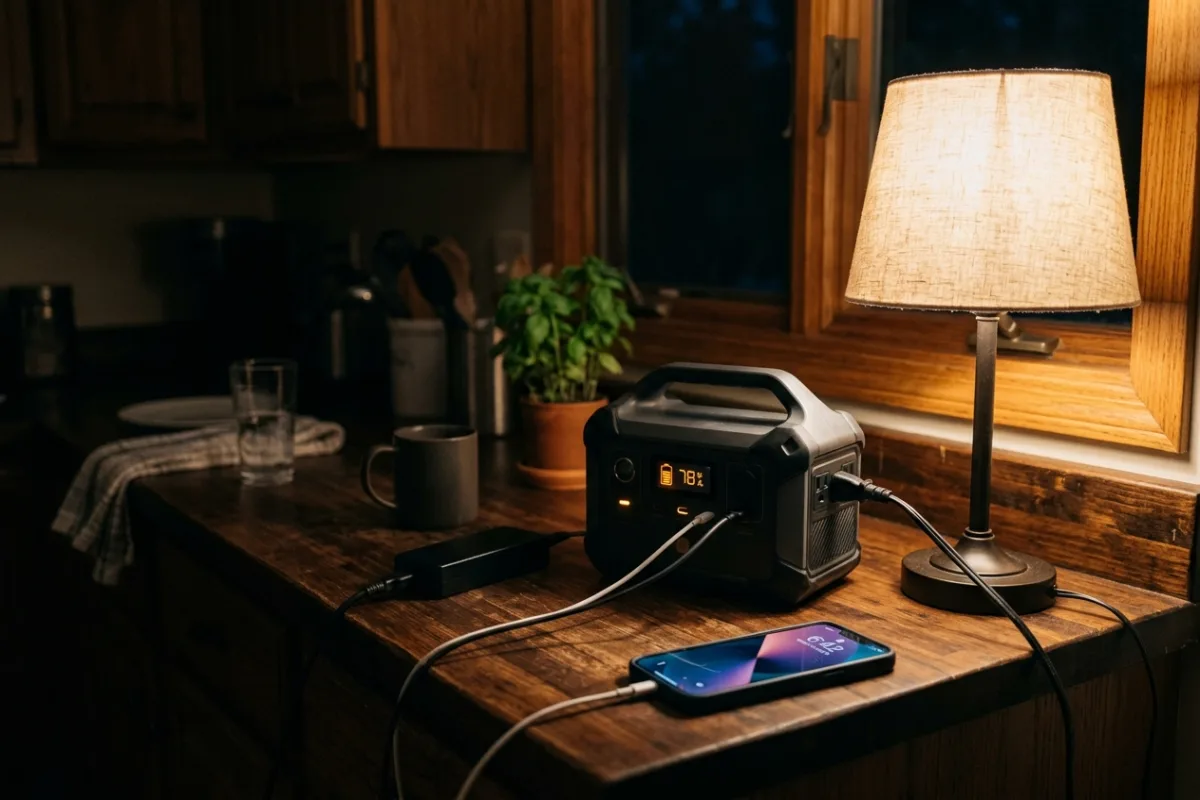
BLUETTI Elite 100 V2 Review: A Lightweight Power Station for Storms
A single lightweight power station for apartment renters and weekend campers who need fast, quiet backup power without a garage generator or a slow-charging alternative.
Read review → Power & Outdoors
Olight PL-X Dual-Beam Rail Light: Specs, Fit, and Range Guide
For pistol owners who need one rail-mounted light that switches between a focused spotlight for distance and a wide floodlight for close-range identification, this guide breaks down the fit.
Read review →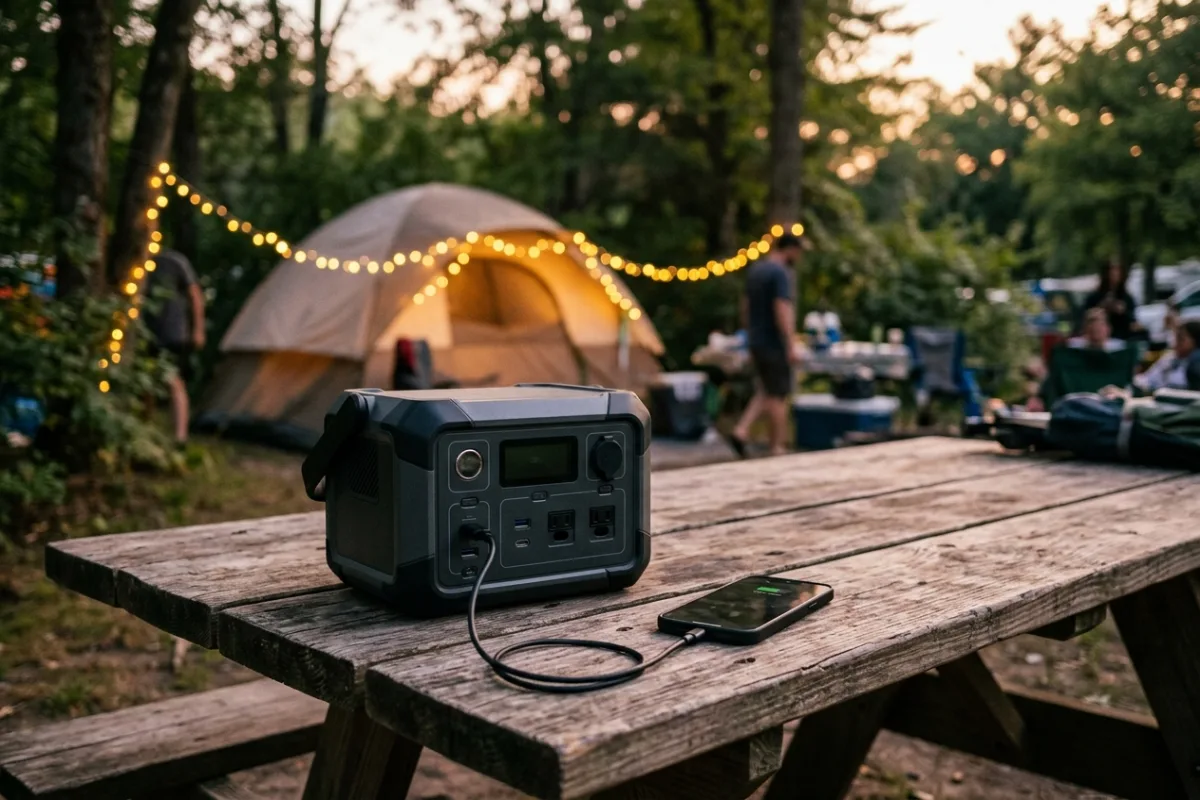 Power & Outdoors
Jackery Explorer 300 Portable Power Station For Light Camping And RV Trips
A compact 293Wh power station that keeps phones, laptops, and a small fan charged through a weekend camping trip or a short home blackout without weighing down your gear.
Read review →