
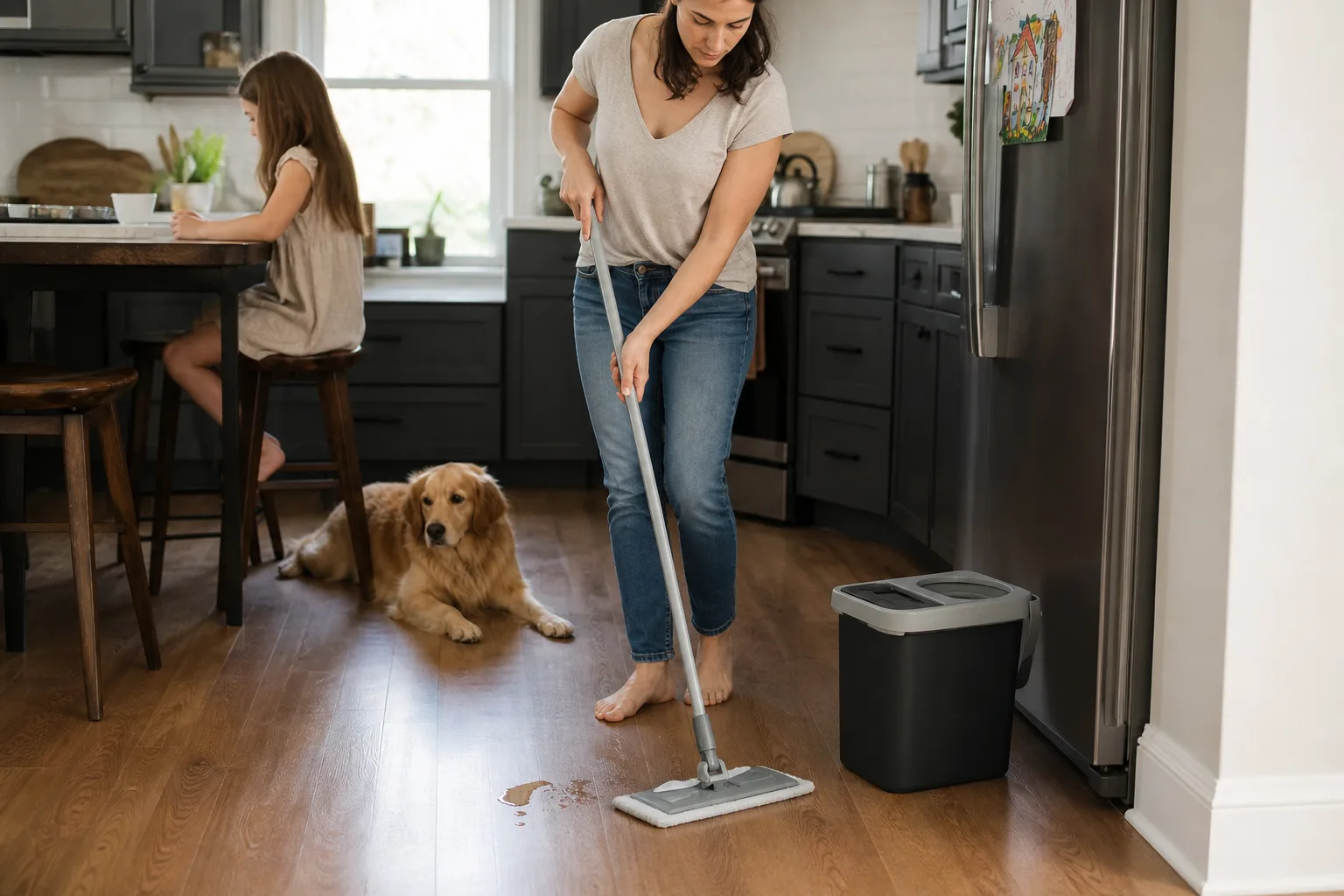
Breakfast ends with sticky juice under the table, paw prints at the door, and no appetite for filling a large bucket. The most useful mop is the one ready for the scale of mess the home creates most often.
This guide does not claim hands-on testing of every option on the market. It translates an everyday household problem into a practical buying checklist, so you can compare current products against your own room, routine, and tolerance for maintenance.
The quick answer
For frequent small spills, a washable flat mop or spray-style system is usually easier to deploy and store. Keep a deeper-clean option only if the floor and household routine justify the extra water and drying space.
What to look for before you buy
Start with the constraint that creates the most friction in your home. A feature is valuable only when it changes that constraint without adding a harder storage or cleaning problem.
Start with floor guidance
Use cleaning methods and solutions approved for the specific flooring. More water is not automatically more clean.
Check head access
A low profile and swivel joint matter around table legs, toilets, and under cabinets. Measure the tightest target gap.
Plan wet storage
The pad or head needs airflow after use. A compact system that stays damp in a closed closet is not truly storage-friendly.
Choose by household scenario
The same product format can be helpful in one room and irritating in another. Use these scenarios as a shortlist, then verify dimensions, care instructions, and current availability on the seller or manufacturer page.
Daily food spills
A light flat mop with multiple washable pads is easy to rotate and quick to rinse.
Pet entryway
Keep one pad dedicated to gritty door areas so abrasive debris does not travel onto delicate floors.
Whole-home reset
A bucket system can carry more rinse water, but choose a compact shape and a wringing method you can operate comfortably.
What not to overpay for
A long feature list can distract from fit. Skip complexity that does not remove a repeated household step, and be cautious when a specialized replacement part is essential to basic use.
- Using unapproved steam or excess water on sensitive flooring.
- Buying proprietary pads without checking replacement availability.
- Storing a used pad attached and wet.
Make the purchase survive real life
Sweep or vacuum grit first, use the least moisture that completes the job, and remove the pad immediately afterward. Keep two or three pads so a clean one is available even when laundry is not.
Before ordering, take one final measurement and decide where the item will live when it is not being used. That single decision prevents many useful products from becoming visible clutter.
Frequently asked questions
Is a spray mop enough for a family home?
It can handle frequent surface cleaning. Periodic deeper cleaning may still be useful depending on floors and soil.
Are disposable pads more hygienic?
They are convenient for some messes, but washable pads can be hygienic when laundered and dried according to instructions.
Should a mop bucket have separate clean and dirty water?
Separation can be useful, but it adds size and parts. Decide whether the benefit matches your floor area and storage.
Keep reading
Related guides
 Cleaning
ReactiSense 440 vs 410 and 451: Match the Exact Model
Compare Eureka 440, 410 and 451 by exact identity, supplied tools and task fit rather than transferring a family chart into the wrong order.
Read guide →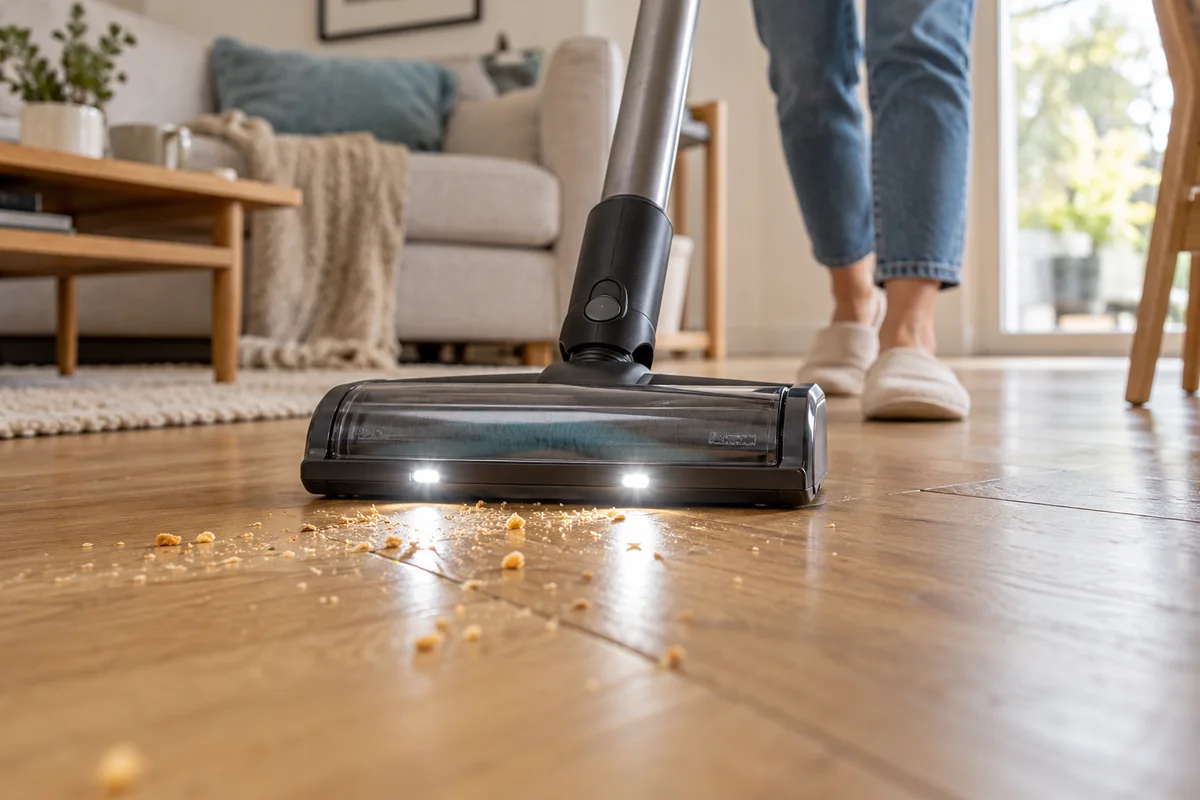 Cleaning
NEC440 Floorhead Light Is Not a Cleanliness Test
Separate NEC440 floorhead illumination, status display and dust sensing so improved visibility never becomes an unsupported cleanliness guarantee.
Read guide → Cleaning
NEC440 Sofa Cleaning: Check the Handheld Tool Package
Check the NEC440's supplied crevice and upholstery tools against your sofa's care instructions before assuming a powered mini-brush is included.
Read guide →