
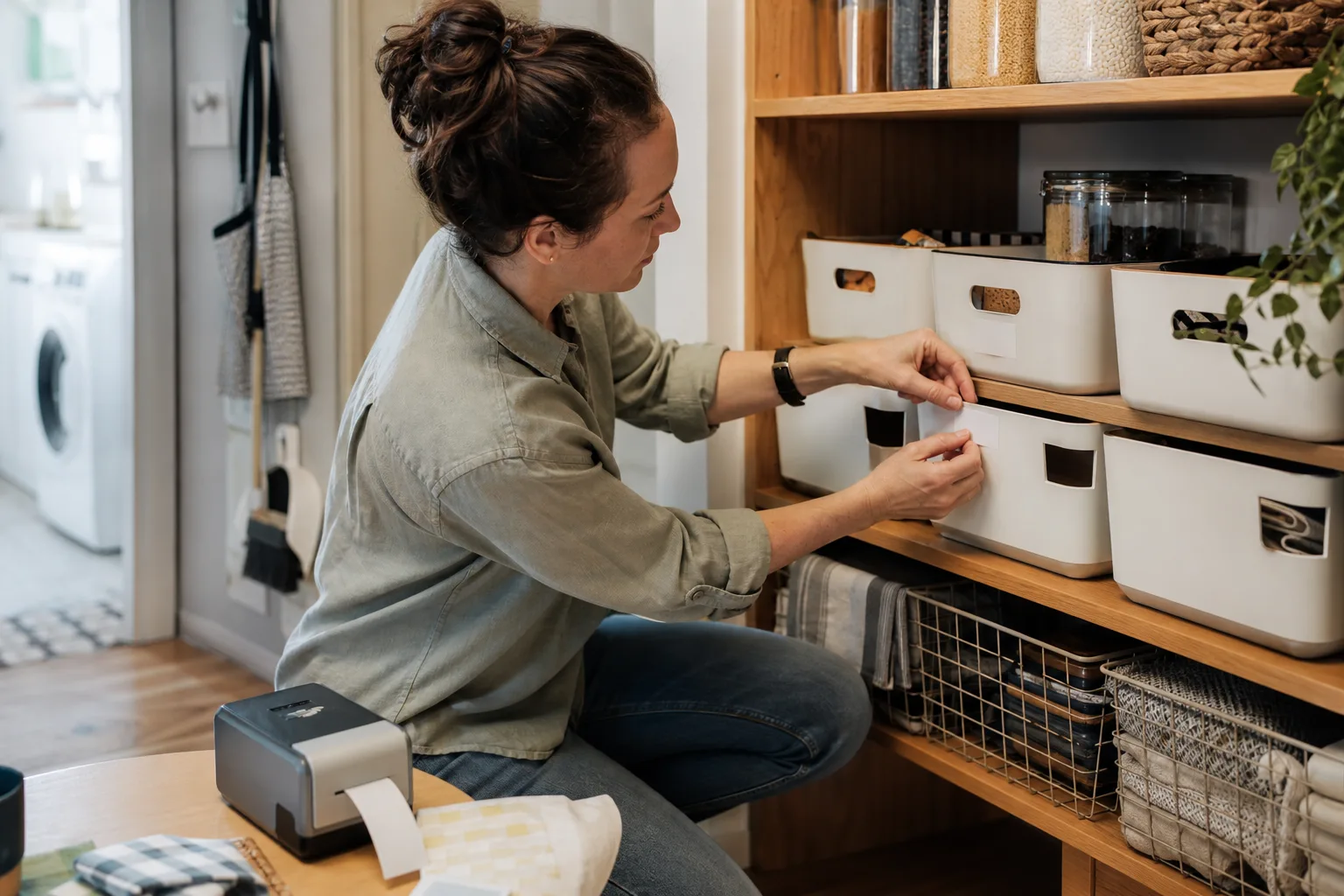
A bin labeled “winter” now holds extension cords, and nobody wants to peel the residue or reconnect an app to print one word. A useful label system must be easier to revise than to ignore.
This guide does not claim hands-on testing of every option on the market. It translates an everyday household problem into a practical buying checklist, so you can compare current products against your own room, routine, and tolerance for maintenance.
The quick answer
For ordinary home use, prioritize a readable built-in keyboard or dependable simple app, widely available tape, and labels that remove cleanly from your common surfaces. Decorative fonts are secondary.
What to look for before you buy
Start with the constraint that creates the most friction in your home. A feature is valuable only when it changes that constraint without adding a harder storage or cleaning problem.
Choose the workflow
A physical keyboard is immediate; an app offers layout flexibility. Pick the method the household will still use for a single label.
Check tape supply
Confirm current tape sizes, adhesive types, color options, and replacement cost before committing to a format.
Match the surface
Pantry bins, fabric cubes, cables, and freezer containers need different label or tag approaches.
Choose by household scenario
The same product format can be helpful in one room and irritating in another. Use these scenarios as a shortlist, then verify dimensions, care instructions, and current availability on the seller or manufacturer page.
Pantry reset
Use plain high-contrast words visible from the shelf, not tiny decorative text.
Changing children’s storage
Pair words with simple category cues and use removable labels as sizes and interests change.
Cables and tools
Narrow durable labels can identify ownership or destination without covering safety information.
What not to overpay for
A long feature list can distract from fit. Skip complexity that does not remove a repeated household step, and be cautious when a specialized replacement part is essential to basic use.
- Labeling before categories stabilize.
- Covering dates, care instructions, or safety labels.
- Buying a proprietary format without checking tape availability.
Make the purchase survive real life
Keep the label maker and one spare tape in the same accessible drawer. During seasonal resets, remove stale labels first; an unlabeled bin is less misleading than a confident wrong label.
Before ordering, take one final measurement and decide where the item will live when it is not being used. That single decision prevents many useful products from becoming visible clutter.
Frequently asked questions
Is an app-connected label maker necessary?
No. It helps with layouts and symbols, but a built-in keyboard is often faster for straightforward household labels.
Should every container be labeled?
Only when the contents are not obvious or several people need the same rule. Transparent daily-use bins may not need labels.
How can labels stay flexible?
Use removable adhesive, label clips, or tags, and describe categories broadly enough to survive small changes.
Keep reading
Related guides
 Organization
Closet Bins That Make Sense for Real Morning Routines
Use open access, visible categories, and reachable heights so storage supports getting dressed instead of hiding the clothes you need.
Read guide →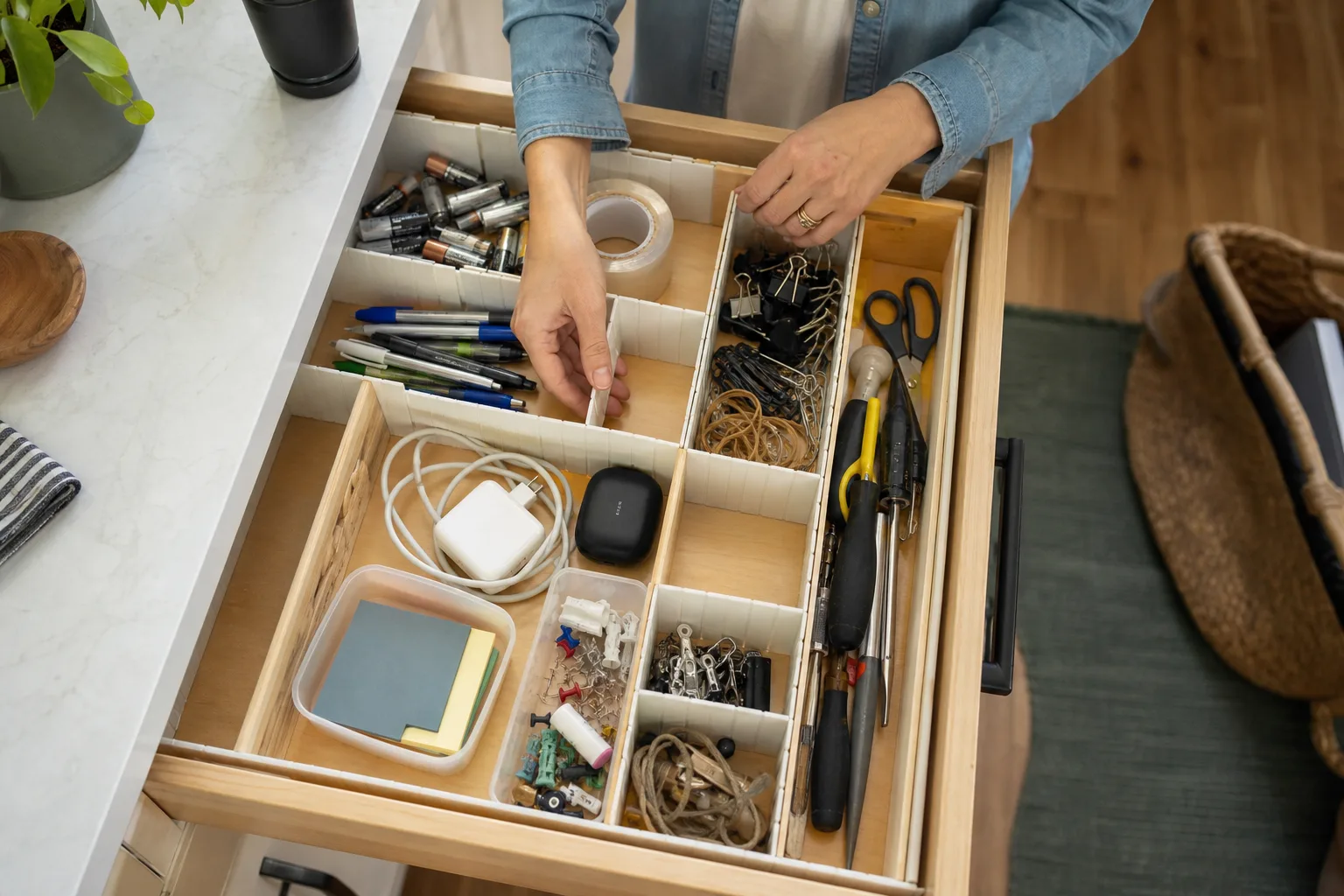 Organization
Drawer Dividers for the Kitchen Junk Drawer Reset
Divide by action—write, fasten, charge, measure—not by the random assortment currently filling the drawer.
Read guide → Organization
Shoe Storage for Narrow Entryways and Busy Households
Keep the active rotation near the door while protecting a clear walking path and giving wet footwear room to dry.
Read guide →