

At 7:40 a.m., a lidded box on the top shelf is not organized storage; it is a reason to wear the same sweater again. Closet bins work when access frequency determines the opening, height, and position.
This guide does not claim hands-on testing of every option on the market. It translates an everyday household problem into a practical buying checklist, so you can compare current products against your own room, routine, and tolerance for maintenance.
The quick answer
Use open-front or low-sided bins for daily categories, handled bins for occasional items, and closed containers only where dust or long-term storage justifies the extra step. Measure the shelf and the hand space above the bin.
What to look for before you buy
Start with the constraint that creates the most friction in your home. A feature is valuable only when it changes that constraint without adding a harder storage or cleaning problem.
Design for reach
A bin that fills the vertical gap may not leave room for a hand. Reserve at least enough clearance to pull the item you store most often.
Limit each category
Broad labels such as “clothes” recreate a drawer inside a box. Narrow the job to workout tops, scarves, or off-season accessories.
Choose structure wisely
Soft bins flex around clothing; rigid bins stack and slide more predictably. Match the material to shelf height and contents.
Choose by household scenario
The same product format can be helpful in one room and irritating in another. Use these scenarios as a shortlist, then verify dimensions, care instructions, and current availability on the seller or manufacturer page.
Daily folded clothes
Open fronts let you see and pull one item without removing the whole bin.
High shelf
A lightweight handled bin keeps occasional items together and lowers safely when not overloaded.
Shared closet
Distinct bin zones reduce accidental mixing better than identical bins with tiny labels.
What not to overpay for
A long feature list can distract from fit. Skip complexity that does not remove a repeated household step, and be cautious when a specialized replacement part is essential to basic use.
- Buying bins before measuring shelf depth and door clearance.
- Stacking soft bins that collapse when the lower one is used.
- Hiding frequently worn items in opaque lidded boxes.
Make the purchase survive real life
Return items by broad useful category, not by perfect fold. When a bin becomes difficult to close or search, edit the category before buying another container. Storage should expose a volume problem, not conceal it.
Before ordering, take one final measurement and decide where the item will live when it is not being used. That single decision prevents many useful products from becoming visible clutter.
Frequently asked questions
Are clear bins best for closets?
Visibility helps occasional storage, but open or labeled fabric bins may be faster for daily access. Choose around the job.
Should bins match?
Matching dimensions make shelves calmer, but categories must remain clear. Function matters more than identical color.
How deep should a clothing bin be?
Deep enough for the folded item but shallow enough to see and reach the back without unloading the front.
Keep reading
Related guides
 Organization
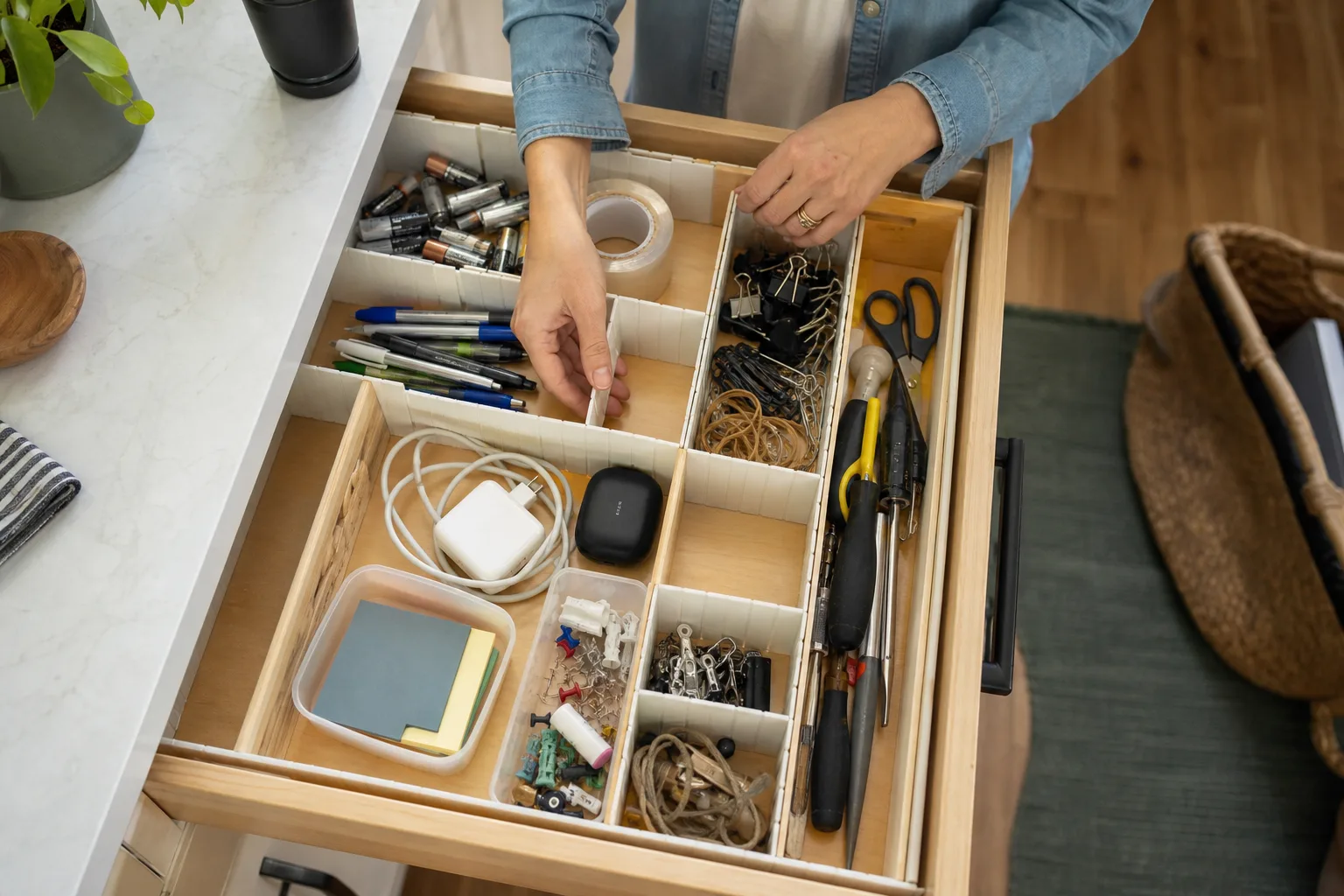
Drawer Dividers for the Kitchen Junk Drawer Reset
Divide by action—write, fasten, charge, measure—not by the random assortment currently filling the drawer.
Read guide → Organization
Shoe Storage for Narrow Entryways and Busy Households
Keep the active rotation near the door while protecting a clear walking path and giving wet footwear room to dry.
Read guide →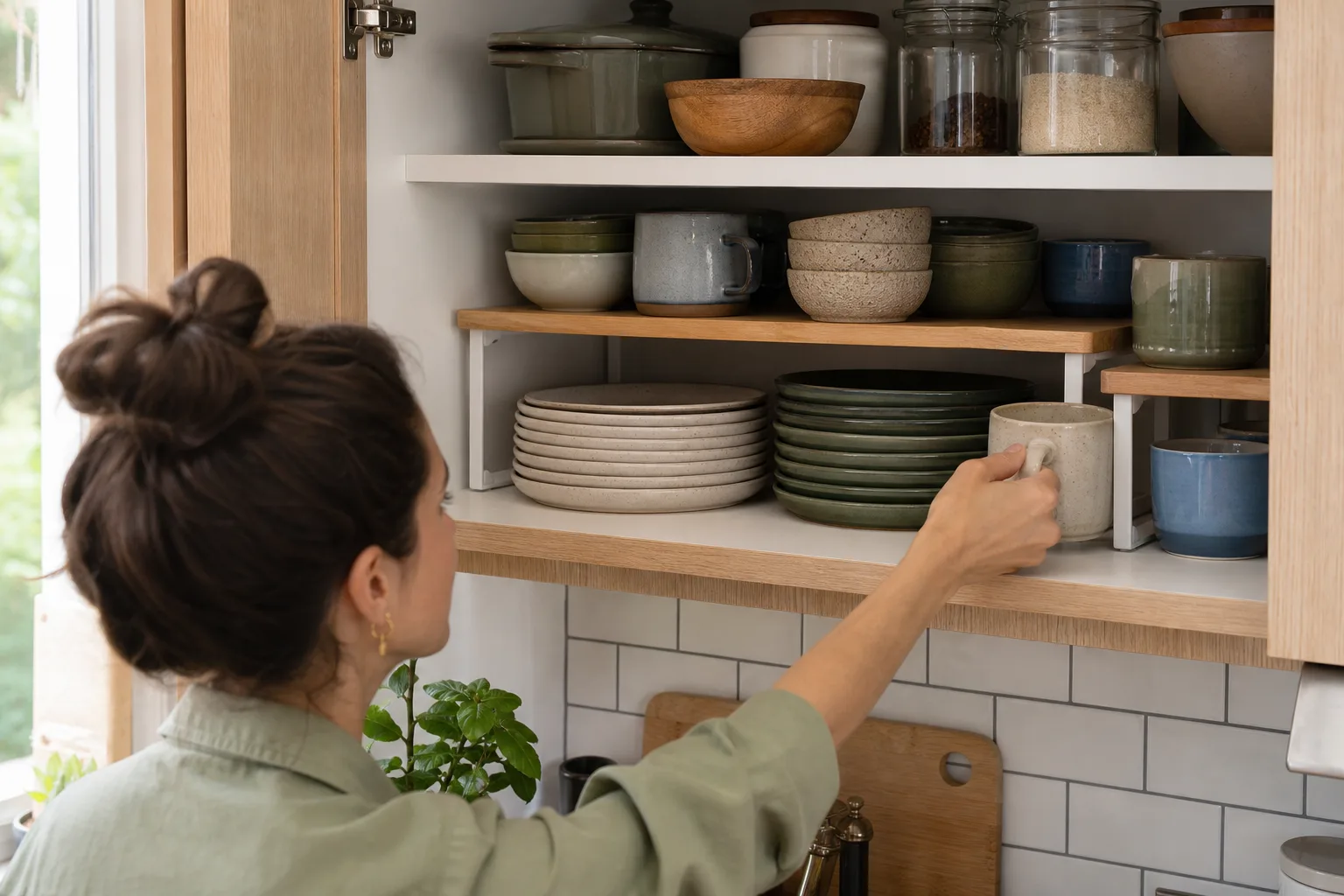 Organization
Shelf Risers: The Cheapest Way to Find Hidden Cabinet Space
Use risers to separate stacks you reach differently, not simply to fill every inch of air inside a cabinet.
Read guide →