
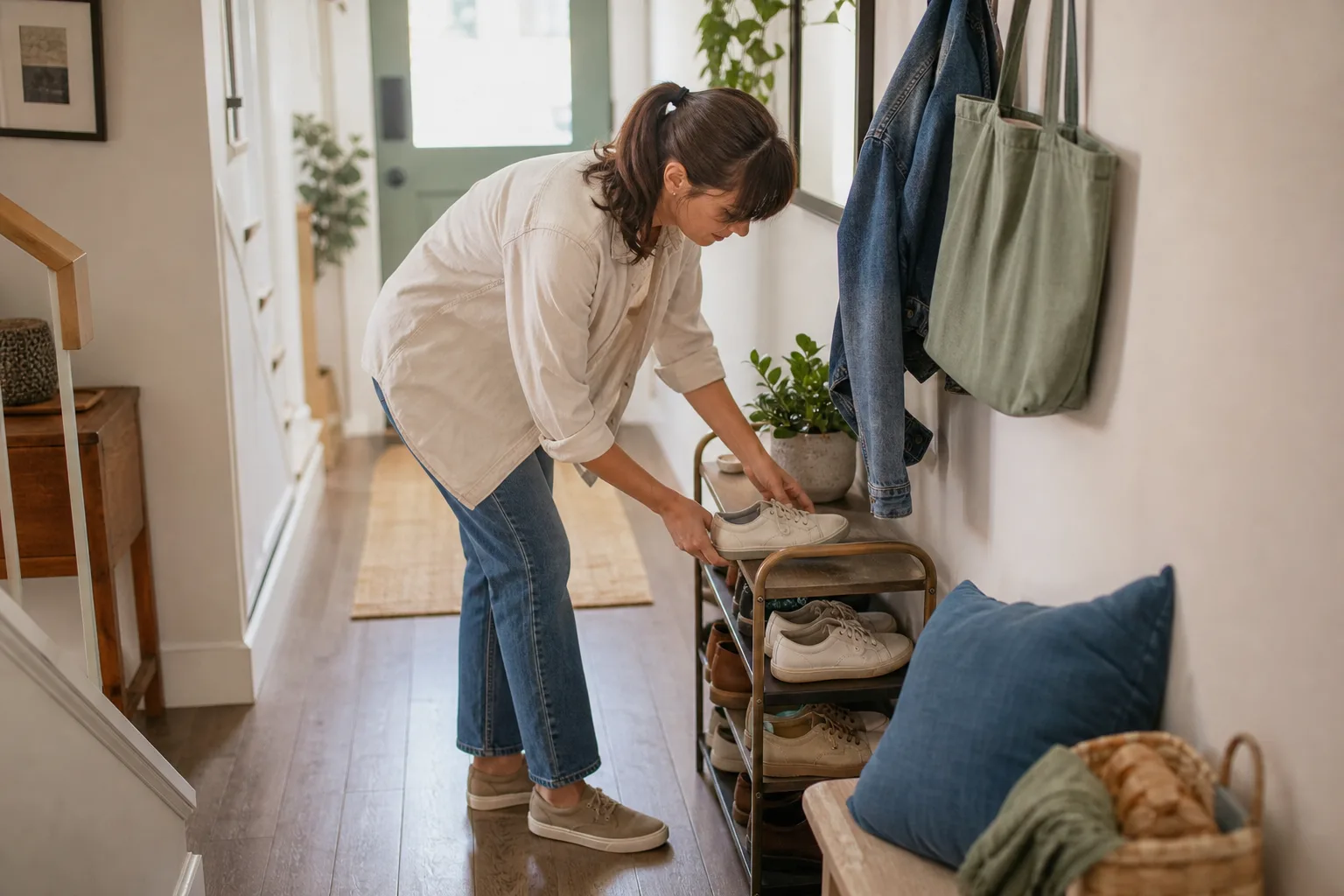
Three pairs become seven by Friday, the front door catches a sneaker, and the shoe cabinet holds formal shoes no one wore. Entry storage succeeds when it prioritizes the pairs moving through the doorway this week.
This guide does not claim hands-on testing of every option on the market. It translates an everyday household problem into a practical buying checklist, so you can compare current products against your own room, routine, and tolerance for maintenance.
The quick answer
Measure the narrowest walking line and store only the active rotation at the entry. Open shelves dry faster; closed cabinets look calmer but need ventilation and enough internal depth for the largest everyday shoe.
What to look for before you buy
Start with the constraint that creates the most friction in your home. A feature is valuable only when it changes that constraint without adding a harder storage or cleaning problem.
Protect the path
Mark the maximum depth on the floor with tape and walk past it while carrying bags. Keep door and emergency access clear.
Measure real shoes
Use the longest and tallest daily pair, not a generic size chart. Boots, high-tops, and large shoes change shelf spacing.
Plan for weather
Wet shoes need a tray and air. Avoid sealing damp footwear in a tight cabinet.
Choose by household scenario
The same product format can be helpful in one room and irritating in another. Use these scenarios as a shortlist, then verify dimensions, care instructions, and current availability on the seller or manufacturer page.
Very narrow hall
A vertical open rack uses height, provided it is stable and does not protrude at shoulder level.
Family entry
Assign one reachable shelf per person and move off-season pairs elsewhere.
Calm visual style
A ventilated tilt-out cabinet conceals shoes, but verify toe-box and heel clearance before committing.
What not to overpay for
A long feature list can distract from fit. Skip complexity that does not remove a repeated household step, and be cautious when a specialized replacement part is essential to basic use.
- Storing every owned pair at the front door.
- Choosing shelves that only fit low-profile shoes.
- Using unstable tall racks without following anchoring guidance.
Make the purchase survive real life
Reset the entry once a week: return special-occasion pairs to the closet, empty grit from the tray, and leave wet shoes open to dry. Capacity should equal the household’s active rotation, not its total collection.
Before ordering, take one final measurement and decide where the item will live when it is not being used. That single decision prevents many useful products from becoming visible clutter.
Frequently asked questions
Is open or closed shoe storage better?
Open storage improves access and airflow; closed storage reduces visual clutter. Moisture, depth, and routine decide the better fit.
How many pairs belong by the door?
Usually the pairs worn in the current week, plus weather-specific footwear. Store the rest elsewhere.
Can a shoe bench work in a narrow entry?
Only if its depth preserves the walking line. A shallow wall-mounted shelf or slim rack may fit better.
Keep reading
Related guides
 Organization
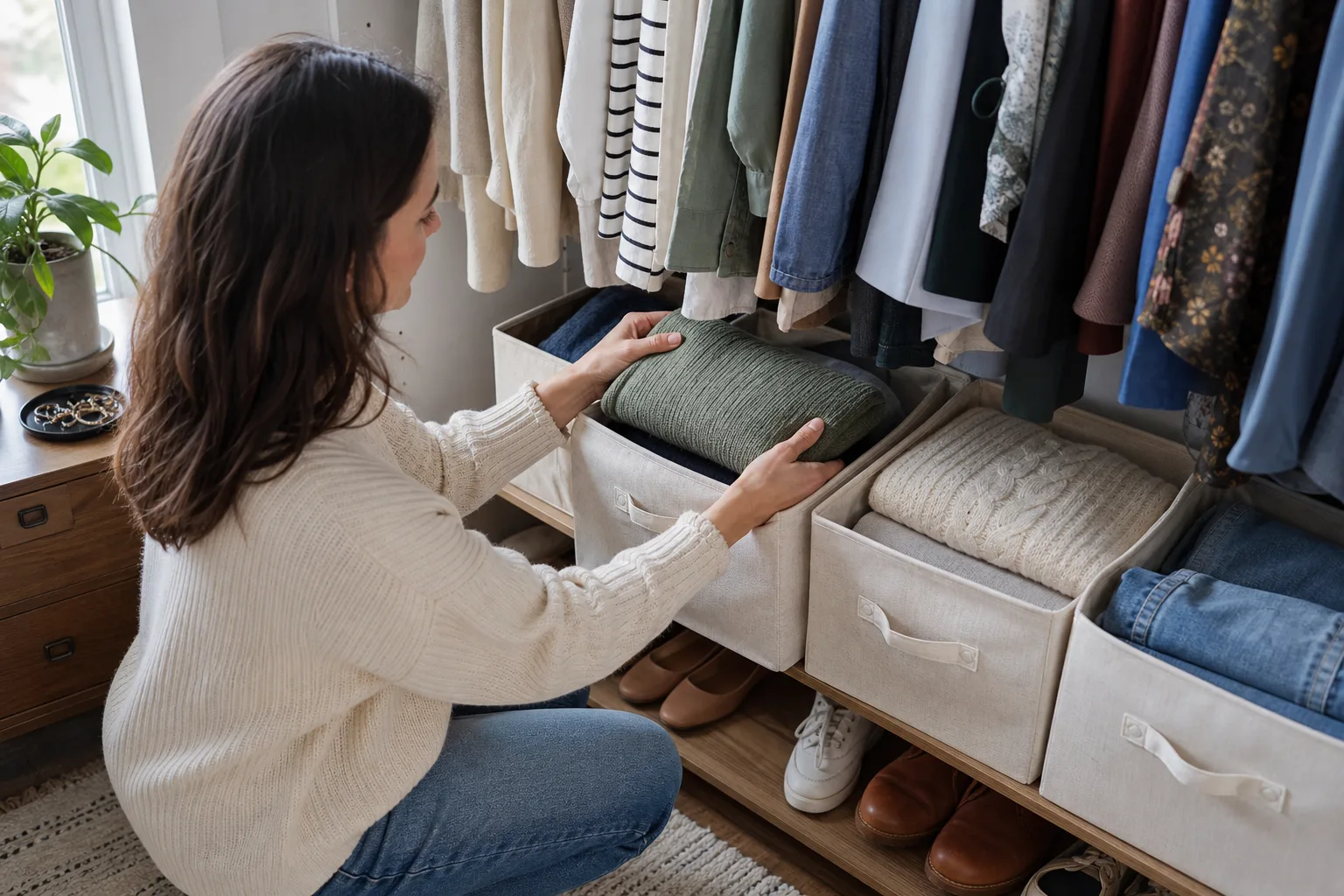
Closet Bins That Make Sense for Real Morning Routines
Use open access, visible categories, and reachable heights so storage supports getting dressed instead of hiding the clothes you need.
Read guide →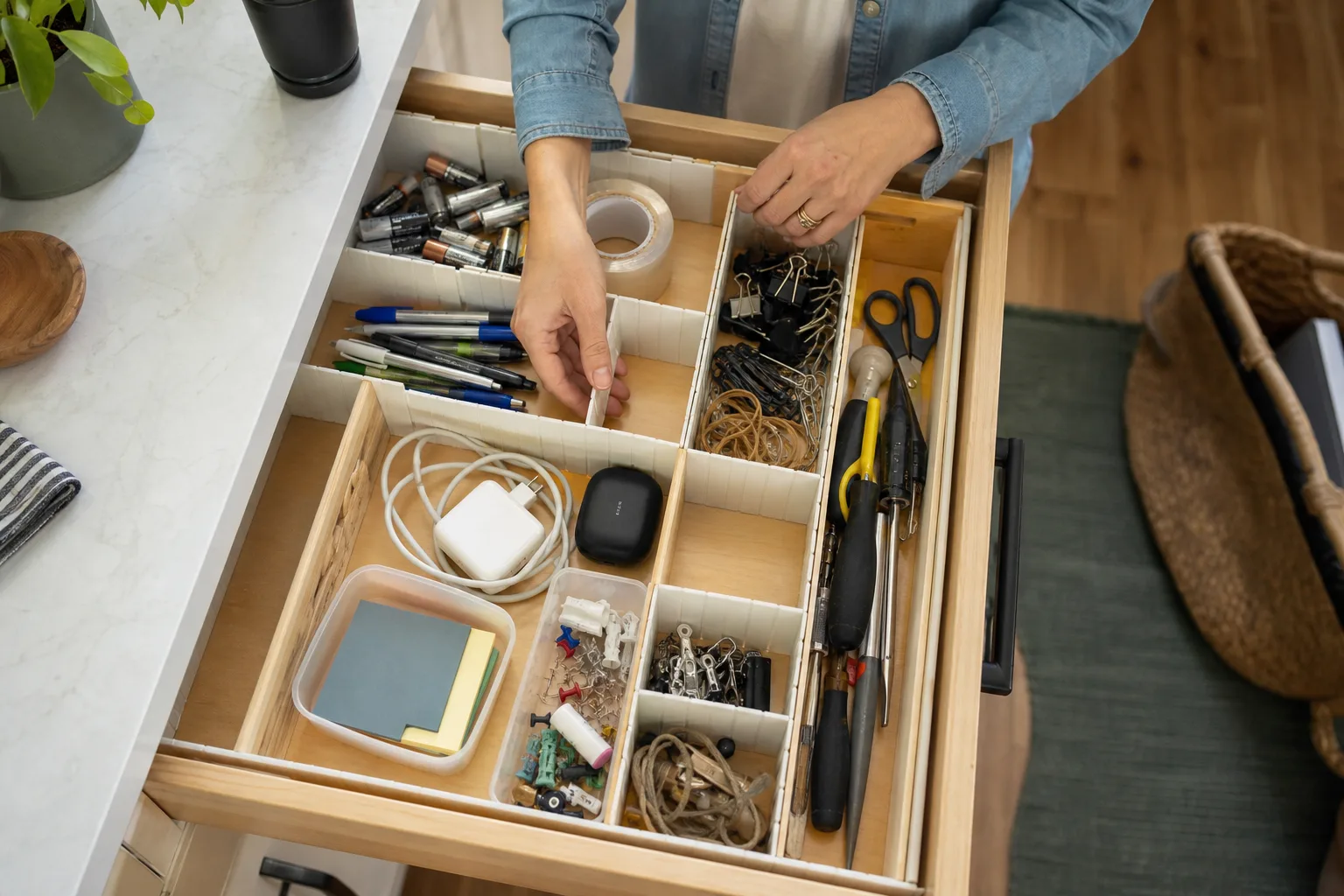 Organization
Drawer Dividers for the Kitchen Junk Drawer Reset
Divide by action—write, fasten, charge, measure—not by the random assortment currently filling the drawer.
Read guide →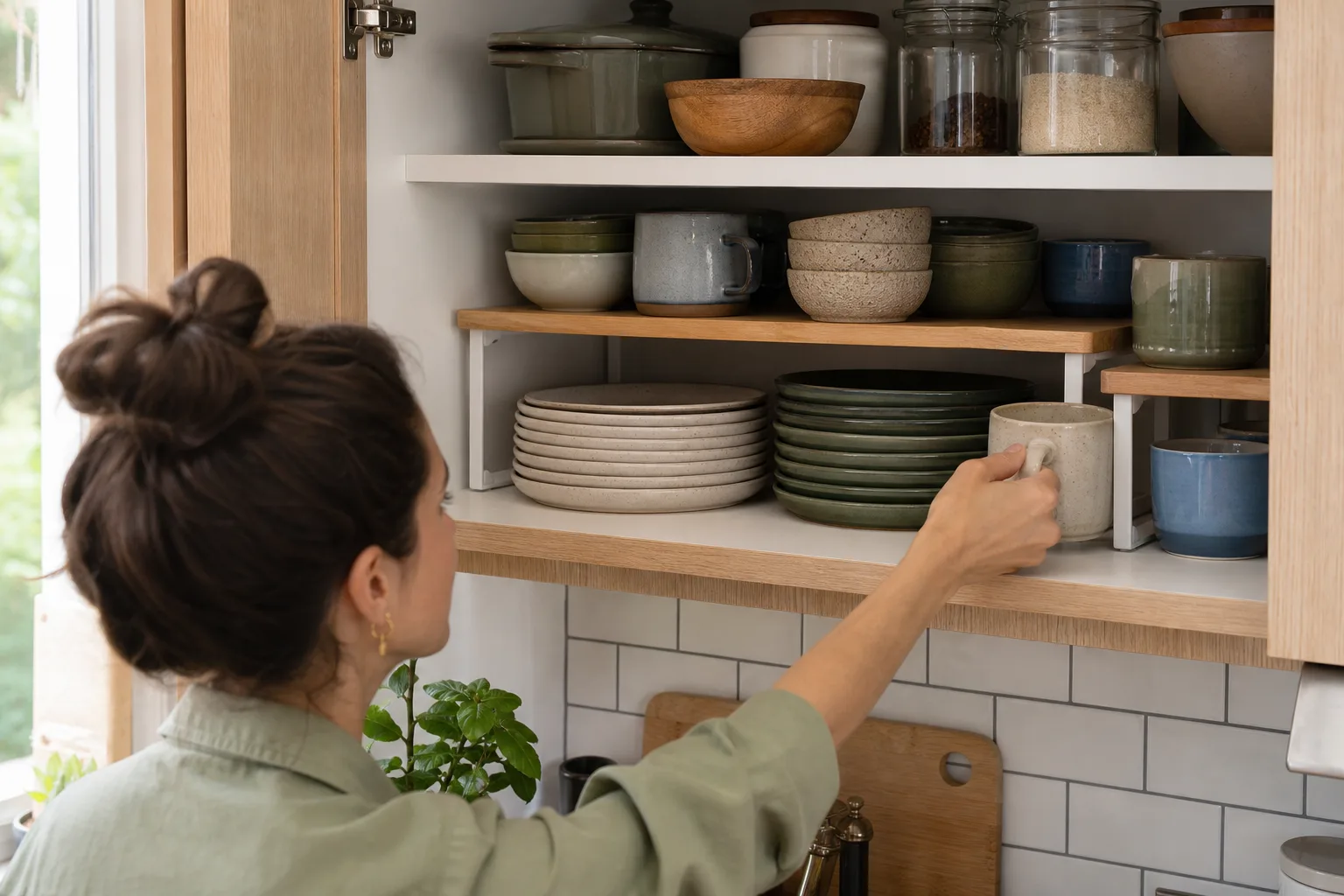 Organization
Shelf Risers: The Cheapest Way to Find Hidden Cabinet Space
Use risers to separate stacks you reach differently, not simply to fill every inch of air inside a cabinet.
Read guide →