
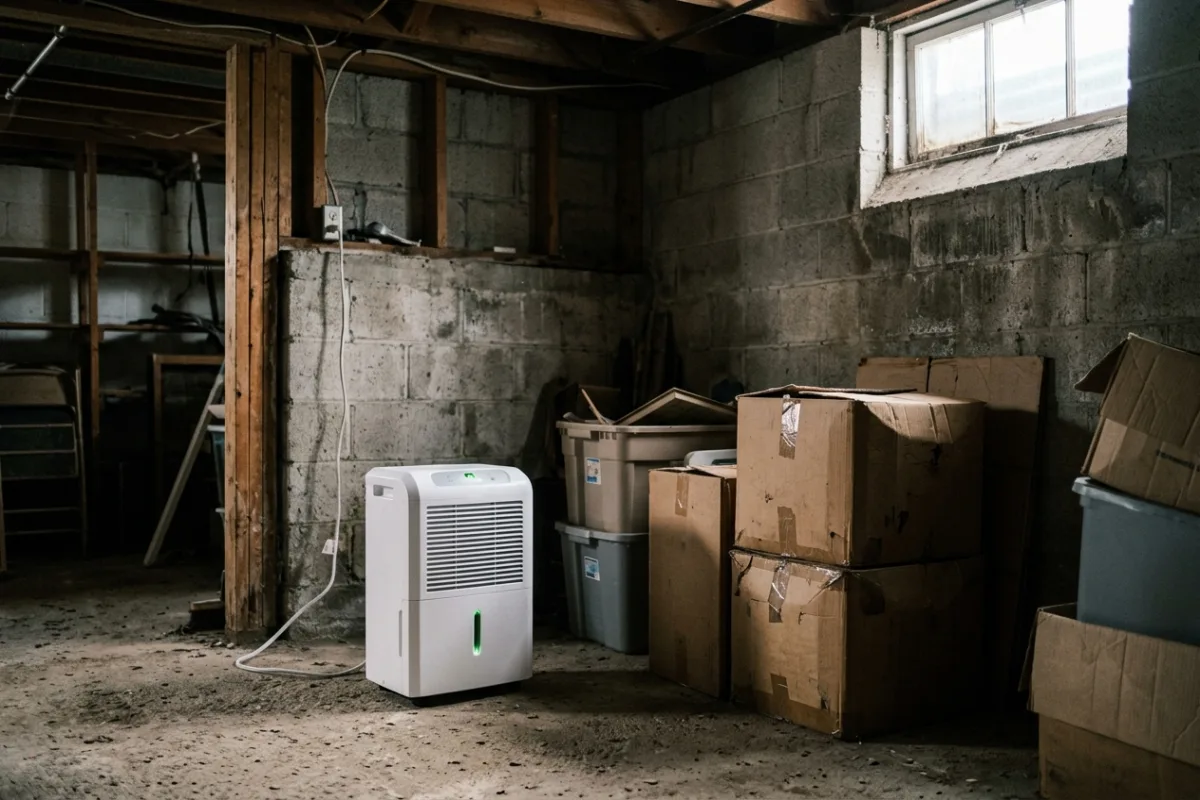
Your basement smells musty by midsummer no matter how often you run a box fan, and the cardboard boxes stacked along the wall have started to soften at the corners. A hygrometer left down there reads well above 60% relative humidity most afternoons, the range where mold and dust mites start to thrive. A small closet dehumidifier barely makes a dent across a finished basement, a laundry room, and the guest bedroom next to it, and hauling a one-gallon bucket to the sink twice a day has gotten old. What the space needs is a single high-capacity unit that pulls serious moisture out of a large, connected area and can drain on its own instead of demanding constant attention.
This review is built from published manufacturer specifications and the current product documentation for the 80-pint basement and large-room dehumidifier category, not from a laboratory test bench. It compares the KNKA Energy Star 5,500 Sq. Ft. Dehumidifier (Max 80 Pint/Day) against the rivals a shopper actually sees beside it, for one clearly defined household job.
The verdict
For a household covering a large basement, laundry room, or humid bedroom in one pass, the KNKA Energy Star dehumidifier is the strongest choice for this use case. Its published rating of up to 80 pints per day across 5,500 square feet lets one unit handle a whole lower level instead of running two or three smaller machines. The built-in 1.45-gallon tank pairs with an included 6.56-foot drain hose for hands-off continuous drainage, and its 40-45 dB range with a dedicated sleep mode makes it one of the few units in this capacity class the manufacturer markets for bedrooms as well as basements. Energy Star certification also keeps the running cost in check for the weeks it needs to stay on.
Check the current listing →KNKA Energy Star 5,500 Sq. Ft. Dehumidifier (Max 80 Pint/Day) at a glance
These are the published specifications that matter most for the use case above. Manufacturers revise hardware between production runs, so confirm the current listing before ordering.
| Extraction Rate | Up to 80 pints/day at 95F/95% RH rated conditions; effective at typical basement conditions of 86F/80% RH |
|---|---|
| Coverage Area | Up to 5,500 sq. ft. |
| Water Tank & Drainage | 1.45-gallon built-in tank with a 6.56 ft (2 m) drain hose; optional 2.64-gallon external tank sold separately |
| Noise Level | 40-45 dB |
| Modes & Controls | Auto mode (default 50% RH), Dry mode, and Set mode (30%-80% RH) with a 12-hour timer and child lock |
Why it wins this category
A better spec sheet is only useful when it removes work from a real routine. These are the four places where the KNKA Energy Star 5,500 Sq. Ft. Dehumidifier (Max 80 Pint/Day) changes the outcome rather than the marketing copy.
Covers a Whole Basement Alone
At a published rate of up to 80 pints a day across 5,500 square feet, one unit can dry an entire finished basement, laundry room, and adjoining bedroom without running two or three smaller machines side by side. Many similarly sized basement dehumidifiers top out closer to 4,500 or 5,000 square feet of rated coverage, so this unit is built to cover more ground per machine.
Quiet Enough for Bedrooms
The manufacturer rates operation at 40-45 dB with a dedicated sleep mode that dims the display and indicator light, a combination most basement-class dehumidifiers in this capacity range do not advertise for bedroom use. That matters for anyone running a high-capacity unit in a guest room or nursery rather than a basement out of earshot.
Hands-Off Continuous Drainage
The included 6.56-foot drain hose connects to the 1.45-gallon built-in tank for continuous run-off into a floor drain or sink, and an optional 2.64-gallon external tank extends capacity further for rooms without a nearby drain. Automatic full-tank shutoff on both the internal and external tank options adds a margin of safety against overflow.
Energy Star Efficiency at This Capacity
Certified under the Energy Star program, the compressor is designed to hold this pint-per-day output without running costs climbing the way they typically do on non-certified units of comparable size. For a dehumidifier expected to run for weeks at a stretch through a damp season, that efficiency rating compounds into a real difference on the electric bill.
How it compares to the alternatives
Each of these is a capable product with a real audience. The question is not whether they work, but which one fits the job described above with the least compromise.
AEOCKY 5,500 Sq. Ft. Energy Star Version 6.0 Home Dehumidifier (105 Pint/D)
a 105-pint dehumidifier marketed for commercial, warehouse, and whole-house use
Where it is strong: AEOCKY's published rating of 105 pints per day at the same 5,500-square-foot coverage class is a genuinely higher extraction figure than this unit's 80-pint rating, and the line carries thousands of customer ratings.
Where it falls short here: Its listing markets the unit for commercial, warehouse, and industrial spaces rather than bedrooms, and the published specifications do not mention a sleep mode, dimmable indicator light, or child lock, features the KNKA listing calls out specifically for household bedrooms and family use.
Waykar 80 Pint (2012 Standard) Energy Star Dehumidifier for Basements
a widely reviewed 80-pint basement dehumidifier rated for 5,000 square feet
Where it is strong: Waykar's line carries tens of thousands of customer ratings and adds auto-defrost plus an auto-dry setting, genuinely useful conveniences for basements that see temperature swings between seasons.
Where it falls short here: Under the newer DOE 2019 testing standard the same unit is rated at 62 pints per day, well below this unit's 80-pint rating, and its coverage tops out at 5,000 square feet against the KNKA's 5,500, with no humidity breathing-light indicator mentioned in the listing.
AVYLO Dehumidifier for Basements with Pump and Hose (Max 90 Pint/Day)
a pump-equipped 90-pint basement dehumidifier with a 2.11-gallon top tank
Where it is strong: AVYLO's built-in pump and three drain options genuinely help in basements without a nearby gravity-fed floor drain, and its 2.11-gallon top-mounted tank holds more between manual empties than this unit's built-in reservoir.
Where it falls short here: Its rated coverage stops at 5,000 square feet, below the KNKA unit's 5,500, and the published listing does not mention a sleep mode or child lock, two features the KNKA model specifically markets for shared bedrooms and homes with kids or pets.
Weighed against those three, the KNKA Energy Star 5,500 Sq. Ft. Dehumidifier (Max 80 Pint/Day) remains the one that covers this scenario end to end without asking you to accept a workaround somewhere else.
Who it fits
Owners of Damp Unfinished Basements
If a hygrometer in your basement regularly reads above 60% relative humidity, or stored boxes and furniture have started to smell musty, a unit rated for 5,500 square feet at up to 80 pints a day is sized to bring a full lower level down to a safer range.
Households Sharing Space With a Bedroom
Finished basements that double as a guest room, home gym, or office benefit from the 40-45 dB rating and sleep mode, which keep the unit from being disruptive overnight the way louder basement-class dehumidifiers can be in a room people actually sleep or work in.
Anyone Without a Convenient Floor Drain
The included drain hose handles continuous run-off wherever a floor drain or utility sink is within reach, and the optional external tank extends unattended run time further for rooms where routing a hose to a drain is not an option.
What to be realistic about
No product is the right answer for every household. Skip this one, or plan around these points, if any of them describe your situation.
- If your space is under a few hundred square feet, like a closet or crawlspace, a compact 30 to 50-pint unit handles it with less bulk and cost.
- If you cannot route the hose to a drain or sink and are unwilling to empty a tank several times a day at this extraction rate, plan around that first.
- This unit is not a medical device and will not resolve existing mold growth or structural water intrusion on its own; consult a remediation professional if either is already present.
Living with it after week one
Keep the unit upright for 24 hours before first use, then place it on a level floor near an outlet with a few inches of clearance on all sides for airflow. Connect the included drain hose to a nearby floor drain or sink for continuous operation, or rely on the 1.45-gallon tank and empty it when the full-tank alarm triggers. Start in Auto mode at 50% relative humidity, switch to Dry mode when drying laundry nearby, and use the 12-hour timer for scheduled runs. Rinse the washable filter every few weeks so airflow and extraction do not gradually decline over a damp season.
Frequently asked questions
Does the KNKA dehumidifier need to be connected to a drain to work?
No. It ships with a built-in 1.45-gallon tank that shuts the unit off automatically when full, so it works as a standalone unit you empty by hand. Connecting the included 6.56-foot drain hose to a floor drain or sink simply lets it run continuously without you needing to check or empty the tank.
How loud is it running overnight in a bedroom?
The manufacturer rates operation at 40-45 decibels, and a dedicated sleep mode dims the display and status light for nighttime use. That is quieter than many basement-class units in this pint-per-day range, though perceived loudness will still depend on the room and how close the unit sits to the bed.
Can one unit really cover a whole basement plus an attached room?
The manufacturer's published rating is up to 5,500 square feet and 80 pints removed per day under rated test conditions, which covers a typical finished basement plus an adjoining laundry room or bedroom in most homes. Actual performance depends on ceiling height, air leaks, and how humid the space starts out.
Keep reading
Related guides
 Home Climate
GARVEE 14,000 BTU Portable Air Conditioner for Apartments and Rentals
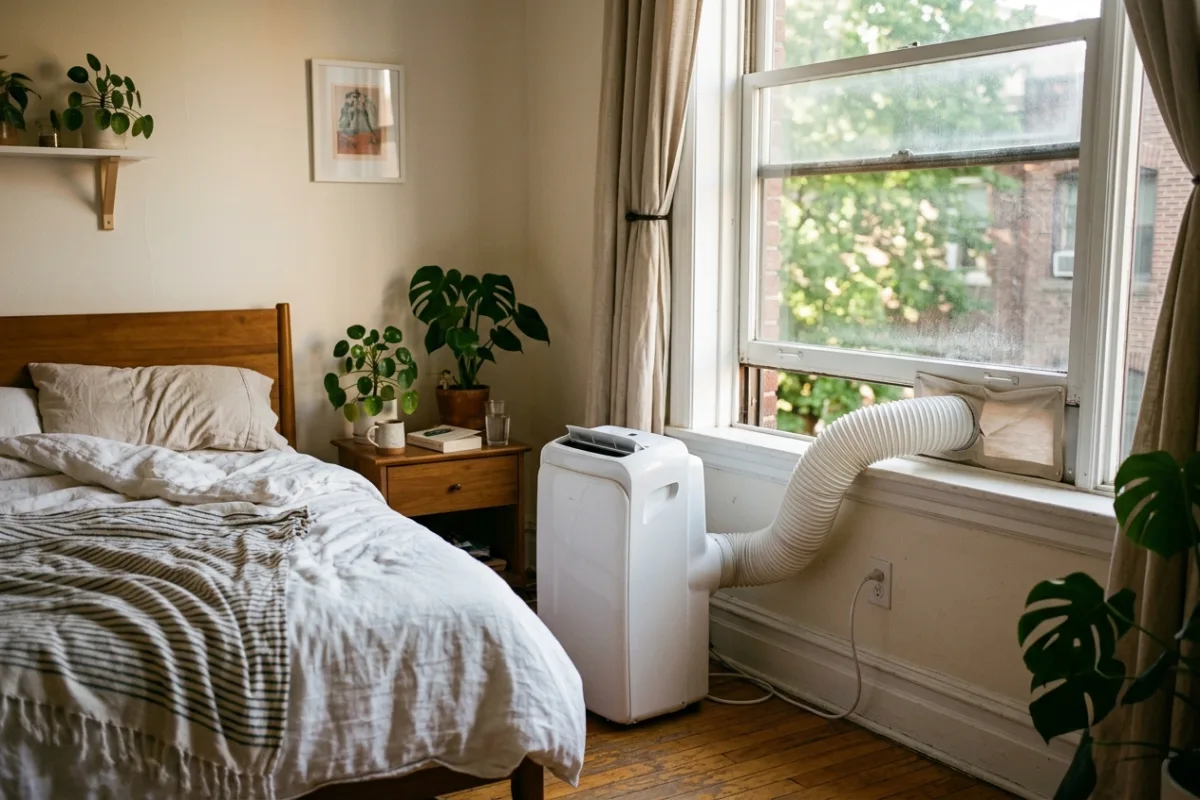
Renters who can't install a window unit or mini-split can use the GARVEE 14,000 BTU portable air conditioner to cool, dehumidify, and vent a single room through any window in under an hour.
Read review →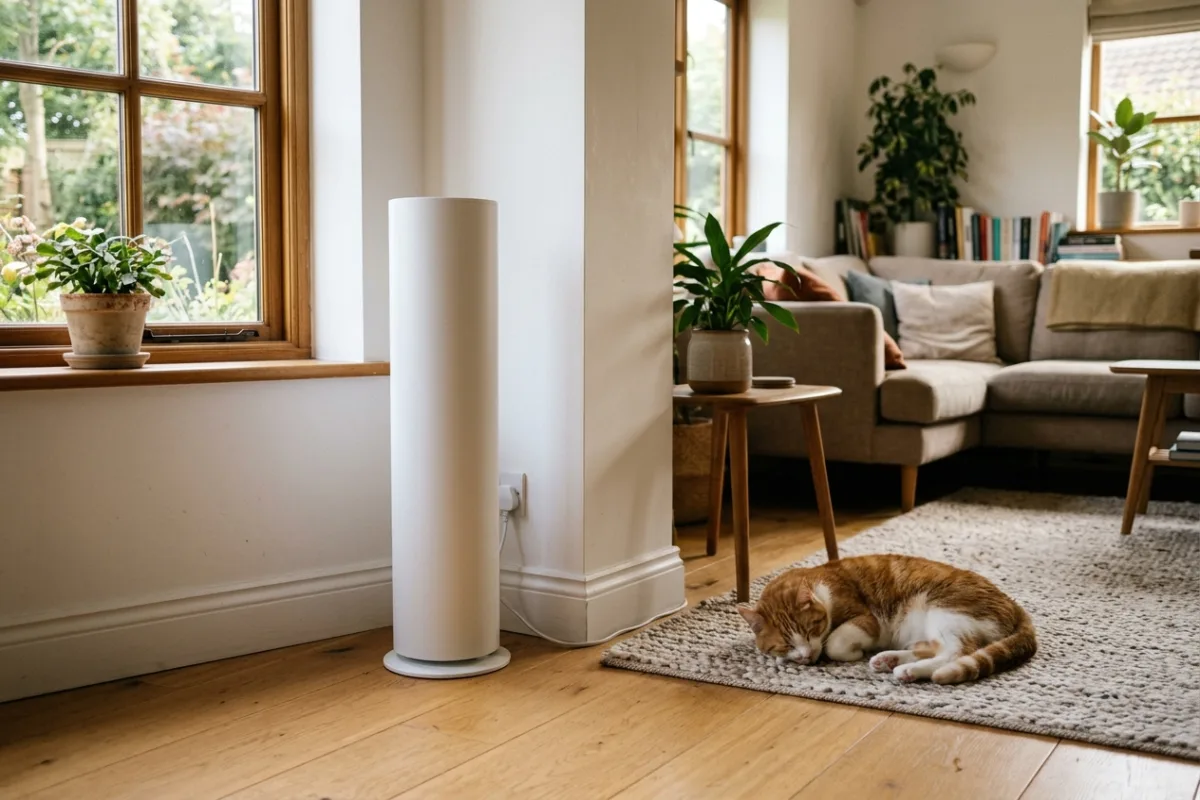 Home Climate
DREO 338S Smart Air Purifier: A Large-Room Pick For Quiet Filtration
For a shared living room with pets and light sleepers nearby, the DREO 338S pairs AHAM-verified large-room coverage with a whisper-quiet sleep mode and full app control.
Read review → Home Climate
JISULIFE Handheld Fan Pro1S: The Commute Fan That Lasts All Day
A day-long commute in punishing heat needs a handheld fan whose battery, airflow, and build quality actually hold up past the morning rush, not just the first few stops.
Read review →