
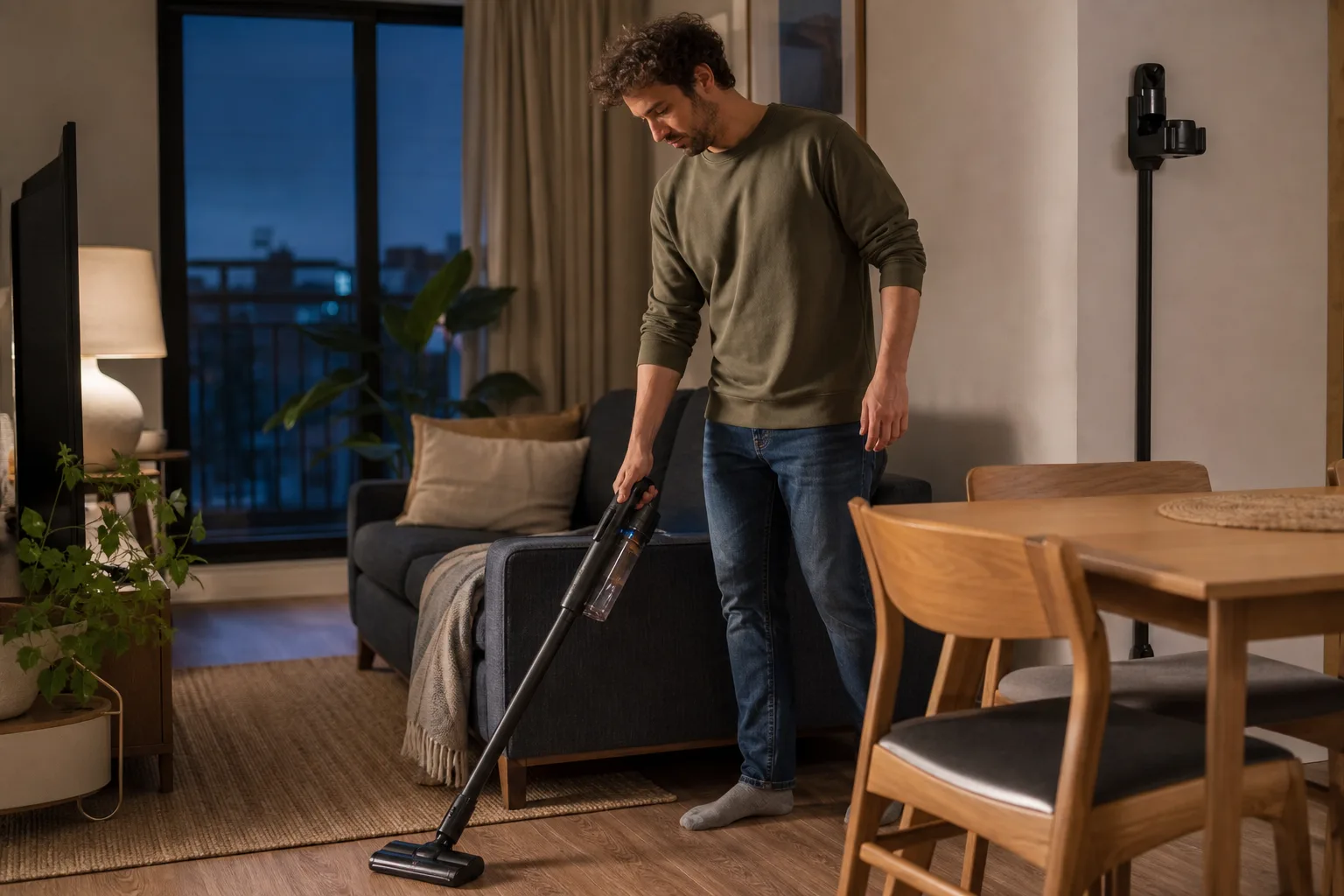
In a 700-square-foot apartment, the vacuum spends more time negotiating chair legs, rugs, and a narrow closet than covering open floor. A model can look powerful in a specification table and still be annoying enough to leave on its charger.
This guide does not claim hands-on testing of every option on the market. It translates an everyday household problem into a practical buying checklist, so you can compare current products against your own room, routine, and tolerance for maintenance.
The quick answer
Choose for the longest cleaning session you actually do, the surfaces you own, and the place the vacuum will charge. Easy steering, a comfortable grip, and a bin you can empty cleanly often matter more than a dramatic headline number.
What to look for before you buy
Start with the constraint that creates the most friction in your home. A feature is valuable only when it changes that constraint without adding a harder storage or cleaning problem.
Follow the floor mix
Hard floors, low-pile rugs, thick carpet, and pet hair require different brush behavior. Check the maker’s supported surfaces and controls.
Test the storage plan
Confirm standing height, wall-mount requirements, outlet position, and whether attachments stay with the unit.
Read runtime context
Published runtime may vary by mode and attachment. Compare it with your likely session rather than treating the largest number as universal.
Choose by household scenario
The same product format can be helpful in one room and irritating in another. Use these scenarios as a shortlist, then verify dimensions, care instructions, and current availability on the seller or manufacturer page.
Quick daily passes
A light model with a simple head can be easier to grab for crumbs and entryway grit.
Pet household
Look for a brush design intended to manage hair and a bin that empties without reaching into debris.
Only vacuum
Prioritize serviceable filters, suitable carpet performance, and enough runtime for the full home—not just spot cleaning.
What not to overpay for
A long feature list can distract from fit. Skip complexity that does not remove a repeated household step, and be cautious when a specialized replacement part is essential to basic use.
- Buying before finding a legal, stable charging location.
- Assuming every attachment is useful in a small home.
- Ignoring replacement filter and battery availability.
Make the purchase survive real life
Empty the bin before it is packed, remove hair from the brush, and clean filters on the published schedule. A two-minute maintenance habit preserves airflow and prevents the vacuum closet from smelling dusty.
Before ordering, take one final measurement and decide where the item will live when it is not being used. That single decision prevents many useful products from becoming visible clutter.
Frequently asked questions
Can a stick vacuum replace a full-size vacuum?
In many smaller homes it can, if it suits the floor types and cleaning duration. Deep carpet or large areas may justify a different format.
Is a removable battery useful?
It can extend service life or runtime if replacements remain available, but it also adds cost. Check the current support policy.
Do more attachments mean better value?
Only when the tools match your furniture, stairs, car, or pet routine and have a place to be stored.
Keep reading
Related guides
 Cleaning
NEC440 Stops Suddenly: Read the Thermal-Cutoff Rule
Use the NEC440 manual's thermal-cutoff sequence to separate a sudden stop, permitted airflow checks and the point to contact Eureka support.
Read guide → Cleaning
NEC440 Warranty: Separate the Vacuum and Battery
Read NEC440 vacuum and battery warranty terms separately, keep delivery evidence and verify the actual service route before buying replacement parts.
Read guide → Cleaning
Eureka NEC440 Spare Battery: Verify the Part First
Verify NEC440BK battery and charger identifiers, resolve an inconsistent official accessory page and compare the real single-pack purchase.
Read guide →