

The shower door looks clear when wet, then dries with visible tracks by evening. A squeegee can reduce the water left behind, but only if it hangs inside the natural exit path instead of disappearing beneath the sink.
This guide does not claim hands-on testing of every option on the market. It translates an everyday household problem into a practical buying checklist, so you can compare current products against your own room, routine, and tolerance for maintenance.
The quick answer
Choose a blade slightly narrower than the smallest panel, with a comfortable handle and a holder that works on your wall material. The best model makes three or four quick passes without squeaking, snagging, or requiring a storage ritual.
What to look for before you buy
Start with the constraint that creates the most friction in your home. A feature is valuable only when it changes that constraint without adding a harder storage or cleaning problem.
Fit the glass
Measure narrow panels, curves, hardware, and tile transitions. A very wide blade can miss edges or collide with fixtures.
Check the edge
A straight, flexible blade should contact the surface evenly. Replace it when nicks leave repeated lines.
Choose reachable storage
Hooks, suction holders, and adhesive mounts suit different surfaces. Follow installation guidance and avoid damaging rental finishes.
Choose by household scenario
The same product format can be helpful in one room and irritating in another. Use these scenarios as a shortlist, then verify dimensions, care instructions, and current availability on the seller or manufacturer page.
Glass enclosure
Use overlapping top-to-bottom passes and finish the lower edge where water collects.
Tiled shower
A smaller flexible blade navigates grout lines and corners more easily than a rigid wide model.
Shared bathroom
Place the holder at eye level near the door so the reset is obvious to every user.
What not to overpay for
A long feature list can distract from fit. Skip complexity that does not remove a repeated household step, and be cautious when a specialized replacement part is essential to basic use.
- A metal edge that can contact or scratch a delicate surface.
- Mounting the holder where the handle blocks the door.
- Treating a squeegee as a substitute for periodic cleaning and ventilation.
Make the purchase survive real life
After the last shower of the morning or evening, pull water from the upper panels toward the drain, wipe the sill, and leave ventilation running as appropriate. Rinse the blade and hang it with airflow around the edge.
Before ordering, take one final measurement and decide where the item will live when it is not being used. That single decision prevents many useful products from becoming visible clutter.
Frequently asked questions
Does a squeegee prevent all mineral buildup?
No. It reduces standing droplets, but water chemistry and cleaning frequency still matter.
Is silicone better than rubber?
Both can work. Even contact, flexibility, handle comfort, and replacement availability are more useful buying checks than material alone.
Can it be used on tile?
Often yes on smooth tile, but textured surfaces and grout interrupt contact. Check the surface and tool guidance.
Keep reading
Related guides
 Cleaning
NEC440 Stops Suddenly: Read the Thermal-Cutoff Rule
Use the NEC440 manual's thermal-cutoff sequence to separate a sudden stop, permitted airflow checks and the point to contact Eureka support.
Read guide → Cleaning
NEC440 Warranty: Separate the Vacuum and Battery
Read NEC440 vacuum and battery warranty terms separately, keep delivery evidence and verify the actual service route before buying replacement parts.
Read guide →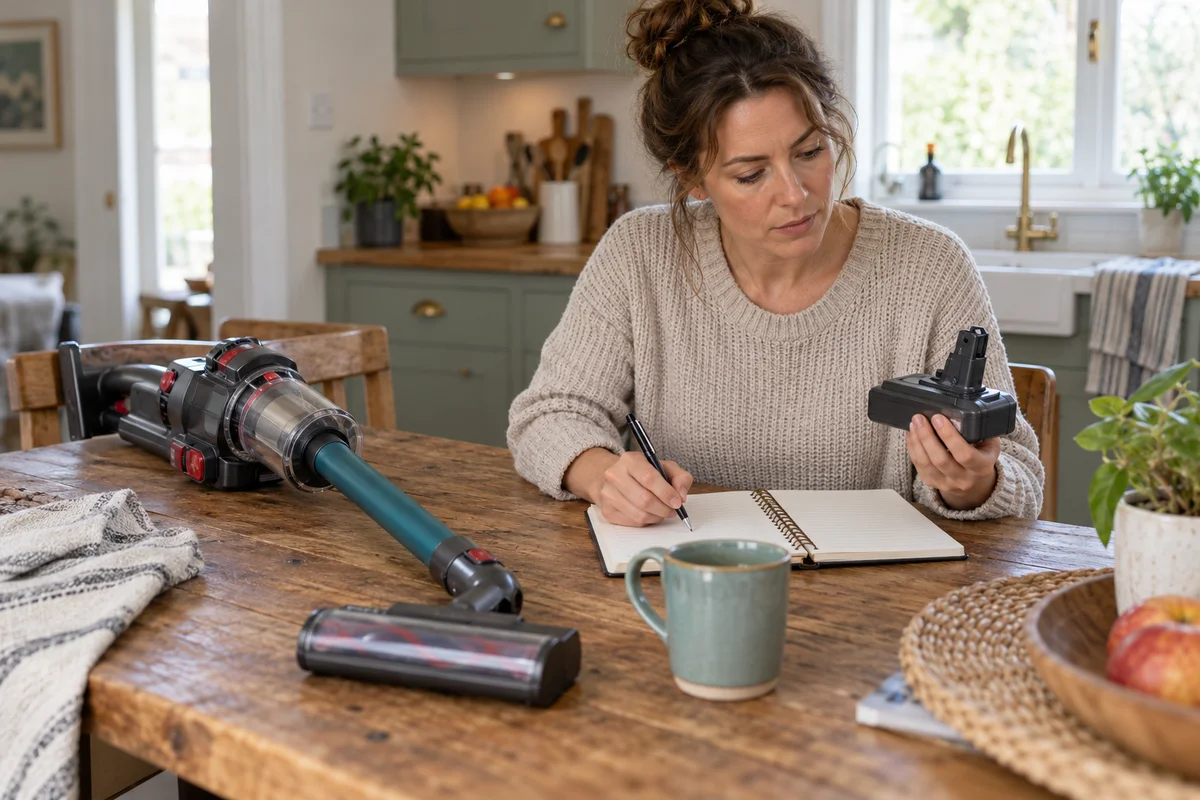 Cleaning
Eureka NEC440 Spare Battery: Verify the Part First
Verify NEC440BK battery and charger identifiers, resolve an inconsistent official accessory page and compare the real single-pack purchase.
Read guide →