
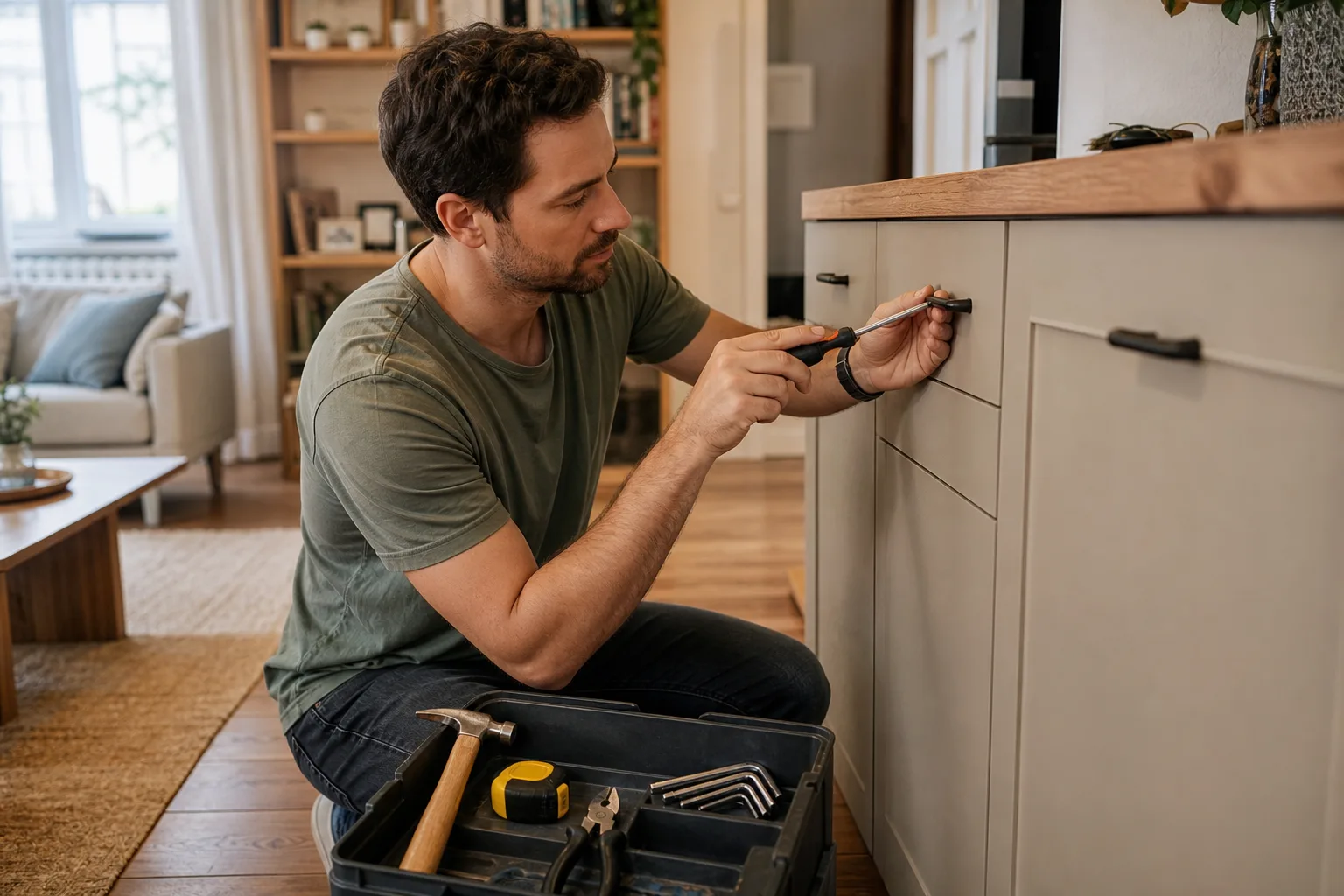
A cabinet handle loosens, a picture needs leveling, and the only screwdriver is the wrong size. Giant kits promise hundreds of pieces, but common home repairs depend on a small group of reliable tools that are easy to identify and replace.
This guide does not claim hands-on testing of every option on the market. It translates an everyday household problem into a practical buying checklist, so you can compare current products against your own room, routine, and tolerance for maintenance.
The quick answer
Start with a comfortable multi-bit or small screwdriver set, claw hammer, tape measure, adjustable pliers or wrench, hex keys, level, utility knife, and basic safety gear appropriate to the task. Add tools only when a real repair repeats.
What to look for before you buy
Start with the constraint that creates the most friction in your home. A feature is valuable only when it changes that constraint without adding a harder storage or cleaning problem.
Inventory the fasteners
Look at cabinet handles, furniture, wall hardware, and appliance panels. Match bit types and sizes rather than buying by piece count.
Value the handle
Grip comfort, control, and clearly marked sizes matter more than a case packed with duplicate low-use bits.
Leave expansion room
A case should hold the starter tools without locking you into molded slots that reject a better replacement.
Choose by household scenario
The same product format can be helpful in one room and irritating in another. Use these scenarios as a shortlist, then verify dimensions, care instructions, and current availability on the seller or manufacturer page.
Apartment renter
A compact kit covers assembly, approved hanging, adjustments, and move-out disassembly without becoming a workshop.
First home
Begin with core hand tools, then add a drill, tester, or specialty tool only with training and a defined use.
Shared household
Clear labels and a return slot prevent the correct bit from disappearing after one repair.
What not to overpay for
A long feature list can distract from fit. Skip complexity that does not remove a repeated household step, and be cautious when a specialized replacement part is essential to basic use.
- Choosing the largest advertised piece count.
- Using a tool for electrical, structural, gas, or plumbing work beyond your skills.
- Keeping damaged blades, cracked handles, or rusted moving parts in service.
Make the purchase survive real life
Return tools clean and dry, replace blades safely, and note missing pieces after each repair. Keep manuals and spare hardware in a separate labeled pouch so the toolkit remains about tools, not mystery screws.
Before ordering, take one final measurement and decide where the item will live when it is not being used. That single decision prevents many useful products from becoming visible clutter.
Frequently asked questions
Is a power drill essential?
Not for every starter kit. Add one when repeated tasks justify it and you understand bits, surfaces, and safe use.
How many screwdriver bits are enough?
Enough to match the common fasteners in your home. A smaller clearly marked set is often more useful than many obscure duplicates.
Which repairs should be left to a professional?
Anything involving uncertain electrical, gas, structural, major plumbing, hazardous materials, or work restricted by a lease or local rules.
Keep reading
Related guides
 Everyday Living
The Foldable Step Stool Every Small Home Eventually Needs
Choose stability, standing height, lock behavior, and a storage position that does not make safe access inconvenient.
Read guide → Everyday Living
Indoor Drying Racks for Rainy Weeks and Delicate Laundry
Balance hanging length, airflow, loaded stability, folded size, and the walkway the rack temporarily occupies.
Read guide → Everyday Living
A Calm Entryway Drop Zone for Keys, Mail, and Bags
Build a short landing sequence that separates items leaving tomorrow from paper that needs a decision.
Read guide →