
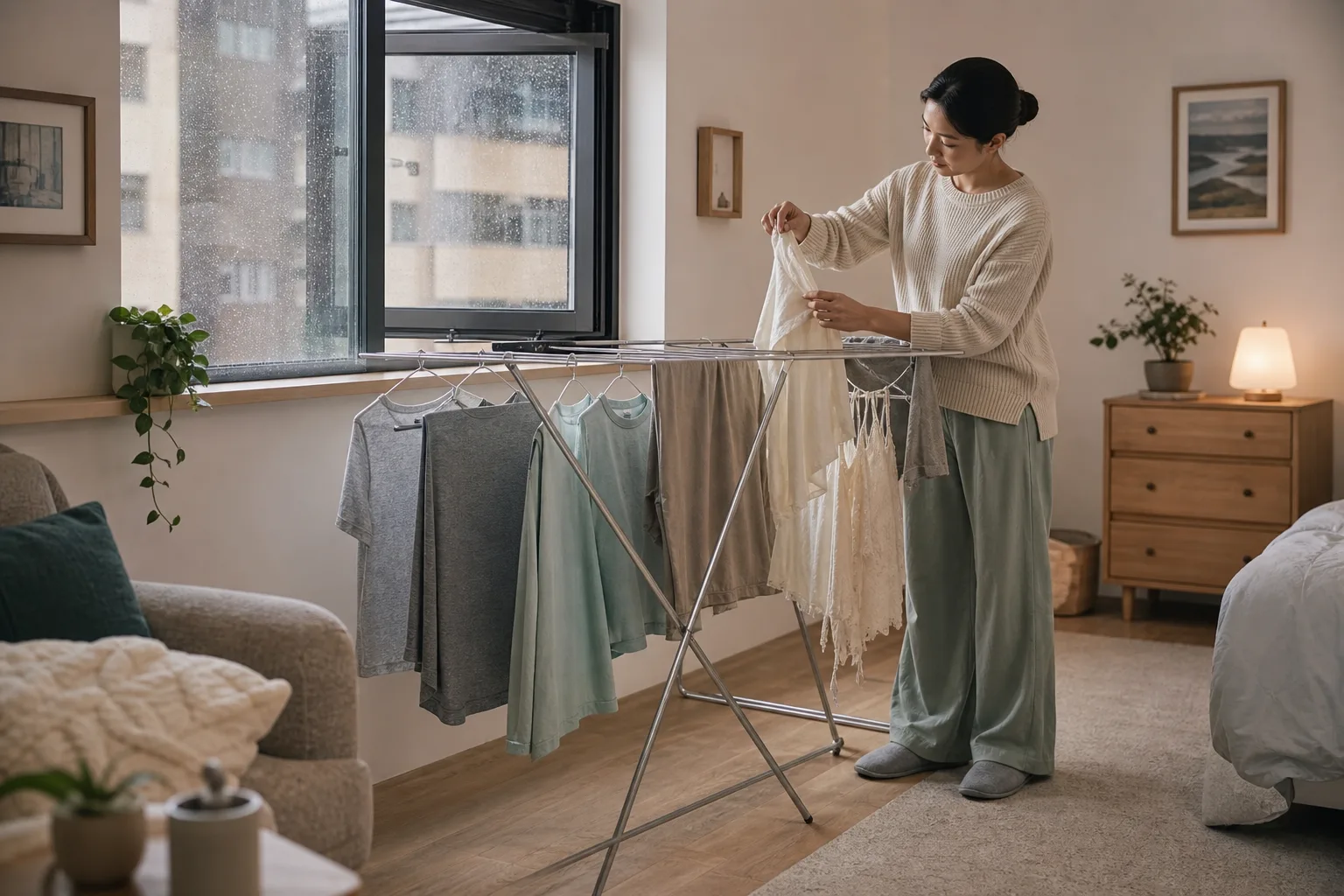
A rainy forecast turns two delicate sweaters and a week of workout clothes into a living-room obstacle. A rack must provide enough line without forcing wet garments together or blocking the route to the balcony.
This guide does not claim hands-on testing of every option on the market. It translates an everyday household problem into a practical buying checklist, so you can compare current products against your own room, routine, and tolerance for maintenance.
The quick answer
Choose the rack’s open footprint by the clear area available on laundry day, then check total hanging length and bar spacing. A stable winged rack is versatile; a vertical tower saves floor area but concentrates moisture and can be harder to load evenly.
What to look for before you buy
Start with the constraint that creates the most friction in your home. A feature is valuable only when it changes that constraint without adding a harder storage or cleaning problem.
Measure open and folded
Record the laundry-day floor rectangle and the permanent storage slot. Include hinges, wheels, and wall clearance.
Protect airflow
Garments dry more predictably when spaced and ventilated. Avoid pressing a full rack against walls or heat sources.
Load for stability
Spread heavy wet items evenly and follow load guidance. A light empty rack can behave differently when one side holds towels.
Choose by household scenario
The same product format can be helpful in one room and irritating in another. Use these scenarios as a shortlist, then verify dimensions, care instructions, and current availability on the seller or manufacturer page.
Delicates and shirts
A winged rack offers varied heights and lays some items flatter across several bars.
Tiny footprint
A stable tower creates more levels, but leave vertical spacing and load it symmetrically.
Bath and laundry zone
An over-tub or wall-mounted solution can preserve the walkway if installation and rental rules permit.
What not to overpay for
A long feature list can distract from fit. Skip complexity that does not remove a repeated household step, and be cautious when a specialized replacement part is essential to basic use.
- Placing wet laundry against heaters or unsafe heat sources.
- Overloading one wing or narrow top rail.
- Buying by folded size while ignoring the open footprint.
Make the purchase survive real life
Run appropriate ventilation, shake garments before hanging, leave gaps, and fold the rack only when dry. Wipe joints and feet before storage so damp lint does not travel into a closet.
Before ordering, take one final measurement and decide where the item will live when it is not being used. That single decision prevents many useful products from becoming visible clutter.
Frequently asked questions
Does a vertical rack dry more slowly?
It can if clothes are crowded or airflow is poor. Spacing, room ventilation, humidity, and fabric matter.
Can heavy towels go on a folding rack?
Only within published load guidance and with weight distributed to keep the rack stable.
How much hanging length is enough?
Lay out one typical air-dry load and estimate the bar space it needs with gaps between items.
Keep reading
Related guides
 Everyday Living
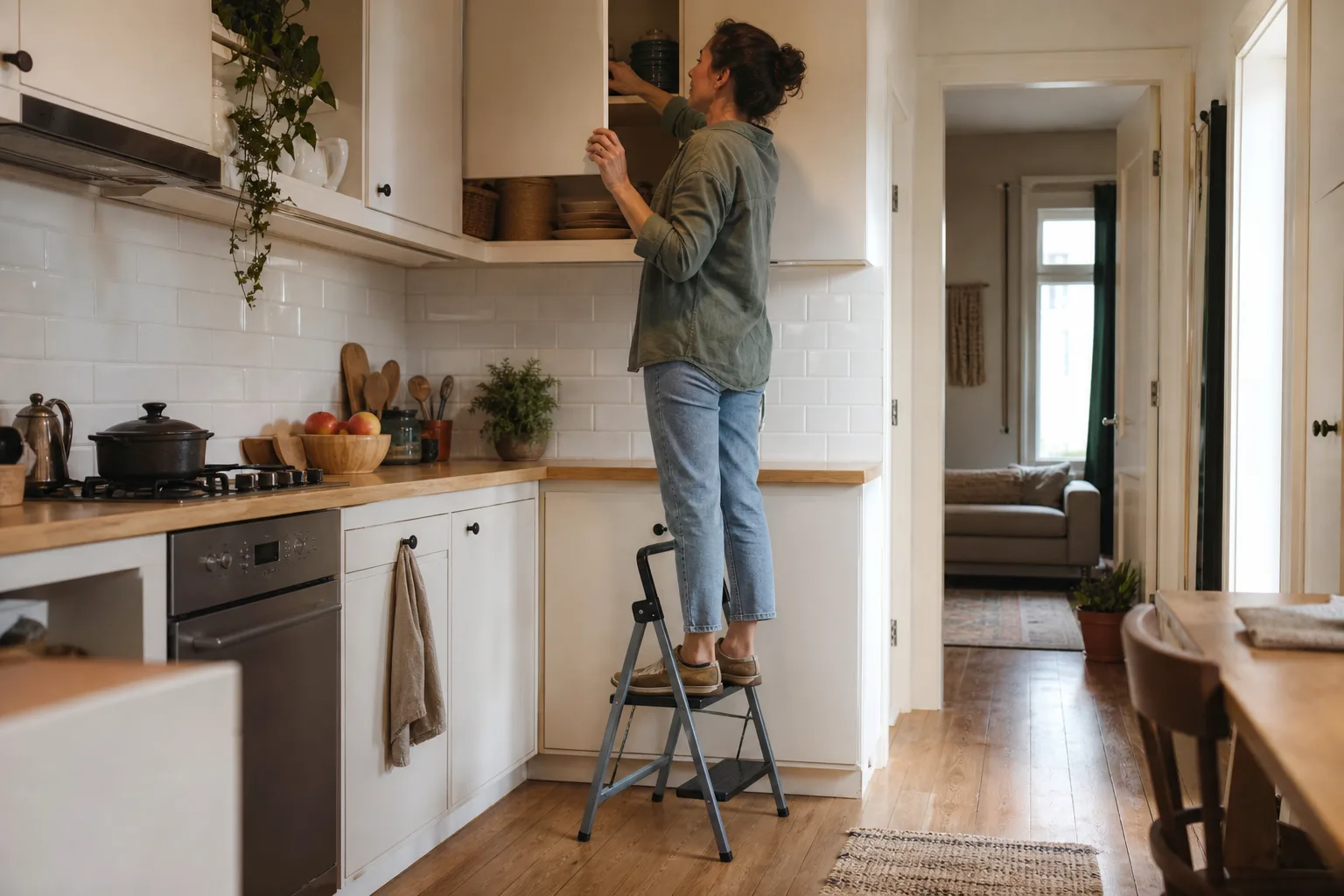
The Foldable Step Stool Every Small Home Eventually Needs
Choose stability, standing height, lock behavior, and a storage position that does not make safe access inconvenient.
Read guide → Everyday Living
A Calm Entryway Drop Zone for Keys, Mail, and Bags
Build a short landing sequence that separates items leaving tomorrow from paper that needs a decision.
Read guide → Everyday Living
Refillable Soap Dispensers That Do Not Create More Work
Choose pump reliability, fill opening, visibility, stable footing, and a refill process that does not coat the sink in soap.
Read guide →