
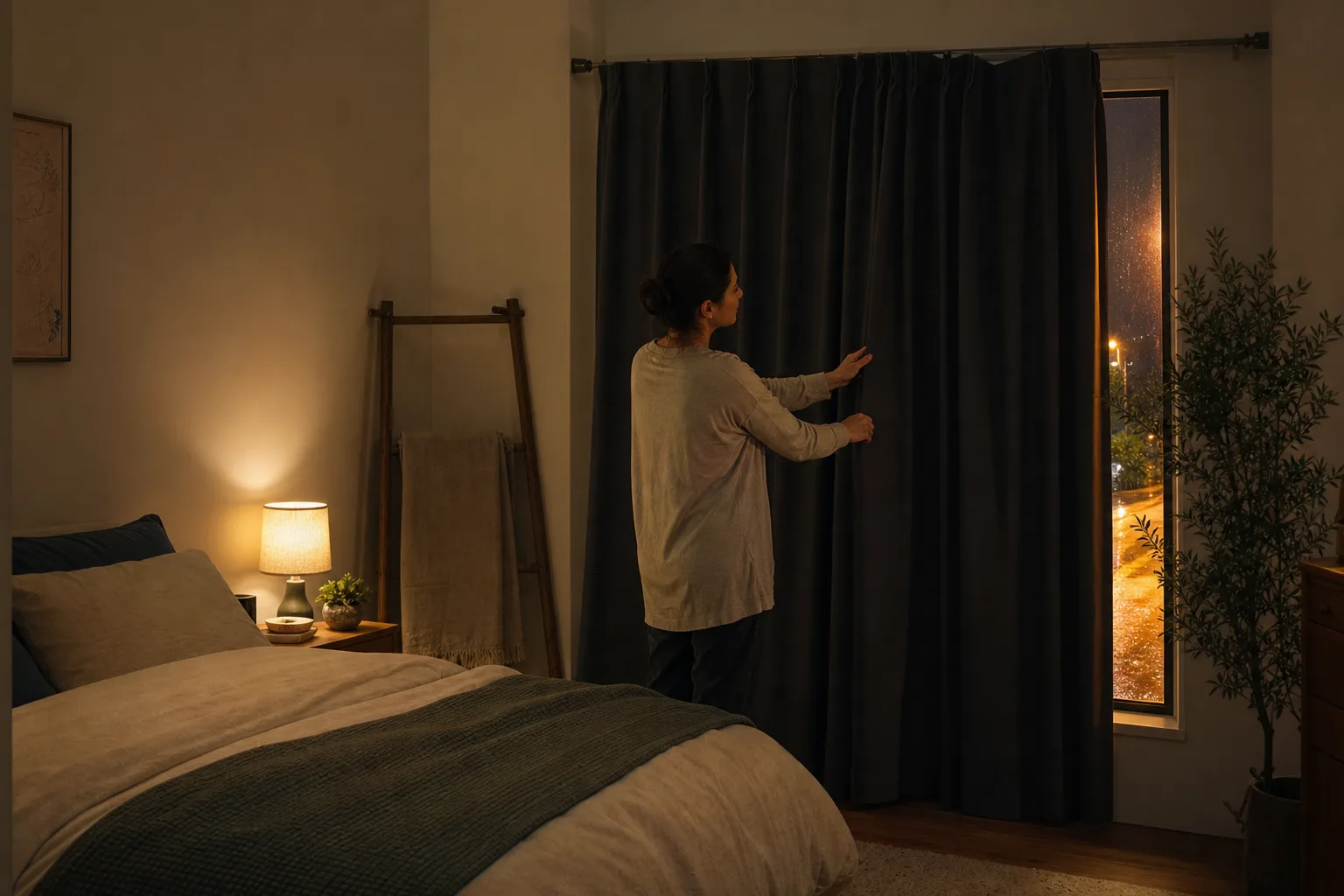
The panel looks opaque in daylight, but at midnight a bright line appears above the rod and two columns of streetlight frame the window. Light control is a coverage problem as much as a fabric problem.
This guide does not claim hands-on testing of every option on the market. It translates an everyday household problem into a practical buying checklist, so you can compare current products against your own room, routine, and tolerance for maintenance.
The quick answer
Measure beyond the glass, mount as high and wide as safely practical, and give panels enough fullness to overlap at the center. Confirm hardware, wall material, radiator clearance, and rental rules before installation.
What to look for before you buy
Start with the constraint that creates the most friction in your home. A feature is valuable only when it changes that constraint without adding a harder storage or cleaning problem.
Measure the whole opening
Include trim and the space needed beyond each side. Product width refers to flat fabric, not necessarily finished coverage.
Control the edges
Wraparound rods, return panels, or layered shades reduce side gaps. Keep fabric safely clear of heat sources.
Review construction
Lining, coating, color, seams, and heading style influence performance. Read current product details rather than assuming the label is absolute.
Choose by household scenario
The same product format can be helpful in one room and irritating in another. Use these scenarios as a shortlist, then verify dimensions, care instructions, and current availability on the seller or manufacturer page.
Streetlight at one side
Extend the rod farther on that side or add a safe return so the panel overlaps the light path.
Rental bedroom
Use approved removable hardware or existing rods, understanding that edge coverage may be more limited.
Day sleeper
Layer curtains with a well-fitted shade and address door or hallway light for more complete control.
What not to overpay for
A long feature list can distract from fit. Skip complexity that does not remove a repeated household step, and be cautious when a specialized replacement part is essential to basic use.
- Buying two panels whose combined flat width only equals the window.
- Letting fabric contact radiators or heaters.
- Assuming dark fabric guarantees identical performance across constructions.
Make the purchase survive real life
Close panels from the same points to preserve folds, vacuum or clean according to the label, and check mounting hardware periodically. If a small edge leak remains, fix that gap before replacing the entire set.
Before ordering, take one final measurement and decide where the item will live when it is not being used. That single decision prevents many useful products from becoming visible clutter.
Frequently asked questions
Do blackout curtains make a room completely dark?
Fabric may block substantial light, but gaps around the edges can remain. Installation and layering determine the room result.
Should panels touch the floor?
Length is partly aesthetic, but pooling fabric gathers dust and may create hazards. Keep it clear of heat sources and walkways.
Can curtains reduce heat?
Some constructions affect heat transfer, but performance varies. Use published specifications and consider the whole window system.
Keep reading
Related guides
 Bedroom & Bath
SparkPod Rain Shower Head: A Tool-Free Upgrade for Rental Bathrooms
This tool-free 6-inch rain shower head lets renters swap out a weak, dated shower head in minutes and put the original back before the move-out inspection.
Read review → Bedroom & Bath
Choosing Bed Sheets for Hot Sleepers Without Marketing Hype
Compare fiber, weave, weight, fit, and care around a warm bedroom instead of treating thread count as the whole story.
Read guide → Bedroom & Bath
Pillow Protectors: The Quiet Layer That Extends Bedding Life
Add a washable barrier without changing pillow loft, trapping heat, or creating a noisy layer beneath the case.
Read guide →