
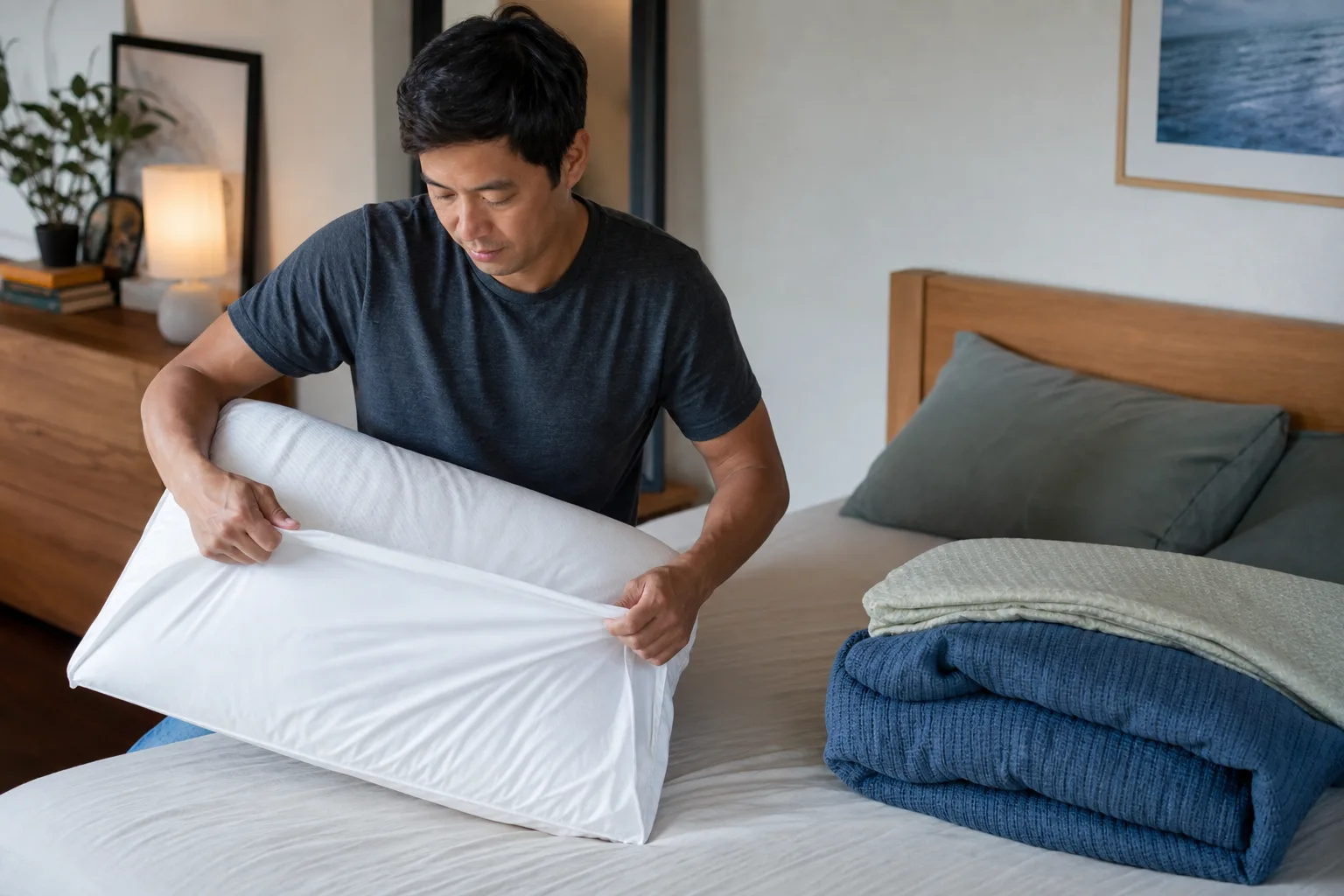
The pillow still feels supportive, but the outer case cannot absorb every night of skin oils, hair products, and moisture. A protector takes the washable wear while the harder-to-clean pillow stays inside.
This guide does not claim hands-on testing of every option on the market. It translates an everyday household problem into a practical buying checklist, so you can compare current products against your own room, routine, and tolerance for maintenance.
The quick answer
Choose a protector sized to the pillow, breathable enough for your sleep temperature, and quiet when your head moves. A smooth zipper with an internal guard helps protect both fabric and skin.
What to look for before you buy
Start with the constraint that creates the most friction in your home. A feature is valuable only when it changes that constraint without adding a harder storage or cleaning problem.
Preserve the feel
Thick waterproof layers can change loft or heat. Decide whether basic washable protection or a more specialized barrier is actually needed.
Check the closure
A full zipper contains the pillow, while envelope designs are simpler. Inspect seams and zipper guards in current listings.
Match laundering
The protector should tolerate the cleaning schedule your household can maintain without shrinking away from the pillow size.
Choose by household scenario
The same product format can be helpful in one room and irritating in another. Use these scenarios as a shortlist, then verify dimensions, care instructions, and current availability on the seller or manufacturer page.
Everyday protection
A lightweight washable protector adds a sacrificial layer with minimal change to pillow feel.
Guest bedding
Fully enclosed protectors simplify turnover and keep spare pillows cleaner in storage.
Specific sensitivities
Look for relevant published barrier details and consult appropriate health guidance rather than relying on vague claims.
What not to overpay for
A long feature list can distract from fit. Skip complexity that does not remove a repeated household step, and be cautious when a specialized replacement part is essential to basic use.
- Buying the wrong pillow size or depth.
- Assuming “waterproof” will feel silent and breathable.
- Skipping the outer pillowcase; a protector is an underlayer, not the finished surface.
Make the purchase survive real life
Wash the outer case frequently and the protector on a consistent schedule that follows its label. Dry it fully before replacing the pillow, and inspect the zipper and seams during changes.
Before ordering, take one final measurement and decide where the item will live when it is not being used. That single decision prevents many useful products from becoming visible clutter.
Frequently asked questions
Do pillow protectors change firmness?
A lightweight one should change it little, while thick or tight barriers can affect loft and surface feel.
Are they the same as pillowcases?
No. A protector sits beneath the decorative or sleep pillowcase and is designed as a washable barrier.
How many are needed?
One per in-use pillow plus a spare set is practical when laundry timing would otherwise leave pillows uncovered.
Keep reading
Related guides
 Bedroom & Bath
SparkPod Rain Shower Head: A Tool-Free Upgrade for Rental Bathrooms
This tool-free 6-inch rain shower head lets renters swap out a weak, dated shower head in minutes and put the original back before the move-out inspection.
Read review → Bedroom & Bath
Choosing Bed Sheets for Hot Sleepers Without Marketing Hype
Compare fiber, weave, weight, fit, and care around a warm bedroom instead of treating thread count as the whole story.
Read guide → Bedroom & Bath
Bedside Lamps for Reading Without Waking Your Partner
Control beam direction, brightness, switch access, and physical stability before choosing a lamp by style.
Read guide →