
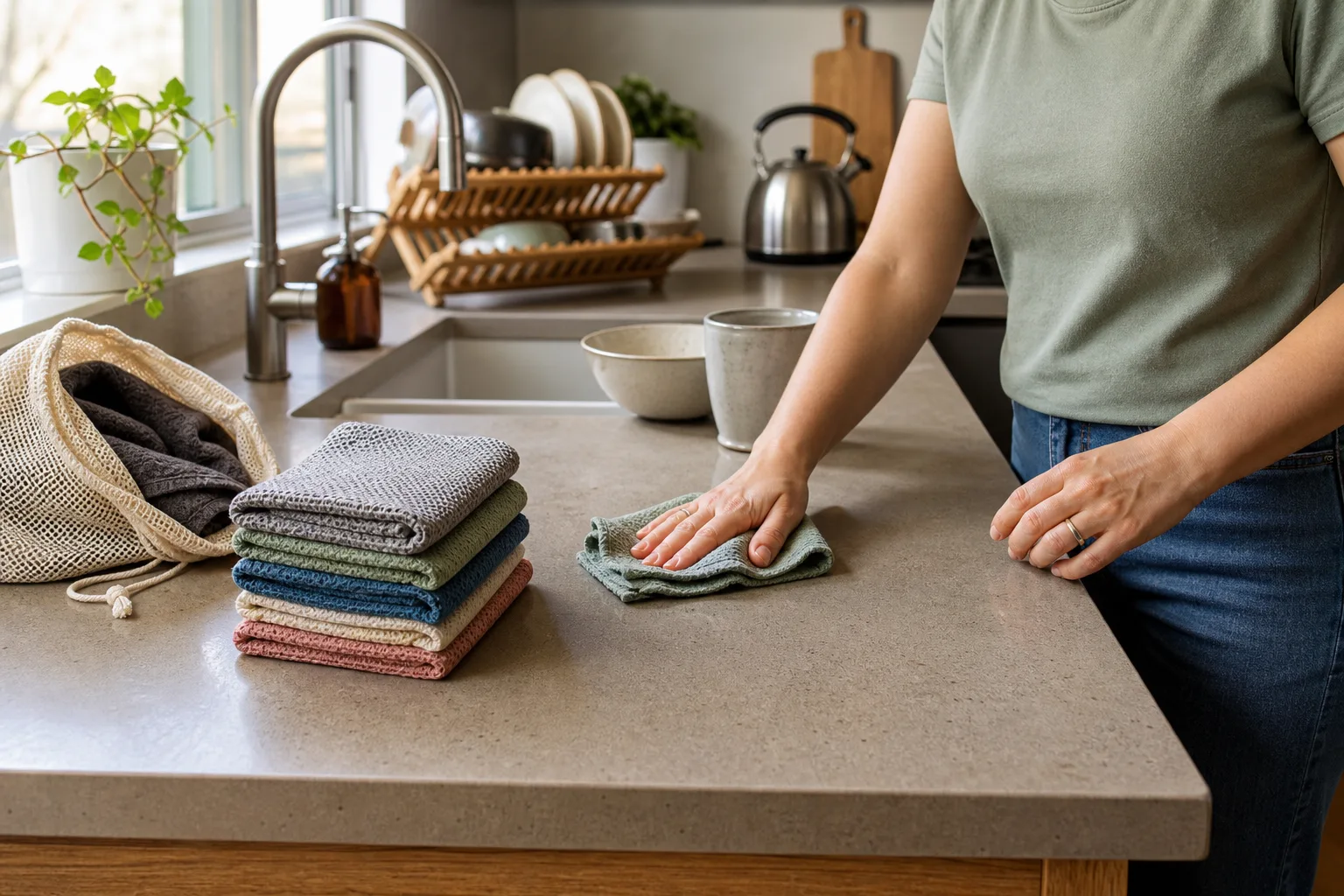
A cloth wipes a coffee spill, another dries a clean knife, and by evening nobody remembers which is which. The problem is rarely owning too few cloths; it is giving different jobs no visible boundary.
This guide does not claim hands-on testing of every option on the market. It translates an everyday household problem into a practical buying checklist, so you can compare current products against your own room, routine, and tolerance for maintenance.
The quick answer
Use a small, obvious system: one color or texture for food-prep surfaces, another for dishes, and a separate group for floors or very dirty work. Buy enough to rotate through laundry without creating a damp pile.
What to look for before you buy
Start with the constraint that creates the most friction in your home. A feature is valuable only when it changes that constraint without adding a harder storage or cleaning problem.
Choose by job
Absorbent terry suits spills, smooth woven cloths polish and dry, and textured cloths lift stuck-on residue. One material need not do everything.
Make drying easy
A loop, rail, or open basket keeps used cloths from staying bunched. Fast drying reduces odor between washes.
Check wash rules
Some microfiber performs poorly with fabric softener or high heat. Follow care instructions and keep heavily soiled cloths separate.
Choose by household scenario
The same product format can be helpful in one room and irritating in another. Use these scenarios as a shortlist, then verify dimensions, care instructions, and current availability on the seller or manufacturer page.
Daily counter wipe
Keep two or three easy-to-identify cloths within reach and rotate them before they smell or remain damp.
Dish drying
A larger smooth towel that leaves little lint is more useful than a small scrub cloth.
Messy cleanup
Use a darker, durable group for grease, pet bowls, or floor edges and launder it separately when appropriate.
What not to overpay for
A long feature list can distract from fit. Skip complexity that does not remove a repeated household step, and be cautious when a specialized replacement part is essential to basic use.
- Using the same cloth for the floor and food-prep surfaces.
- Buying a huge color set without assigning colors a job.
- Leaving wet cloths in a sealed hamper.
Make the purchase survive real life
Place a small open “used cloths” container near the laundry path, not beside the clean stack. Replace the active cloth at a predictable time—after dinner or each morning—rather than waiting for odor to make the decision.
Before ordering, take one final measurement and decide where the item will live when it is not being used. That single decision prevents many useful products from becoming visible clutter.
Frequently asked questions
How many kitchen cloths does a household need?
Enough for the number of jobs and laundry interval. Start small, observe a week, and add only when the clean rotation runs out.
Are microfiber cloths required?
No. Cotton, linen blends, and cellulose-based cloths can work well. Choose around the surface, task, and care routine.
Can used cloths go straight into a hamper?
Let damp cloths dry first or use a breathable container, then wash according to soil level and care instructions.
Keep reading
Related guides
 Kitchen
M6SL 3:1 Ratio: Calculate Water Use the Right Way
Read M6SL's pure-to-drain ratio in the right direction, normalize competing conventions and separate arithmetic from actual household water use.
Read guide → Kitchen
M6SL Cold Water: Plan the Fridge, Not a Chiller
Check M6SL's fridge-compatible pitcher, shelf fit and serving rotation without confusing a detachable vessel with built-in water chilling.
Read guide → Kitchen
M6SL Filter Reset: Replace First, Reset Second
Separate the M6SL filter reminder, physical M6RFL replacement and reset confirmation so a cleared indicator never substitutes for maintenance.
Read guide →